As several countries pursue new fighter jets, experts told Breaking
Defense it’s more about avoiding obsolescence than a southern arms race.
WASHINGTON — In late December, the first F-16 Block 10
aircraft for Argentina’s Air Force arrived in the country in what
Minister of Defense Luis Petri hailed as the “most important”
acquisition since the nation’s “return to democracy” in 1982.
Originally published: https://www.e-ir.info/2024/09/23/opinion-omens-for-uruguays-presidential-elections/
Uruguay will hold general elections on 27 October. As South American
politics remain turbulent, Uruguay is one of the few remaining islands
of stability and progressive thinking. Nevertheless, the situation
remains complex as the country has several challenges. There are three
main presidential candidates to replace President Luis Lacalle Pou
(2020-present): Yamandú Orsi (Broad Front or Frente Amplio); Álvaro
Delgado (National Party or Partido Nacional); and Andrés Ojeda (Colorado
Party or Partido Colorado). Recent polls show that Orsi has over 40% of the vote, with Delgado in second with around 20%.
If no candidate achieves over 50% of the votes in the first round, the
two candidates with the most votes will have a run-off on 24 November.
Described as a “true” multi-role
aircraft, Embraer has set an aim for the C-390 Millennium to be the
cornerstone for different operations, from HA/DR to combat missions.
A new shipbuilding deal could be a test case that, if successful, could
lead for years more work and millions more in deals for Seoul, in Peru
and South America.
Written by Wilder Alejandro Sanchez, The Southern Tide addresses
maritime security issues throughout Latin America and the Caribbean. It
discusses the challenges regional navies face including limited defense
budgets, inter-state tensions, and transnational crimes. It also
examines how these challenges influence current and future defense
strategies, platform acquisitions, and relations with global powers.
“Whether
[working] against COVID, transnational criminal organizations, the
predatory actions of China, the malign influence of Russia, or natural
disasters, there’s nothing we cannot overcome or achieve through an
integrated response with our interagency allies and partners.” –General Laura J. Richardson, Commander, U.S. Southern Command
In a speech to commemorate the service’s sea day (Día de la Fuerza de Mar) on August 21,Uruguayan Navy Captain Daniel Di Bono
stated, “Starting today, it is time to start writing another page of
this story. Ours, [the story] of the older ones, those of the Frigates,
the Minesweepers, the [marine research vessel] Vanguardia, is already
coming to an end. The period of modern, agile, and flexible ocean patrol
vessels, coastal patrol vessels, and scientific vessels is
approaching.”
Navies
constantly evolve due to new challenges, objectives, visions, and
realities. However, analysts rarely witness a sharp evolution of a Navy
and its fleet. The Uruguayan Navy is undergoing that process, and as a
reliable U.S. ally, Washington needs to understand what is going on and
why.
Argentina has held discussions with
India's HAL about acquiring Tejas fast jets and helicopters, while
Uruguay awaits funding for an A-37 Dragonfly replacement.
The donation of a utility helicopter by
the UA will increase the Uruguayan peacekeeping deployment’s air
support capabilities in the Democratic Republic of Congo.
When
thinking about navies, there is a natural tendency to focus on
operations in the open sea and the role of carriers, frigates, and
submarines. However, aside from protecting their territorial waters and
exclusive economic zones, South American navies have another equally
important theater of operation: inland water bodies like lakes and
rivers.
The
recently concluded riverine exercises ACRUX X and BRACOLPER and even
last year’s UNITAS 2021 demonstrate the importance that regional navies
place on inland bodies of water and riverine populations. Activities
carried out by local navies, not to mention other armed services,
including defense/security operations, combating crimes (illegal mining
and smuggling are significant problems in the region), search and
rescue, and humanitarian assistance/disaster relief operations. In South
America, the armed forces help extend the reach of the state to areas
where civilian agencies do not operate; navies utilize rivers as a
system of complex highways via which they can move and operate just as
efficiently as in the open sea.
First operational flight to Antarctic base comes after Uruguay procured two ex-Spanish Hercules aircraft.
The Uruguayan Air Force recently
passed a milestone in its much-needed renewal of an ageing aircraft
fleet, after a new Lockheed Martin KC-130H Hercules transport aircraft
carried out its maiden operational flight to support the country’s presence in the Antarctic.
The aircraft (tail number FAU 594) departed Montevideo on ...
Written by Wilder Alejandro Sanchez, The Southern Tide addresses
maritime security issues throughout Latin America and the Caribbean. It
discusses the challenges regional navies face including limited defense
budgets, inter-state tensions, and transnational crimes. It also
examines how these challenges influence current and future defense
strategies, platform acquisitions, and relations with global powers.
“We
focus on partnerships…Our partners want to work with us. They want the
advantage of the United States education, training, exercises and
military equipment. It’s the best in the world. And so it’s up to us to
deliver that in a way that’s relevant and also provides a return on
investment for American taxpayer. So that is our focus.” –Navy Adm. Craig S. Faller, commander of U.S. Southern Command, before the Senate Armed Services Committee July 9, 2019.
By Wilder Alejandro Sanchez
A historical milestone was reached in Uruguay as Capitan Valeria Sorrenti
became the first female commander of an Uruguayan Navy vessel. With
that said, it is important to keep in mind that she is only the latest
example of a growing trend. In recent years there were a number of
positive “firsts” when it comes to female naval officers taking command
of ships among various Latin American navies, a trend that will
hopefully continue.
"Latin American Navies and Antarctica"
W. Alejandro Sanchez and Brittney J. Figueroa
The Southern Tide
Center for International Maritime Security
June 27, 2017
Originally published: http://cimsec.org/latin-american-navies-antarctica/33097
Written by Wilder Alejandro Sanchez, The Southern Tide addresses maritime security issues throughout Latin America and the Caribbean. It discusses the challenges regional navies face including limited defense budgets, inter-state tensions, and transnational crimes. It also examines how these challenges influence current and future defense strategies, platform acquisitions, and relations with global powers.
“The security environment in Latin America and the Caribbean is characterized by complex, diverse, and non-traditional challenges to U.S. interests.” Admiral Kurt W. Tidd, Commander, U.S. Southern Command, before the 114th Congress Senate Armed Services Committee, 10 March 2016.
By Alejandro Sanchez Nieto and Brittney J. Figueroa
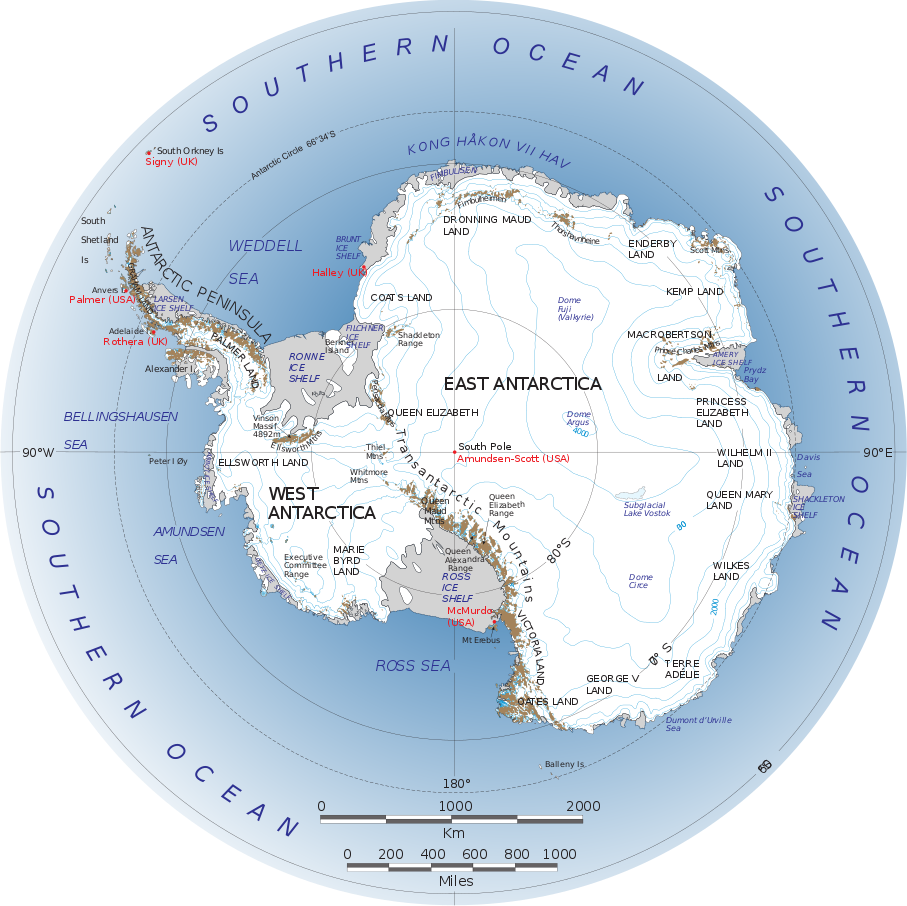
Latin American governments have a strong presence in Antarctica, with two countries, Argentina and Chile, formally claiming Antarctic territories while several others carry out annual scientific expeditions (apart from having research bases there). Regional navies are of paramount importance in these operations as they are the spearhead of their respective nations’ expeditions and security initiatives in Antarctic waters. In fact, in recent months, there have been new developments that signal a greater Latin American naval presence in the Antarctic in the near future: Peru has commissioned its new oceanographic vessel while Chile has commenced the construction of a new icebreaker.
Antarctic geopolitics will only increase in importance due to climate change and the upcoming year 2048 when the Antarctic Treaty will be open for review. Hence it is important that Latin America, broadly speaking, takes steps to maintain a continuous presence in Antarctica in order to have a voice when the frozen continent’s future is decided. Increasing budgets in order to modernize or replace aging vessels and expanding already successful scientific and security programs will play a critical role in regional navies’ future Antarctic operations.
Antarctica as a National Interest
The importance of Antarctica in Latin American security and defense strategies, as well as more comprehensive foreign policy concepts, cannot be overemphasized. One example of this is Antarctica’s frequent and prominent mentions in regional White Papers. For example, Argentina’s 2015White Bookrepeatedly references Antarctica, and explains how “the Ministry of Defense considers of the upmost importance the upgrade [of military platforms] necessary for the scientific development, international cooperation and preservation of the Antarctic environment” (P. 43). Similarly Peru’s 2005 White Bookmentions how the “Ministry of Defense, via the armed forces, has a fundamental role in the logistical support and the scientific research that encompasses the Peruvian presence in Antarctica” (P.42). Finally, Chile’s2010 White Book has an extensive chapter on the Chilean Antarctic, explaining how the armed forces aim to “have a permanent presence, even during winter, in the Antarctic continent and its islands” and to carry out oceanographic scientific research in the region (P. 51 & 52).
These three different White Books exemplify Latin American nations’ interests in having a strong Antarctic presence and how militaries, particularly navies, are regarded as the tip of the spear of Antarctic operations.
Vessels and Patrols
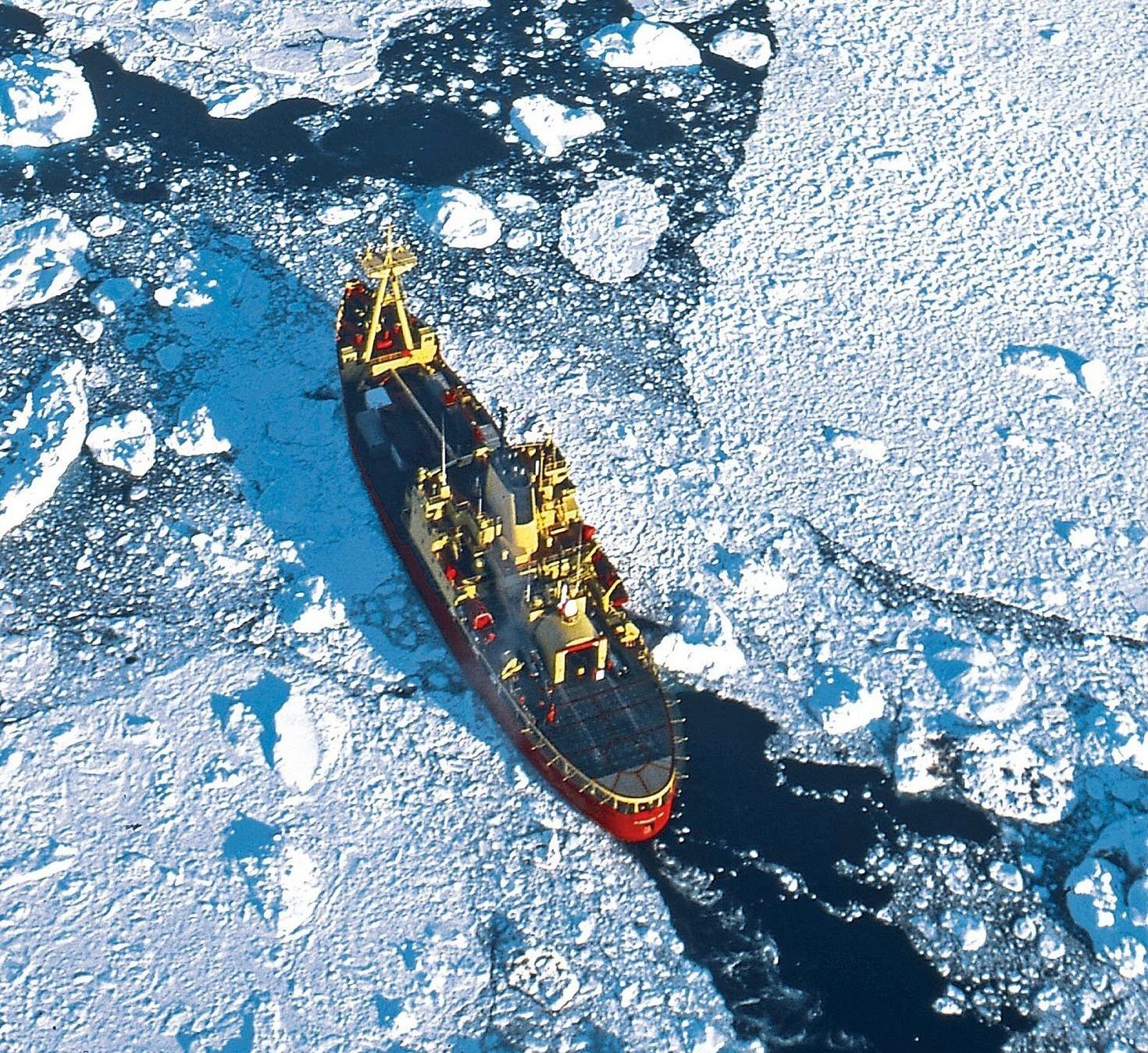
Argentina and Chile possess several platforms that operate in Antarctic waters for expeditions, patrols, and to support their Antarctic bases. Argentina has the icebreaker ARA Almirante Irízar(Q5) and in 2014, Buenos Aires acquired four Russian Neftegaz-class multipurpose vessels to support its Antarctic bases. Meanwhile, Chile has the icebreaker Almirante Oscar Viel (AP46), and several other vessels capable of operating in Antarctic waters.
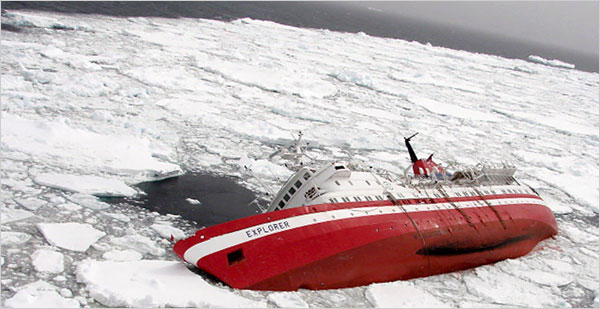
Additionally, the two countries set aside their differences—overlapping territorial claims in the Antarctic—to create the Joint Antarctic Naval Patrol (Patrulla Antártica Naval Combinada: PANC) in 1998. Via the PANC, naval platforms from the two countries come together during the Antarctic Summer months (November-March) to patrol Antarctic waters, assist vessels in need (e.g. the tourist vessel M/V Explorer in 2007), respond to oil spills, and visit and support various bases.
The PANC’s navies pride themselves on being prepared to safeguardthe lives of those who work in and travel to the region, and are prepared for search and rescue missions along with other various emergencies at sea. The creation and success of the PANC should not be underestimated as it exemplifies the possibilities of collaborative naval efforts in the Antarctic. It is worth stressing that neither PANC country is a military power, and theydo not have the samenaval capabilities as some of their wealthier Antarctic counterparts, thus putting them at a great disadvantage (especially when considering each nation’s capabilities alone). However, despite the older vessels in their fleets, their partnership over the past two decades has proven to be effective both to patrol Antarctic waters, and also as a confidence-building mechanism.
Non-claimant nations also have important Antarctic programs. Peru, for example, recently received BAP Carrasco (BOP171),constructed by the Spanish Freire shipyard in 2016. Jane’s 360 explainsthat “the steel-hulled ship has a length of 95.9 m, a 6,000-tonne displacement, has a streamlined and raked superstructure with a meteorological sensor platform at the forward end,” which will be of great help for Peru’s future operations in the Antarctic. In addition, Brazil has avaried presence in the region that consists of the Almirante Maximiano (H-41), an ice breaker, the Ary Rongel (H-44), an oceanographic support ship, and several C-130 Brazilian Air Force (FAB) aircraft that are utilized to transport essential equipment and personnel to the Brazilian Antarctic Program (PROANTAR) facilities.
Regarding Chile, it has commenced the construction of a brand-new icebreaker as part of its Antarctica I project. Thanks to information provided to the authors by ASMAR, (Astilleros y Maestranzas de la Armada) Chile’s state-owned shipyard that has partnered with the Chilean Navy since 1895, we know that the new platform, an over $210 million project, will be capable of longer Antarctic missions in part due to its design which allows it to operate at temperatures as low as -30 Celsius. Additionally, the icebreaker will be equipped with modern, state-of-the-art scientific equipment in its microbiological and chemical laboratories. Construction commenced on 9 May at ASMAR’s Talcahuano facilities. The new vessel will be operational by the 2022-2023 season, and will greatly support Chile’s Antarctic operations.
As for Colombia, the navy has refitted one of its oceanic patrol vessels, ARC 20 de Julio (PZE-46), so it can better operate in Antarctic conditions. The vessel has already carried out two expeditions.
Uruguay’s presence in Antarctica since 1985 is also worth noting. TheROU 26 Vanguardia is the small South American country’s primary platform used for scientific research and to supportBase Artigas and Station Ruperto Elichiribehety. The Vanguardia,named Otto Von Guericke at the time of its construction, was built in Poland for East Germany in 1976. The vessel was purchased by Montevideo in 1991 and was then given its current name. It has a length of 72.62 m, displaces 1872 tons, and a maximum speed of 14.5 knots. Other ships that participate in the country’s Antarctic activities are ROU 04Artigas and ROU 22 Oyarvide. Unlike the PANC, which focuses on patrolling and safety activities, Uruguay’s main operations in the continent take place via the Uruguayan Antarctic Institute, a national agency under the supervision of the Ministry of Defense that focuses on scientific, technological, and logistic activities.
Finally, it is worth stressing the general spirit of camaraderie in the Antarctic among South American navies. The PANC is a security-related initiative of two navies coming together in spite of historical differences and ongoing territorial claims in theAntarctic. Similarly, Uruguay has shared the results of some scientific studies with Chile and Argentina. In addition, Uruguay’s Mobile Marine Meteorological Station Project (Proyecto Estacion Meterologica Movil Marina) is an ongoing project that provides real-time information such as wind direction and speed, atmospheric and barometric pressure; and wave period, height, and type to Argentine and Chilean stations. This is a prime example of Latin American navies and scientific centers coming together to build upon each other’s successes in Antarctica.
Slow Improvements
While the aforementioned developments clearly demonstrate how Latin American navies are growing Antarctic capabilities, they should not be overestimated as there are also troubling shortcomings, particularly due to budget issues. For example, while Argentina’s icebreaker Irízar recently commenced sea trials and will likely return to operational duty by the 2017-2018 season, it has taken a decade-long reconstruction effort to repair the platform after it was ravaged by a fire in 2007. Similarly, budget issues have affected Argentina’s recent Antarctic operations, best exemplified by the recent summer 2016- 2017 season, in which the government had trouble figuring outhow to resupply its Antarctic bases.
As for other nations, platforms that are too old to continue operating safely are eventually replaced by other vessels, which is not the same as expanding a fleet in terms of numbers. For example, Peru’sCarrasco will replace BIC Humboldt, which was constructed in the late 1970s and has gone through extensive overhauls to extend its operational life. Similarly, the new Chilean icebreaker will replaceViel, which was constructed in the late 1960s. Other naval platforms utilized for Antarctic operations, including the PANC, will soon become outdated. For example, Chile deployed ATF Lautaro (67) to the 2016-2017 PANC mission, a vessel constructed in 1973, while Argentina deployed ARA Islas Malvinas (A24), constructed in the 1980s. While replacement platforms are always welcome, expanding fleets by acquiring newly constructed ships would be more practical as their operational lives would last much longer than repurposed, older vessels.
The aforementioned Argentine Almirante Irízar illustrates the benefits of a stronger commitment by regional states toward their Antarctic programs, including their naval platforms. While its post-fire reconstruction was extensive and lengthy, the Argentine government’s investment has made the vessel one of the 10 biggest icebreakers in the world, as well as one of the most capable. In a recent navigational test, the ship surpassed expectations, and showed no signs of the various previous problems it had when it first made its way to the Antarctic from Finland in 1978. Not only does the ship have improved navigation capabilities, but it is also nowmultipurpose, housing eight top-of-the-line scientific laboratories, and an overall scientific investigation sector six times larger than that of its original construction. Despite the lengthy timeline of the repair, the Argentine government’s decision to allocate scarce resources in revamping the Irizar is a Cinderella Story of sorts, as it exemplifies the benefits that could come from a bigger budget committed to Antarctic maritime operations. Obtaining a new vessel would have probably taken less time than repairing the Irizar, nevertheless, if reports are to be believed, this modernized vessel will be of great help for Argentina’s Antarctic operations for the foreseeable future.
Final Thoughts
Navies are usually viewed through the prism of defense and security; however they also play a critical role in Antarctic programs. Certainly other military services, government departments, and scientific institutions are other necessary pillars of any vibrant and robust Antarctic program, but navies are a sort of spearhead as they employ the primary platforms that deploy to this frozen continent. Hence it comes as no surprise that navies are prominently mentioned in the White Papers of several regional countries regarding Antarctic operations as they are engaged in various operations ranging from scientific activities to providing emergency assistance.
Countries like Peru and Chile are working on obtaining new platforms for Antarctic use while Colombia has refitted one of its navy’s vessels for these operations. Meanwhile, the Argentine and Chilean navies have come together to create a joint Antarctic naval patrol that has helped vessels and Antarctic bases in need. Finally, Uruguay’s scientific program and projects are also notable as they provide data that allows the multifaceted work of the Latin American countries in the region to continue operations safely and effectively.
The importance of Arctic and Antarctic geopolitics will increase due to climate change and the approaching year 2048, when the Antarctic Treaty is up for revision. The modernization of polar-capable vessels, such as Argentina’s Alimirante Irizar, if not the acquisition of newer ones like Peru’s Carrasco, will help Latin American navies increase the reliability and projection of already successful missions in Antarctica thereby fortifying Latin America’s presence and increasing its voice in regards to the future of the frozen continent.
Alejandro Sanchez Nieto is a researcher who focuses on geopolitical, military, and cyber security issues in the Western Hemisphere. Follow him on Twitter: @W_Alex_Sanchez.
Brittney J. Figueroa is a recent graduate from the University of California, Santa Barbara with a Bachelors degree in Global Studies, and a Minor in Latin American Iberian Studies.
The views presented in this essay are the sole responsibility of the authors and do not necessarily reflect those of any institutions with which the authors are associated.
"The UNCLCS Ruling and the Future of the Uruguayan Navy"
W. Alejandro Sanchez
October 12, 2016 The Southern Tide
Center for International Maritime Security
Originally published: http://cimsec.org/unclcs-ruling-future-uruguayan-navy/28738
The Southern Tide
Written by Wilder Alejandro Sanchez, The Southern Tide addresses maritime security issues throughout Latin America and the Caribbean. It discusses the challenges regional navies face including limited defense budgets, inter-state tensions, and transnational crimes. It also examines how these challenges influence current and future defense strategies, platform acquisitions, and relations with global powers.
“The security environment in Latin America and the Caribbean is characterized by complex, diverse, and non-traditional challenges to U.S. interests.” Admiral Kurt W. Tidd, Commander, U.S. Southern Command, before the 114th Congress Senate Armed Services Committee, 10 March 2016.
By W. Alejandro Sanchez
Uruguay’s continental shelf control has been extended to 350 nautical miles. On 30 August, the United Nations Commission on the Limits of the Continental Shelf (UNCLCS) ruled in favor of the South American nation’s request to extend its maritime territory by83,000 square kilometers. While this is a major diplomatic victory for the Uruguayan government, the new territory will need to be properly patrolled, which means additional pressure on theUruguayan Navy that currently operates with an aging fleet.
The author of this commentary argues that Uruguay’s new maritime territory should be a starting point for a greater discussion about the future of its Navy, both in terms of its future fleet composition and missions.
A Brief History
It is important to stress that the Uruguayan military has not been in an inter-state conflict in over a century. Its last major confrontation was the War of the Triple Alliance (1864-1870). In the 20th century, Uruguay supported the Allies in World War II (the 1939 Admiral Graf Spee incident occurred in Uruguayan waters). The only other major challenge to Uruguayan sovereignty occurred in the late 1960s to early 1970s when Uruguayan security forces battled the Tupamaros, a local insurgent movement.
In the 21st century, Uruguay has only had one small international incident. Between 2005-2010, the Uruguayan and Argentine governments had a diplomatic and legal dispute regarding the construction of a pulp mill in the Uruguay River, which serves as a border between the two states. Even though no conflict ever occurred, former Uruguayan President José Mujica famously declared in 2011 that he had contemplated the possibility of a war with Argentina over the pulp mill and had met with his military’s commanders about possible scenarios.
The Navy’s Current Platforms
Nowadays the Uruguayan military, and the Navy in particular, is in a dire state given limited budgets which prevent the acquisition of new heavy platforms.
In August, Admiral Leonardo Alonso, commander of the Uruguayan Navy, declared that the fleet has 12 operational sea platforms. The fleet composition includes a Joao Belo-class frigate, the ROU Uruguay; two Kondor II-class minesweepers, the ROUTemerario and the ROU Audaz (the ROU Fortuna was retired in 2014); the oceanic patrol vessel ROU Maldonado the support vessels ROU General Artigas and ROU Vanguardia. Additional vessels include the tugboat ROU Banco Ortiz; the oceanographic ship ROU Oyarvide; the ROU Sirius; and the patrol boats ROUColonia, ROU Rio Negro, and the ROU Paysandu. According toUruguayan media, the average age of the fleet is 50 years (e.g. the Joao Belo frigate was constructed in the late 1960s).
A strongly worded op-ed in the daily El Observador op-edpublished on 20 August, provocatively titled “Who Needs the Armed Forces?” stresses how the Navy is “bankrupt, not only because of its aging fleet, its lackluster training and small budget, but due to corruption scandals in recent years that have affected the morale.”
For the past couple of years, the Uruguayan military has attempted to purchase modern offshore patrol vessels (OPVs), which will be the cornerstone of the future fleet. The Navy has apparently selected Lurssen’s OPV 80 model and reportedly plans to procure three platforms in a deal which will cost an estimated USD $250 million. To date, no contract has been signed yet as the government appears to lack sufficient funds to purchase the vessels.
The Uruguayan Navy has been lobbying the government for new funds and the approval of the OPV-deals in order to properly monitor the country’s growing sea. Admiral Leonardo Alonso has declared to the Senate that on any given day the Navy detects around 350 ships in Uruguayan waters “but we only see the ones that wish to be detected, which have their equipment on and are identified by our sensors,” which means that the country is vulnerable to “piracy, maritime accidents, pollution, drug trafficking, smuggling, and illegal fishing.” In an e-mail interview with the author, an Uruguayan naval officer explained that “in Uruguayan waters there is an average of 200 vessels (cruising or anchored) carrying out different tasks. This volume means that without proper control of maritime traffic, the probability of accidents and incidents escalates.” The officer also highlighted the necessity of a coastal surveillance network for Vessel Traffic Services (VTS) to aid the activities of the (yet to be acquired) OPVs and their support helicopters.
While this analysis is focusing on the Uruguayan Navy’s platforms and equipment, it is necessary to briefly mention personnel woes. The Uruguayan officer explained to the author that it is also vitally important “to retain our personnel and prevent a migration to the private sector as they seek salary improvements.” The problem of preventing qualified military personnel from migrating to better paid (and less dangerous) positions in the private sector is an issue that affects many militaries across the world.
The UNCLCS Ruling
It is in this problematic situation that the UNCLCS’s ruling enters the equation. Montevideo first requested the UNCLCS to expand its continental shelf beyond 200 nautical miles in 2009. “Uruguay has a special interest in expanding its continental shelf rights since it is currently involved in the search for oil and gas in the so called Punta del Este basin,”explained a September 2009 report byMercoPress.
According to Uruguayan media, a Uruguayan delegation met with a UNCLCS commission 21 times to argue its case between 2011 and 2015. The aforementioned naval officer also highlighted the role of the oceanographic vessel Oyarvide and the Navy’s Oceanographic, Hydrographic, and Meteorological Service in contributing to the case made to the UNCLCS.
In 2016, Uruguay presented its case to the plenary of the UNCLCS and the Commission decided in favor of Montevideo’s request to expand its continental shelf to a total of 350 nautical miles on 30 August. According to IHS Jane’s Defense Weekly, “the new territory grants mineral and resource rights over the continental shelf (sea floor) but it does not grant fishing rights over the new area.” Meanwhile, the Uruguayan daily El Observador explains that the country now has more maritime territory than dry land.
The UNCLCS’s decision has been a massive victory for the administration of President Tabaré Vázquez. In fact, the Uruguayan Minister of Foreign Affairs, Rodolfo Nin Novoa, has declared “nobody can do anything [in these waters] without Uruguay’s authorization.” The minister’s statement was perhaps too bold as the aforementioned Admiral Alonso has highlighted the problematic situation of the Navy while Defense Minister Jorge Menendez has stressed the need for USD $250 million to upgrade the fleet (namely to acquire the OPVs).
One Possible Way Forward
The expansion of Uruguay’s continental shelf should serve as a starting point for a discussion about the future of its Navy. Given the lack of an external security threat (the author has discussed South Atlantic geopolitics in a 17 February commentary for CIMSEC, “How Peaceful is the South Atlantic?”), particularly as the pulp mill diferendum with Argentina appears to have been solved, the Uruguayan armed forces have had to reinvent themselves in recent decades to justify their existence. Case in point, the country is a major supplier of peacekeepers to the United Nations – as of 31 August, Uruguay has a contingent of 1,457 troops participating in UN peacekeeping missions.
Regarding the Navy, its current and future challenges are transnational and irregular in nature. Rather than worrying about the Brazilian nuclear or Scorpene submarinesappearing on its coast, the major maritime security threats include drug trafficking, illegal fishing, maritime pollution, as well as search and rescue operations.
Illegal fishing is a major problem for governments around the world, and the South Atlantic already has the precedent of the March incident between the Argentine Coast Guard and an illegal Chinese fishing fleet that highlights the need for a well-equipped and modern fleet that can chase and detain (or sink, if violence is necessary) illegal fishing vessels. To this point, the Uruguayan dailyEl Pais has noted that the country’s waters have fish species like merluza (a cod-like fish), the pescadilla (whiting) and the corvina, which must be protected from illegal fishing.
Another task for the Navy’s future will be to protect future oil platforms that may be constructed in Uruguay’s maritime waters. As a matter of fact, France’s Total company (with U.S. ExxonMobil and Norway’s Statoil as partners) has been looking for oil in Uruguayan and South Atlantic waters, though unsuccessfully so far. The South Atlantic does not have a piracy problem in the sense of oil platforms being at risk of criminal attack. However, if aDeepwater Horizon-type accident were to occur in one of these new wells, the Navy must have capable vessels able to rescue workers in peril and contain potential oil spills and other destruction. It is worth noting that just in late September the aforementioned Audazand Artigas had to assist the Fortune Harmony, a tanker that had a fire aboard while 20 miles off Piriapolis, Uruguay.
For these operations, the Navy requires new sea platforms, namely OPVs, to support and eventually replace the antiquated vessels it currently operates, as well as a coastal monitoring network. While this author is not qualified to properly discuss the training of Uruguayan naval officers as well as the budgetary issues, the problem of preventing well-trained personnel from migrating to the private sector affects the Uruguayan Navy like in other defense forces across the world.
Final Thoughts
Proper surveillance of the extended continental shelf is a critical task for the Uruguayan Navy and will be the cornerstone of its maritime strategy going forward. Incidents like the March clash between Argentina and illegal Chinese fishing vessels (illegal fishing), or the recent Fortune Harmony incident (disasters at sea and possible pollution) are reminders of why it is a priority for a nation with a large continental shelf to have a modern fleet capable of adapting to different scenarios.
With that said, Uruguay’s history and current South Atlantic geopolitics argue that the possibility of inter-state warfare is minimal. Hence, Uruguay must upgrade its Navy, not just in terms of new platforms, radars and helicopters, but also its mission in the 21st century.
Alejandro Sanchez Nieto is a researcher who focuses on geopolitical, military, and cyber security issues in the Western Hemisphere. Follow him on Twitter: @W_Alex_Sanchez.
The views presented in this essay are the sole responsibility of the author and do not necessarily reflect those of any institutions with which the author is associated.