Showing posts with label history. Show all posts

Tuesday, August 11, 2026

The Diplomat: " ‘Golden Kamuy’ and Modern Russo-Japanese Relations "


"‘Golden Kamuy’ and Modern Russo-Japanese Relation"

Wilder Alejandro Sanchez and Marin Ekstrom

 Tokyo Report

The Diplomat

11 August, 2026

Published: https://thediplomat.com/2026/08/golden-kamuy-and-modern-russo-japanese-relations/ 


The manga-turned-anime serves as an important pop cultural piece in understanding Japan’s place in the world, most specifically its historic role with Russia and their Northeast Asian borderlands.  


Friday, September 15, 2023

NE Global: Moldova’s Maia Sandu is the ‘Iron Lady’ of Eastern Europe


"Moldova’s Maia Sandu is the ‘Iron Lady’ of Eastern Europe"

Wilder Alejandro Sanchez

NE Global

15 September, 2023

Originally published: https://www.neglobal.eu/moldovas-maia-sandu-is-the-iron-lady-of-eastern-europe/

As the war in Ukraine passes the year-and-a-half milestone, a critical ally for Kyiv and Washington is the tiny nation of the Republic of Moldova, led by President Maia Sandu. Strong leadership is often hard to find during challenging and tense geopolitical moments.

Continue reading... 

Sunday, February 12, 2023

E-International Relations: "Moldova and Romania’s Unification is Not on the Horizon"


"Moldova and Romania’s Unification is Not on the Horizon"

Wilder Alejandro Sanchez

Opinion

E-International Relations

12 February, 2023

Originally published: https://www.e-ir.info/2023/02/12/opinion-moldova-and-romanias-unification-is-not-on-the-horizon/

Since the War in Ukraine commenced, a critical ally of the Republic of Moldova has been neighboring Romania. This partnership is not solely based on a shared border but on a shared language, culture, and history. Unification is a topic that is not often discussed in international relations nowadays, as there is a greater tendency for countries to break apart than to unite. However, more than a century after the 1918 merging of Moldova and Romania unification sentiments in both countries still exist. While a reunification between Chisinau and Bucharest is unlikely, these pro-unification sentiments should be discussed as they continue to influence bilateral relations.

Continue reading... 

Saturday, November 12, 2022

The National Interest: Kazakhstan’s Enduring Lessons for Nuclear Disarmament


"Kazakhstan’s Enduring Lessons for Nuclear Disarmament"

Wilder Alejandro Sanchez

The Buzz

The National Interest

12 November 2022

Originally published: https://nationalinterest.org/blog/buzz/kazakhstan%E2%80%99s-enduring-lessons-nuclear-disarmament-205842

While the risks of nuclear escalation and proliferation have re-emerged, Kazakhstan’s decision to dismantle its nuclear arsenal thirty years ago offers a valuable case study in denuclearization.

Continue reading...

Sunday, May 15, 2022

Cited in: Казахстан «дистанцируется» от России, шагая «по острию бритвы»


"Казахстан «дистанцируется» от России, шагая «по острию бритвы» 

 Radio Liberty/Free Europe

14 May 2022

Originally published: https://rus.azattyq.org/a/review-kazakhstan-distancing-from-putins-offensive-in-ukraine/31849271.html 

 ПОЧЕМУ КАЗАХСТАН ОТКАЗАЛСЯ ОТ ВОЕННОГО ПАРАДА В ДЕНЬ ПОБЕДЫ?

О попытке Казахстана дистанцироваться от российской агрессии говорится и в статье, опубликованной на сайте американского исследовательского института Аtlantic Council. Директор консалтинговой компании Second Floor Strategies Уайлдер Алехандро Санчес и исследователь Центральной Азии Камила Ауэзова пишут о том, что стоит за отказом Казахстана проводить военный парад 9 мая.

После российского вторжения в Украину празднование Дня Победы 9 мая приобрело дополнительный символический смысл. Праздник, посвященный победе Советского Союза над нацистской Германией, стал центральным элементом национальной идентичности современной России, но отношение к нему в других странах бывшего СССР зачастую более тонкое и отражает сложную динамику постимперских отношений с Москвой. «Для Казахстана отказ от празднования Дня Победы стал способом дистанцироваться от российской агрессии», — отмечают авторы.


Wednesday, May 11, 2022

International Policy Digest: Russian Disinformation in 2022: Following the Historical Blueprint

"Russian Disinformation in 2022: Following the Historical Blueprint"

Wilder Alejandro Sanchez

World News

International Policy Digest

11 May, 2022

Originally published: https://intpolicydigest.org/russian-disinformation-in-2022-following-the-historical-blueprint/

As the Russian invasion of Ukraine continues, battles are not fought just on the physical battlefield but also online via disinformation campaigns. A key fact to keep in mind is that Russian-sponsored disinformation campaigns have not been solely focused on Ukraine in recent years, other post-Soviet states have also been targeted.

Lies and threats

By now the justifications for the Russian invasion of Ukraine are well known. Moscow argues that this special military operation is to “denazify” and remove “extremist” elements from Ukraine that threaten the Fatherland. Russian TV channels have stressed not only constant victories on the ground but also how Ukrainians are supposedly welcoming Russian forces as liberators, while also arguing that the atrocities committed in Bucha are “fake.” Maintaining the support of the Russian population is an obvious priority for the Kremlin, hence facts are either denied or twisted.

Continue reading...


Atlantic Council: Kazakhstan cancels Victory Day in protest over Putin’s Ukraine War


"Kazakhstan cancels Victory Day in protest over Putin’s Ukraine War"

Wilder Alejandro Sanchez and Kamila Auyezova

UkraineAlert

Atlantic Council 

 11 May, 2022

Originally published: https://www.atlanticcouncil.org/blogs/ukrainealert/kazakhstan-cancels-victory-day-in-protest-over-putins-ukraine-war/

With Russia currently waging war in Ukraine, traditional Victory Day events on May 9 took on added symbolic significance. This holiday marking the Soviet victory over Nazi Germany has become central to modern Russia’s national identity, but attitudes elsewhere in the former USSR are often more nuanced and reflect the complex dynamics of post-imperial relations with Moscow. For Kazakhstan, refusal to join this year’s Victory Day celebrations was a subtle way of distancing the country from Russia’s aggressive actions.

Continue Reading... 

Thursday, January 6, 2022

Geopolitical Monitor: Assessing a Possible Moldova-Romania Unification


"Assessing a Possible Moldova-Romania Unification"

Wilder Alejandro Sanchez

Situation Reports

Geopolitical Monitor

6 January, 2021

Originally published: https://www.geopoliticalmonitor.com/assessing-a-possible-moldova-romania-unification/

Moldovan President Maia Sandu was asked during an interview in the Moldovan TV program In PROfunzime about a potential unification between Moldova and neighboring Romania. Unification is an idea that has been discussed since Moldova obtained its independence from the Soviet Union in 1991; it has been utilized to advance various political agendas in Chisinau, Bucharest, as well as Moscow, and even Tiraspol, the de facto capital of Moldova’s separatist region, Transnistria. Exactly how likely unification is to occur in the foreseeable future is debatable, but the very idea provokes strong feelings and emotions, and also serves different objectives.

Two or more countries unifying into a single entity is not an event that often occurs nowadays – separatism is more common – hence even a theoretical scenario in which Moldova and Romania unify deserves a proper discussion, considering local and regional factors.

Continue Reading...

Friday, December 24, 2021

E-IR: Mustafa Shokay and the Soviet Propaganda Machine


"Mustafa Shokay and the Soviet Propaganda Machine"

Wilder Alejandro Sanchez

Articles

E-International Relations

24 December, 2021

Originally published:  https://www.e-ir.info/2021/12/24/mustafa-shokay-and-the-soviet-propaganda-machine/

The Soviet propaganda machine created heroes and monsters via exaggerations and, often, lies. Books like The Soviet Propaganda Machine and The Birth of the Propaganda State have researched this topic. However – with notable exceptions – not much has been written in English about the inhabitants of Central Asia who became victims of the propaganda machine. The Kazakhstani scholar and activist Mustafa Shokay (also spelled Çokay or Chokay) is a prime example of the machine at work. His name and legacy have only now begun to be revisited as Kazakhstan has been an independent nation for three decades and a new generation of Central Asian scholars are able to carry out their own historical research.

 Continue Reading...

Wednesday, November 17, 2021

E-IR "The Lasting Repercussions of Kazakhstan’s Nuclear Disarmament"


"The Lasting Repercussions of Kazakhstan’s Nuclear Disarmament"

Wilder Alejandro Sanchez

E-International Relations

17 November, 2021

Originally published: https://www.e-ir.info/2021/11/17/the-lasting-repercussions-of-kazakhstans-nuclear-disarmament/

As 2021 draws to a close, the Central Asian states are celebrating three decades of independence from the former Soviet Union. One additional cause worth celebrating is that Central Asia is a nuclear weapons-free region.

Continue Reading...

Thursday, October 28, 2021

The National Interest: Russia-Central Asia Relations Will Be Forged by How the Past Is Remembered


"Russia-Central Asia Relations Will Be Forged by How the Past Is Remembered"

Wilder Alejandro Sanchez

The National Interest

28 October, 2021

Originally published: https://nationalinterest.org/blog/buzz/russia-central-asia-relations-will-be-forged-how-past-remembered-195626

While Central Asian states generally cooperate with Russia in areas such as defense, trade, and other common foreign policy interests, the legacy of Soviet propaganda has left deep scars, which bleed into everyday life today.

As the nations of Central Asia celebrate three decades of independence from the now defunct-Soviet Union, the region’s relations with the Russian Federation are generally cordial, though not without occasional tensions. While Central Asian states generally cooperate with Russia in areas such as defense, trade, and other common foreign policy interests, the legacy of Soviet propaganda has left deep scars, which bleed into everyday life today.

 Continue Reading...

Tuesday, October 12, 2021

IPD: Assessing the Complicated Legacy of Mustafa Shokay


"Assessing the Complicated Legacy of Mustafa Shokay"

Wilder Alejandro Sanchez

International Policy Digest

October 11, 2021

Originally published: https://intpolicydigest.org/assessing-the-complicated-legacy-of-mustafa-shokay/

 It is impossible to overstate the power of propaganda throughout the Second World War and the Cold War. Along with creating national narratives and heroes, propaganda machines churned out demons by the thousands. One such individual whose legacy has been tarnished is Kazakhstani activist and scholar Mustafa Shokay.

Captured by the Germans when they entered France, Shokay’s time in Nazi captivity has been a subject of both fact-based speculation and wild conspiracy theories. During the Soviet era, he was branded an accomplice of Nazi Germany; however, the dissolution of the Soviet Union allowed new studies of his life, showing a complex and multifaceted individual devoted to an independent homeland for his fellow Turkic people.


 Continue Reading...


Friday, September 25, 2020

DefenceIQ: Mine-clearing operations in Moldova


"Mine-clearing operations in Moldova"

Wilder Alejandro Sanchez

DefenceIQ

September 24, 2020

Originally published: https://www.defenceiq.com/army-land-forces/case-studies/mine-clearing-operations-in-moldova


The Republic of Moldova continues to be affected by its past. Specifically, World War II-era mines, artillery shells and other unexploded ordnance continue to litter the European nation’s territory, creating a constant danger to the Moldovan population that, unfortunately, has claimed a number of innocent lives.

Thus, one of the Moldovan military’s most important daily operations is to locate and remove these ancient, but still deadly, weapons from its territory.

The problem

It is unclear exactly how much unexploded ordnance remains buried beneath Moldovan land. Via the Molotov-Ribbentrop Pact of 1939, Nazi Germany and the Soviet Union created spheres of influence in Eastern Europe – an agreement that Berlin would later break via the invasion of the Soviet Union in 1941. Specifically, thanks to the Pact, Moscow gained control of parts of Bessarabia and Northern Bukovina, which became the Moldovan Soviet Socialist Republic, and the Hertza region, given to Ukraine. After Operation Barbarrosa (Germany’s invasion of the Soviet Union) commenced, the Axis-aligned Romania, regained control of Bessarabia, until Soviet troops returned in 1944. It was during this period of the war, particularly the Red Army’s return to the region, that most of this military equipment was littered across the territory.


Continue Reading

Wednesday, November 21, 2018

IPD: Brazil-Africa Relations during the Bolsonaro Presidency

"Brazil-Africa Relations during the Bolsonaro Presidency"
Wilder Alejandro Sanchez and Scott Morgan
International Policy Digest
21 November 2018
Originally published: https://intpolicydigest.org/2018/11/21/brazil-africa-relations-during-the-bolsonaro-presidency/

Incoming Brazilian President, Jair Bolsonaro, has been labeled by the global media as the South American version of President Donald Trump. One more reason to add to the list of resemblances between the two may be a potential disengagement with Africa once the Brazilian politician assumes the presidency in January.

How has the dream of former President Lula da Silva (2003-2011) for South-South cooperation soured? He was in power when the concept known as the BRICS was first coined by Jim O’Neill. This term evolved into an initiative in which Brazil joined the Russian Federation, India and China (South Africa joined later) to form a new bloc that would provide investment opportunities to emerging economies without some of the conditions that other donors such as the United States and the European Union often add. The leaders of these five states, including Brazilian President Michel Temer, most recently met in South Africa for their annual summit.

Alas, Bolsonaro’s interest in strengthening ties with the U.S. and Europe may put in jeopardy Brazil’s participation in the BRICS initiative, as well as Brasilia’s engagement with Africa.

Brazil and Africa have a long history, dating back to the era of slavery. As a 2016 report by the German Marshall Fund explains, “around 11 million black Africans were forcibly brought to the American continents during the slave trade period. Brazil received approximately 4 million, making it the country with the most slaves in the world.” Brazil opened embassies and consulates in various African states in the 1960s as Brasilia supported self-determination and the end of colonization.

When Lula came to power, he wanted to make Brazil a global leader, and he also encouraged South-South cooperation. At first it was the five Portuguese speaking countries (Sao Tome and Principe, Angola, Guinea-Bissau, Cape Verde and Mozambique) that were the initial points of contact as Brasilia sought to step out onto the World State under the tenure of the Worker’s Party. Lula was also a frequent visitor to Africa: a 2010 BBC article about Lula’s final trip to Africa as head of state explains how he visited “27 African countries on 12 different occasions, more than all his predecessors combined.” But under the term of Dilma Rousseff the government considered closing some embassies in Africa.

As for what can we expect once Bolsonaro comes to power? A 26 October article in Quartz Africa suggests that, “if little is known about Bolsonaro’s views on foreign policy in relation to Africa, his running mate, General Hamilton Mourão, has been very clear. During a recent speech he criticised Lula da Silva and Dilma Rousseff’s South-South diplomacy claiming that it had resulted in costly association with “dirtbag scum” countries (African) that did not yield any ‘returns.’” Scholarships that help African Students travel to Brazil to study could also be in jeopardy. This is problematic, as a relatively cheap and very effective way to promote cultural ties is to have such exchanges take place at the educational level.

Nevertheless it is assumed that the military initiatives and commercial contracts between Brazil and some of its African contacts will continue. For example, in July, the Brazilian aerospace company EMBRAER and Sahara Africa Aviation “signed a multi-year Pool Program Agreement for spare parts and support covering more than 500 components for their two recently acquired Embraer ERJ 145 jets.” Similarly, Denel Dynamics of South Africa and Brazil’s Mectron, Avibras, and Opto Eletrônica are jointly developing the A-Darter short-range imaging infrared (IIR) air-to-air missile (AAM) system. In other words, there are valid and practical reasons for Brasilia to continue its engagement with Africa.

Moreover, there is the question of Brazilian participation in UN peace missions on the African continent, now that the UN mission in Haiti, MINUSTAH, in which Brazil had a prominent role, is over. For some time, there was the belief that the Temer presidency was going to deploy troops to the Multidimensional Integrated Stabilization Mission in the Central African Republic (MINUSCA), a crucial but struggling mission (the authors of this commentary published an article in IPD, titled “Brazil to Join UN Mission in Central African Republic, MINUSCA,” in December 2017 about that possibility) however this has yet to occur. Brazilian Air Force Colonel Alexandre Corrêa Lima has joined the international staff of the United Nations Integrated Multidimensional Stabilization Mission in the Central African Republic (MINUSMA, in French), arriving in early September, but no massive deployment has occurred.

There are plenty of questions about what can we expect once President Bolsonaro assumes power next year. The future of Brazil-Africa relations may not be at the top of anyone’s list of Brazilian foreign policy priorities right now, but given how Brazil’s history of South-South cooperation could abruptly come to an end in the near future, it should be.

The views expressed in this article are those of the authors alone and do not necessarily reflect those of any institutions with which the authors are associated.

Friday, November 9, 2018

Providence: The Possibility of US Intervention in Venezuela


"The Possibility of US Intervention in Venezuela"
Wilder Alejandro Sanchez
Providence
23 October, 2018
Originally published:  https://providencemag.com/2018/10/us-intervention-venezuela/

“For which of you, desiring to build a tower, does not first sit down and count the cost, whether he has enough to complete it?” (Luke 14:28)

As the crisis in Venezuela continues and with Nicolás Maduro showing no intention of ever stepping down from power, diplomatic pressure from various Latin American governments and the Organization of American States has done nothing to shake the confidence of the chavistas in Caracas. In this situation, the US media has reported that US officials have met with anti-Maduro military officers, apparently to discuss a regime change in the South American state. But what does history and the Bible tell us about planning before acting?

Meetings and Statements
According to a September 8 article in the New York Times, the White House held “secret meetings with rebellious military officers from Venezuela over the last year to discuss their plans to overthrow President Nicolás Maduro.” The article described various meetings, during which Venezuelan military officers requested communication equipment to coordinate their coup, which Washington did not provide; nor did it, according to the article, endorse the conspirators’ plans.

As for President Donald Trump’s opinion about Venezuela, back in 2017 he talked about a “military option” to deal with the situation there. Then, while attending the United Nations General Assembly in September 2018, he once again mused that “all options are on the table,” adding that “the strong ones and the less than strong ones—and you know what I mean by strong.” At the same time, he has said that he is willing to meet with President Maduro.

Other senior officials have made direct or vague statements about the use of military force in Venezuela. For example, Vice Admiral Craig Faller, who has been nominated to lead Southern Command (which oversees US military operations in most of Latin America and the Caribbean) has stated that “we are not doing anything other than normal, prudent planning that a combatant command would do to prepare for a range of contingencies.” On the other hand, Republican Senator Marco Rubio tweeted in February that “the world would support the Armed Forces in #Venezuela if they decide to protect the people & restore democracy by removing a dictator.”

It is unclear exactly what role the US would play should something actually occur in Venezuela. Would the US back a coup carried out by Venezuelans? Or, as President Trump seems to think, could US troops land in Caracas? There are regional precedents for these speculations: in 1964, Washington sent a carrier group, led by the USS Forrestal, to Brazil to support, if necessary, a military coup against President João Goulart. As for more “traditional” regime change operations, in 1989 the US invaded Panama to overthrow the late dictator Manuel Noriega.

Discussion
Regime change operations are problematic, whether covert or overt. They should not occur without, as the Bible verse at the beginning of this essay states, lengthy discussions and analyses in order to attempt to predict and prepare for different outcomes, both positive and negative. After all, a government may intervene in another nation with the best of intentions, such as to remove a repressive regime that has brought the country to financial ruin while perpetuating its own power, but the consequences may not be as expected. The US experienced this not long ago when then-Vice President Dick Cheney said that “my belief is we will, in fact, be greeted as liberators” as US troops prepared to go to Iraq to overthrow Saddam Hussein, and when then-President George W. Bush declared “mission accomplished.” History proved them wrong.

In Venezuela, the problem is not just President Maduro, but also other officials like Vice President Delcy Rodriguez, the cabinet of ministers, the unconstitutional National Constituent Assembly (including its president, Diosdado Cabello), and the military leadership, like Defense Minister Vladimir Padrino, a key supporter of the regime. Any attempt at regime change would have to oust all of those individuals, as well.

Even more, should violence break out (whether between rival factions or against a foreign military), it is unclear how the Venezuelan military and other security agencies would react. We know there is some level of discontent within Venezuela’s National Bolivarian Armed Forces; in recent years Caracas has arrested many military officers, accusing them of plotting coups. But how the military would react if a coup or foreign intervention occurred is unknown. Again, it is unwise to be blindly optimistic.

As a final point, another regime change operation backed by US involvement would have regional (if not global) repercussions. In addition to the aforementioned examples, other US interventions include Guatemala in 1954, the Dominican Republic in 1965, Grenada in 1983, and numerous (failed) attempts against the Castro regime throughout the Cold War. Hence, although Washington would be helping to remove a very unpopular regime—Maduro’s allies in the hemisphere have been reduced to Bolivia, Cuba, Nicaragua, and a handful of Caribbean islands—this would trigger memories of indiscriminate US interventions in the region within living memory. How Latin American and Caribbean citizens and governments would react, and what this would mean for Western Hemisphere geopolitics, is anyone’s guess.

Final Thoughts
The general consensus in the Western Hemisphere, with few exceptions, is that the Maduro government is a dictatorship that wants to perpetuate itself in power. Washington has hinted that “all options are on the table” when it comes to dealing with Caracas and has already imposed sanctions against high profile individuals. Recent media stories about meetings between the US government and opposition military leaders to discuss some sort of regime change in Caracas are likely true. After all, Washington has a lengthy history of intervention in the Western Hemisphere.

Alas, interventions, whether via military or other tactics, are tricky, and the decision making and planning process cannot be rushed. Washington and most of the hemisphere strongly desire Maduro’s removal, but prudence is found in thinking about the future rationally.

—
Wilder Alejandro Sanchez is an analyst who focuses on geopolitical, military and cyber security issues in the Western Hemisphere. The views expressed in this article are those of the author alone and do not necessarily reflect those of any institutions with which the author is associated.

Sunday, August 26, 2018

IPD: The Unknown Congolese Heroes – Book Review: ‘Spies in the Congo: America’s Atomic Mission in World War II’

"The Unknown Congolese Heroes – Book Review: ‘Spies in the Congo: America’s Atomic Mission in World War II’"

Wilder Alejandro Sanchez and Yves Bashonga
Book Review & Analysis
24 August 2018
International Policy Digest

Spies in the Congo by Dr. Susan Williams discusses U.S. intelligence operations in the Belgian Congo (now the Democratic Republic of Congo: DRC), to secure uranium during World War II while also preventing Nazi Germany from obtaining said mineral for its own nuclear weapons program. This is a very well-written book that effectively narrates the activities that members of the Office of Strategic Services (OSS, the predecessor of the Central Intelligence Agency) carried out in the Belgian Congo. Without a doubt, Williams’ book combines both a deep discussion about World War II geopolitics while also bringing these individuals, too many of whom died at a young age, to life.

Moreover, Spies in the Congo discusses the other unknown heroes of this massive operation, the people of the Congo itself, who suffered then and continue to suffer, because of the richness of their country.

An Ideal Movie Plot

What transpired in the Belgian Congo during World War II is a plot worthy of a movie or a Netflix miniseries. On 2 August 1939, Albert Einstein wrote a letter to President Franklin D. Roosevelt, explaining that uranium reserves in the U.S. were very poor and in moderate quantities. He added that some good ore may be found in Canada and the former Czechoslovakia, while the most important source of uranium is in the Belgian Congo. As war in Europe was looming – Nazi Germany invaded Czechoslovakia in March of that year and invaded Poland only a month later following Einstein’s letter in September. As a consequence, it was important for the U.S. to push forward with its own nuclear program which required rich ore.

The book discusses in great detail the activities of OSS members in the Belgian Congo as they attempted to procure all uranium out of the Shinkolobwe mine in Katanga, and how it was transported from there to the coast: first to Lobito in Angola, a Portuguese colony at the time, and later through Matadi in the Congo and from there to the U.S. As the OSS members set up and monitored this massive operation, we learn more about them, as well as other individuals and entities that were involved in the uranium game: the sometimes unhelpful US consuls in the Congo, the British intelligence officers; Belgian officials, like the governor general of the Congo, the Belgian state police and intelligence agency Sûreté de l’État, which operated in the Congo; Belgian companies like Union Minière du Haut Katanga (which operated the Shinkolobwe mine) and Société Générale (which controlled the UMHK) not to mention the several often-unreliable individuals that the OSS had to work with. Everyone had his own interests and objectives.

Williams does an excellent job at explaining how Washington and the OSS in the Belgian Congo, successfully managed to keep its operations regarding the Shinkolobwe mine a secret, not to mention the overall objective of the Manhattan Project. The OSS team in the Belgian Congo, led by the book’s protagonist, Wilbur Owings “Dock” Hogue (Codename Teton), managed to successfully maintain a cover to combat the illegal diamond trade, rather than uranium. There was a constant fear that the Nazis would somehow figure out the US operations in the Belgian Congo and attempt to smuggle uranium via Nazi-friendly smugglers and Belgian officials. The Allies were also unclear about how developed Nazi Germany’s nuclear program was. In the end, to the Allies’ surprise, said program was not very developed at all.

Congolese uranium will be eventually used for the U.S. nuclear bombs (“Little Boy” and “Fat Man”) that were dropped in Hiroshima and Nagasaki in 1945.

Unknown Heroes
Thanks to declassified documents and other research, we know more about OSS operations in the Belgian Congo, as well as the divided interests of the Belgian government and business community both in Brussels and Léopoldville (now Kinshasa, the capital of the DRC). Some were determined to fight the Nazis, while others were sympathetic. There was also a faction that behaved pragmatically supporting whichever side was winning the war.

But what about the Congolese themselves? While Spies in the Congo focuses on the OSS and World War II, Williams does a great job telling us about the people who actually worked at the Shinkolobwe mine and helped win the war.

Williams is blunt about the treatment of the Congolese by the Belgians. Both before and during the war, they were exploited, and the eventual victory of the Allies did nothing to improve their conditions until the Belgian Congo’s eventual independence in 1960. She discusses the role of King Leopold II of Belgium, which transformed the territory into the Congo Free State in the 19th century.

Leopold’s harsh rule has been well examined, including the use of the infamous chicotte “which at the time was made from hippopotamus hide with razor-sharp edges,” to punish the Congolese. How many Congolese died during Leopold’s rule is anyone’s guess. Williams cites the number at 10 million “as result of the routine brutality and executions,” but other authors cite different numbers, also in the millions; hence the genocide during the Congo Free State should be more well-known than it is today. (For more information about Leopold’s rule and Congo, see Adam Hochschild’s King Leopold’s Ghost.)

During World War II, the Allies’ need for Africa’s raw resources, such as uranium, rubber, cotton among others, dramatically increased. Williams explains how “between 1938 and 1944, the Union Minière workforce almost doubled from 25,000 to 49,000; so did the number of fatal accidents at Union Minière plants.” Even more, Congolese soldiers were also conscripted into the Force Publique, the Belgian Colonial Army, which fought in Ethiopia (then Abyssinia), Nigeria, Egypt and Palestine. The 11th battalion of the Force Publique included 3,000 Congolese soldiers and 2,000 bearers who fought valiantly in Ethiopia.

Unsurprisingly, Congolese soldiers were badly treated by white officers, and they were told that, if they fled, their families would be punished. This mirrored the situation of the Congolese in the civilian world under Belgian rule, as they were treated as second class citizens, underpaid and segregated from white-neighborhoods in Leopoldville or Elisabethville (now Lubumbashi).

As a final point, it is important to highlight that the radioactivity of uranium does not care about skin color. Several OSS personnel would become sick and die at early ages, partially weakened by diseases like malaria, but their continuous exposure to uranium certainly did not help their health. The same can be said about the Congolese workers who worked at the Shinkolobwe mine without protective equipment. Williams correctly concludes that the Congolese “were simply used as workers, as if they had no rights as equal human beings. This was a process for which the US, the UK and Belgium bear a heavy responsibility.”

Analysis: Who Benefits from Congo’s riches?
In her conclusions, Dr. Williams discusses how, when Congo achieved independence, it attempted to remain neutral in the emerging Cold War, “but it was unavoidable: the Congo’s resources, including its uranium, put the newly independent nation at the very heart of Cold War concerns.”

This seems to be part of a pattern when it comes to the Congo; over the centuries, different outside actors have arrived to plunder and steal (for there is no other term to describe this process) its natural resources: during World War II, it was the U.S. to defeat the Nazi empire; today they are transnational companies, rebel movements, not to mention certain governments. Whether it is diamonds, uranium, copper, cobalt or coffee, it seems that the entire world benefits from the Congo, except for the Congolese themselves.

A lot has changed in the past 70 plus years since the end of the War: the DRC is now an independent nation, but Congolese villagers continue to work for transnational companies in atrocious circumstances, with said companies giving little back to local communities in exchange for what they extract.
In early June 2018, the DRC signed into law a revised version of the 2002 mining code, which will hopefully mean more tax revenue for the government from transnational companies that operate in the country. “The DRC does not have a strong history of obtaining taxes from the general population, so taxes from these companies are vital for our development,” explains one of the authors of this commentary. Unsurprisingly, this move has prompted criticism by mining companies like Glencore and Randgold, which argue that “the tax hikes and the removal of exemptions for pre-existing operations are a breach of their agreements with the government,” explains Reuters.

As for Congolese-Belgian relations, the legacy of the Congo Free State and the Belgian Congo remains in the minds of the Congolese who have learned their nation’s history, not to mention the role that the Belgian government played in the assassination of the Congolese Prime Minister Patrice Lumumba (a renowned supporter of Pan-Africanism) via Katangan separatists in 1961.

Brussels has recognized its role in Lumumba’s death: it apologized in 2002 and this past June it inaugurated the Patrice Lumumba square at the entrance to the Belgian capital’s largely Congolese Matonge area. In spite of the symbolic importance of this initiative, bilateral relations have continued to deteriorate and it will be important to monitor these to see if they improve in the future after the DRC’s upcoming elections, scheduled for December 2018.

Without a doubt, Spies in the Congo is a great book that tells a vital, though obscure story about World War II, namely the role the Congo had in helping the Allies win, and the U.S. development of its nuclear program in particular. Today Congo continues to supply the world with critically important resources, and sadly the vast majority of the Congolese people have yet to profit from them.

The views expressed in this article are those of the authors alone and do not necessarily reflect those of any institutions with which the authors are associated.


Saturday, June 3, 2017

Opinion: Una Respuesta: Perú y la Creación del Ejército Nacional de Bolivia

Una Respuesta: Perú y la Creación del Ejército Nacional de Bolivia

El columnista Ramiro Prudencio Lizón publicó un comentario titulado “Creación del Ejército Nacional” en el diario boliviano La Razón del 16 de Noviembre de 2016. En su artículo de opinión, el Sr. Prudencio Lizón argumenta que el aniversario de creación del Ejército Boliviano conmemorado cada 14 de Noviembre, por su origen en la Batalla de Aroma del 14 de noviembre de 1810; es una “elección absurda” y que debe conmemorarse el 18 de noviembre ya que“la verdadera creación del Ejército Boliviano se dio el 18 de Noviembre de 1841”. La segunda fecha corresponde a la Batalla de Ingavi, en donde las fuerzas bolivianas derrotaron a un Ejército Peruano liderado por el entonces Presidente del Perú, el Mariscal Agustín Gamarra.

El artículo argumenta que los guerreros del combate de la Batalla de Aroma en 1810 “no fueron soldados, sino montoneros cochabambinos y orureños, encabezados por don Esteban Arze”, mientras que los que participaron en la Batalla de Ingavi en 1841, sí lo fueron (vale recordar que Bolivia recién fue fundada en 1825). El autor brevemente relata dicha batalla, explicando como “esta tuvo una duración de solo 50 minutos, pues con la muerte de Gamarra y con la irrupción por su retaguardia de la famosa caballería chicheña, cedida por el general Velasco a Ballivián, sobrevino la derrota completa de sus tropas. Casi todo el Ejército enemigo quedó prisionero.” Sin duda, fue un gran triunfo para el ejército boliviano.

La razón por la que esta fecha no se ha cambiado, explica el autor, es porque “ello crearía susceptibilidades con el hermano pueblo peruano.”

Al respecto, en aras de la paz me permito expresar una breve opinión: Perú y Bolivia tienen una larga historia en común: empezando por las culturas pre-hispánicas que abarcaron territorios que hoy pertenecen a los dos países. Su cultura, gastronomía y música son afines. Así mismo, durante el periodo virreinal conformaron el Virreinato del Perú como Alto Perú y Bajo Perú y también fueron un mismo país durante la Confederación Peruano-Boliviana (constituida por tres estados: Estado Nor-Peruano, Estado Sur-Peruano y Estado Boliviano). Es decir, aún si Perú y Bolivia son dos países con su propia identidad, también son dos naciones hermanas con una larga historia que los une.

Hoy en día los dos países mantienen relaciones diplomáticas cordiales y lazos comerciales fuertes. Debido a que Bolivia no ha conseguido una salida al mar de acuerdo a sus reclamaciones, el gobierno andino recurre a países vecinos para viabilizar su intercambio comercial.  Por ejemplo, en estos días se especula en medios periodísticos que la Administración de Servicios Portuarios - Bolivia (ASP-B) y la Empresa Nacional de Puertos (Enapu) de Perú firmarían un convenio marco  para trasladar  la carga boliviana a través del Puerto de Ilo, ubicado en el Departamento de Moquegua, con trato y tarifas preferenciales.

En el campo de las Relaciones Internacionales de Defensa, los dos gobiernos mantienen también cordiales relaciones. En este contexto en Diciembre del 2016, la Agregaduría de Defensa Adjunta y Militar de la Embajada del Perú en Bolivia, llevó a cabo una ceremonia para recordar el Aniversario de la Batalla de Ayacucho y Día del Ejército del Perú. La Batalla de Ayacucho del 09 de Diciembre de 1824, fue de transcendental importancia para derrotar definitivamente al opresor Ejército Español en las Américas. En la ceremonia de Diciembre del 2016, las celebraciones incluyeron un  desfile de honor del Batallón de Cadetes de Bolivia. Así mismo periódicamente se llevan a cabo tanto ejercicios militares, como actividades entre las dos armadas en el Lago Titicaca. Es más, ninguno de los dos gobiernos ve al otro como una amenaza y más bien trabajan unidos para combatir al narcotráfico.

En tal sentido   considero que no sería una ofensa al Perú si el gobierno de Bolivia decide cambiar la fecha del aniversario de la creación de su ejército del 14 de noviembre conmemorando la Batalla de Aroma,  al 18 de noviembre conmemorando la Batalla de Ingavi. En otras palabras, pienso que nuestro pasado y presente son lo suficientemente fuertes para “sobrevivir” el cambio del aniversario del Ejército Boliviano.

Para ser sincero, el rol peruano en el conflicto boliviano es un tema que no es muy recordado en Perú, aparte del hecho que el Mariscal Gamarra fue el primer, y único, Presidente peruano que ha perdido la vida en el campo de batalla. He encontrado al menos un blog que celebra la vida del difunto presidente, declarando que el Ejército Peruano fue a Bolivia para cumplir  “el gran sueño que siempre tuvo [el Mariscal Gamarra] de anexar Bolivia al Perú como territorio propio, como lo fue antes de la Independencia.”

Como punto final, si hablamos de herir susceptibilidades, como peruano, más amargo me resulta recordar lo que el General José Ballivian (posteriormente, Presidente de Bolivia) hizo con el cuerpo del Mariscal Gamarra después de la Batalla. Afortunadamente, los restos del Presidente Gamarra fueron devueltos al Perú y hoy descansan en el "Panteón de los Próceres." Eso me ayuda a recordar a la Batalla de Ingavi como una derrota de un Ejército Peruano en territorio extranjero, pero no como una afrenta nacional.

Una batalla se puede perder, pero como actúa el vencedor con el derrotado influenciará mucho las futuras relaciones entre los dos lados, un tema que es bien entendido en nuestra región.

Tuesday, April 11, 2017

Journal: Argentina, Chile and the Joint Antarctic Naval Patrol: a successful confidence building mechanism


"Argentina, Chile and the Joint Antarctic Naval Patrol: a successful confidence building mechanism"
W. Alejandro Sanchez
The Polar Journal
Published online: 11 April, 2017
http://www.tandfonline.com/doi/full/10.1080/2154896X.2017.1310488
Established in the late 1990s, the Joint Antarctic Naval Patrol (PANC) is a defence initiative that brings together naval platforms from Argentina and Chile to monitor Antarctic waters and territory. After almost 20 annual campaigns, Patrol vessels have helped numerous vessels in need, as well as having carried out an emergency extraction from a Brazilian base in 2012. The success of the PANC is even more commendable given the occasionally tense relations between Argentina and Chile, which include overlapping Antarctic claims. The PANC is likely to continue operating for the immediate future particularly since climate change, which translates into a longer Antarctic summer, and greater maritime traffic has already prompted recent campaigns to extend operations for an additional two weeks. Nevertheless, one factor that hinders the Patrol and its capabilities is that it is made up of a few ageing vessels, and neither Argentina nor Chile have recently obtained modern platforms for Antarctic operations. In spite of this limitation, the activities carried out by these two navies make the PANC an example of how military cooperation to protect the Antarctic and human activities there is possible.

EIR: The ICJ As An Effective Conflict Prevention Tool in Latin America

"The ICJ as an effective conflict prevention tool in Latin America"
W. Alejandro Sanchez and Brittney J. Figueroa
E-International Relations
April 4, 2017
http://www.e-ir.info/2017/04/04/the-icj-as-an-effective-conflict-prevention-tool-in-latin-america/


The International Court of Justice (ICJ) has made a name for itself as various governments across the world resort to it to rule on inter-state disagreements. There are certainly valid criticisms about how the ICJ, the chief judicial body of the United Nations, operates, particularly as African governments have accused it of imposing Eurocentric international law. Some of its rulings on controversial cases have even been denounced as ‘step[s] backwards’.

Despite these criticisms, Latin American governments have regularly turned to ICJ rulings on border disputes and other inter-state disagreements.  Over the past decades, the Court has ruled on numerous cases between Latin American states and enjoys a positive record so far in this region, given the generally peaceful compliance of Latin American states to the Court’s rulings. Nevertheless, the complexity of one particular case, ‘Obligation to Negotiate Access to the Pacific Ocean’, a historically-charged territorial dispute between Bolivia and Chile, may prove to challenge the credibility of the ICJ in Latin America in the near future.
The ICJ in Latin America
Since commencing its operations in 1946, after the 1945 San Francisco Conference and the dissolution of the Permanent Court of International Justice, the ICJ has had an important and constant role in Latin American geopolitical affairs. For example, the ICJ’s first case in the region was Colombia v. Peru in 1949 regarding the interpretation of an asylum treaty. Honduras and Nicaragua similarly turned to the Court in 1958 after the latter claimed that the Arbitral Award that delineates the borders between the two countries, made by the King of Spain in 1906, was not binding. Ultimately, Nicaragua lost the case, as judges voted 14 to 1 in favor of Honduras.In other words, the ICJ has ruled not solely on cases relating to territorial disputes, but also diplomatic disagreements.
In the 21st century, the Court has been actively involved in border disputes. For example, The ICJ has passed rulings on cases between Costa Rica and Nicaragua over navigational rights in 2009; Argentina and Uruguay over a pulp mill in the Uruguay River in 2010;Colombia and Nicaragua  over a territorial and maritime dispute in 2012; a maritime dispute between Chile and Peru in 2014; and a ping-ponged dispute between Costa Rica and Nicaragua over both the rights to wetlands on the River San Juan, and the construction of a road along the San Juan River in 2015. Most recently, in March 2016, the court passed a new judgment over the delimitation of the continental shelf between Colombia and Nicaragua(a follow up of the aforementioned ruling).
At the time of this writing, March 2017, out of the Court’s 14 pending cases, seven involve Latin American states: three cases between Costa Rica and Nicaragua; two involving Nicaragua and Colombia; and two between Bolivia and Chile.
Discussion
How does the ICJ fit into Latin American geopolitics? The obvious answer is that it is a positive development that regional states are looking for non-violent means to solve their outstanding border disputes, including seeking third party mediation (and rulings).
Moreover, the governments that have gone to the Court have generally respected the ICJ’s decisions, though there have been occasions in which states return to the Court for additional clarification (and arguably to revisit the previous decision in order to obtain a more favorable ruling). The back-to-back rulings between Colombia and Nicaragua regarding their maritime dispute illustrates this situation. Additionally, there is the question of whether an ICJ ruling will be beneficial or detrimental to bilateral relations. For brevity, we are not able to provide an in-depth discussion about this issue, however it is worth noting that Peru and Chile have respected the Court’s decision over their maritime borders, and have strong bilateral ties, particularly when it comes to trade due to their membership in the Pacific Alliance, a regional trade bloc. With that said, the two countries have a history of “bad blood” and distrust dating back to the 19th century War of the Pacific, and while they will likely continue to respect the Court’s 2014 ruling, this does not necessarily mean that distrust will decrease in the short term. It is also worth noting that there is still a disagreement over the interpretation of the ICJ ruling regarding how it affects the territorial border between the two countries. For the moment, neither government appears interested in returning to the ICJ as the main goal is to improve bilateral relations rather than provoke more controversy, however this could happen at some point given the precedents set by other governments.
The numerous judicial procedures between San Jose and Managua require additional discussion as they exemplify how the ICJ is utilized. In 2010, Costa Rica went to the Court and asked that it investigate the legality of Nicaragua’s excavation of three channels of the River San Juan, as well as Nicaraguan military presence on Costa Rican territory. Very soon after, Managua submitted a counter claim to the court in 2011 stating that San Jose had failed to perform environmental impact assessments prior to the construction of a highway that runs close to the river. In December 2015, the Court ruled that Nicaragua pay damages to its neighbor, as its actions violated Costa Rica’s territorial sovereignty, the 1858 Treaty of Limits, and the ICJ Order of 8 March 2011 (“Certain Activities Carried out by Nicaragua in the Border Area”) outlining provisional measures issued by the court. On the other hand, Costa Rica was found guilty of the allegations in the counter claim, but was not ordered to compensate Nicaragua.
Although complex, this trial had a positive diplomatic end, as made clear by Nicaragua’s ambassador to the Netherlands, Carlos Argüello Gómez’s statement that ‘[The] ruling will help ties between our two countries. When things are cleared up, then problems go away and that is the most important thing.’ This positive outlook, however, is fragile when the tensions between the parties involved are already high. Moreover on 16 January the ICJ announced that Costa Rica had commenced proceedings against Nicaragua, making it the third case between the two sides currently in the ICJ’s docket. Clearly, diplomatic relations between the two remain tense, however violence continues to be avoided.
A Pivotal Case
The intention of the authors is to propose that the Court’s ultimate challenge, including the question whether parties will respect its ruling, has to do with the Bolivia and Chile cases. There are currently not one, but two cases under deliberation, the most controversial regarding a border issue that is over a century old and the foundation of patriotic sentiments in the landlocked nation as La Paz has sued Santiago in an effort to have access to the Pacific Ocean.
Bolivia lost its coastal territories to Chile during the War of the Pacific (1879-1883), making it a landlocked nation. The state has subsequently attempted to regain some sort of permanent corridor back to the Pacific. This is a very complicated and sensitive issue: should the Court award sovereignty to Bolivia to territory currently controlled by Chile, it would effectively cut Chile geographically in two. The case is still in its preliminary hearings and presentation of arguments and counter arguments; hence we will have to wait some years before the ICJ passes its decision.
Nevertheless, even at this early stage, tensions are already high. For decades, diplomatic relations between the two countries have been limited. In April 2013, the Evo Morales government filed an application at the ICJ against Chile due to the failure, from the Bolivian point of view, of “Chile’s obligation to negotiate in good faith and effectively with Bolivia in order to reach an agreement granting Bolivia a fully sovereign access to the Pacific Ocean.” While Bolivia is utilizing  the Court to force negotiations over  access to the Ocean, Chile claims that the existence of a 1904 peace treaty has settled the account between the two nations, and hence does not see the need to negotiate further, thuscalling into question the jurisdictional boundaries of the Court. Santiago’s lack of intention to enter negotiations with La Paz over the past decades regarding the sea access is arguably the main reason why President Morales decided to go to an international judicial body for a favorable ruling to force Chile negotiate.
While the case is proceeding, in late March Bolivia filed new paperwork at the ICJ, and Santiago has also opened a case against La Paz over the Silala River. The authors would argue that the Silala case is a countermove by Santiago over the sea access issue, a sort of legal tit-for-tat akin to the Costa Rica and Nicaragua proceedings. Due to space considerations, we cannot provide an in-depth discussion about the Silala case, which centers on Chile stating that the river is an international watercourse, therefore making Santiago “entitled to the equitable and reasonable use of the waters of the Silala River system in accordance with customary international law.” While Santiago may have a valid claim to the river, the timing of the case suggests that more than interest in the river, Chile wants to “punish” Bolivia for commencing proceedings over the sea access issue.
It is important to note that the ICJ’s role in the sea access case is a bit different than its usual role. The Court is currently being used as a tool, rather than as an explicit decider, in the case. This is exemplified in its most recent declaration, aptly named ‘Obligation to Negotiate Access to the Pacific Ocean’. Rather than deciding on which of the two countries is granted access to the ocean, the ruling makes it mandatory that Santiago peacefully negotiates with La Paz regarding the coveted corridor to the Pacific. However, Chile’s president was quick to remark that, even though the court has ruled so that Chile is forced to negotiate, “Bolivia hasn’t won anything” and that the ruling “does not affect the territorial integrity of Chile”. These comments regarding the heated, historically-charged case bring to light concerns about related future rulings. While it is uncommon for States to go against ICJ rulings, if they feel that the Court lacks jurisdiction over a particular matter, they may contend. This possibility then raises important questions. If the two countries cannot come to an agreement on their own, will the Court issue an umbrella decision, and if it does, will Chile comply?
The ICJ may attempt to go for a Solomon-like ruling, with La Paz gaining joint control, but not sovereignty, over a narrow corridor to the ocean. If both sides choose to respect the ICJ’s ruling on such a complex and controversial issue, this will provide the Court with further credibility of a near-perfect record in the region.
Final Thoughts
Since its inception, the International Court of Justice has been involved in Latin American affairs. While critics deem international courts fundamentally ineffective, and wrestle with the idea whether compliance with international law may be a top priority for a state, the ICJ’s rulings in the region prove otherwise, as they have affected Latin American diplomatic relations over the past decades, and will continue to do so for the foreseeable future. Indeed, this analysis mentions how eight nations in recent years have gone to the ICJ to peacefully resolve various differences that range from territorial disputes to even navigational rights. In fact, half of the Court’s pending cases deal directly with Latin America, demonstrating how the region is eager for resolutions to inter-state conflicts that no longer require violence. This statement is supported by the fact that the last inter-state war was more than 20 years ago: the 1995 conflict between Peru and Ecuador, and prior to that, the 1982 Faklands/Malvinas War between Argentina and the United Kingdom.
Ultimately, while Latin American countries have generally respected the Court’s decisions, it will be important to monitor how countries involved in more controversial disputes, namely the Bolivia-Chile sea access case, will react to future ICJ rulings. Hopefully, the two parties will choose to continue in the peaceful steps of their fellow Latin American nations regarding the Court, and respect the ICJ’s ruling.

The authors wish it to be known that the views presented in this essay are their sole responsibility do not necessarily reflect those of any institutions with which the authors are associated.
W. Alejandro Sanchez Nieto and Brittney J. Figueroa.
Alejandro is an analyst who focuses on international security and geopolitics. Follow him on Twitter: @W_Alex_Sanchez. Brittney is a recent graduate from the University of California, Santa Barbara with a Bachelors degree in Global Studies, and a Minor in Latin American Iberian Studies.

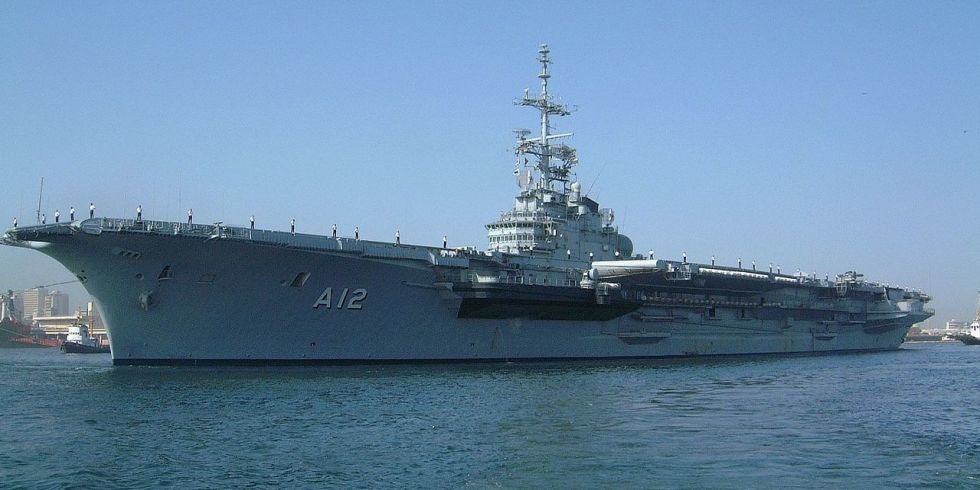
CIMSEC: THE DEMOBILIZATION OF LATIN AMERICA’S ONLY CARRIER: BRAZIL’S NAE SAO PAULO


"The Demobilization of Latin America's Only Carrier: Brazil's NAE Sao Paulo"
W. Alejandro Sanchez
The Southern Tide
Center for International Maritime Security
April 3, 2017
http://cimsec.org/demobilization-latin-americas-carrier-brazils-nae-sao-paulo/31365
The Southern Tide
Written by Wilder Alejandro Sanchez, The Southern Tide addresses maritime security issues throughout Latin America and the Caribbean. It discusses the challenges regional navies face including limited defense budgets, inter-state tensions, and transnational crimes. It also examines how these challenges influence current and future defense strategies, platform acquisitions, and relations with global powers.
“The security environment in Latin America and the Caribbean is characterized by complex, diverse, and non-traditional challenges to U.S. interests.” Admiral Kurt W. Tidd, Commander, U.S. Southern Command, before the 114th Congress Senate Armed Services Committee, 10 March 2016.
By W. Alejandro Sanchez
On 14 February, the Brazilian Navy announced that it will suspend the modernization of carrier NAe Sao Paulo (A12) and commence its demobilization and subsequent decommissioning. Oddly, the news is simultaneously surprising and unsurprising at the same time. The Brazilian Navy regarded the extension of the carrier’s operational life as one of its priorities, however, ongoing technical difficulties and rising costs have made it more feasible to get rid of it than to extend its service life. As Brazil is the only Latin American country that possesses an aircraft carrier, its decommissioning must be properly discussed in terms of regional geopolitics.
A Brief History
Brazil has possessed two carriers: the first one was NAe Minas Gerais (A11), a Colossus-class vessel that served in the Brazilian Navy from 1960 to 2001. The vessel, formerly known as HMSVengeance (R71), was constructed by the United Kingdom during World War II and sold to the South American nation in 1956.
Minas Gerais was replaced by Sao Paulo, a Clemencau-type French carrier formerly known as Foch (F99). The vessel was constructed in the late 1950s and Brazil purchased it in 2000 in a deal reportedly worth USD 12 million; it arrived in the country in 2001.Sao Paulo reportedly displaces 32,800 thousand tons, is 265 meters in length, and its air wing is constituted of A-4 Skyhawk aircraft. Sao Paulo was an important component in the training of Brazil’s naval pilots, and it also participated in exercises with countries like Argentina. However, it also spent time docked undergoing repairs and upgrades.
The French shipyard Direction dês Constructions Navales et Services (DCNS) announced in December 2013 that it had “performed a ship check on the forward catapult” of Sao Paulo. On November 2015, IHS Jane’s reported that cracks had been found in the hull of the carrier, but the Brazilian Navy denied the report. Unfortunately, there were also deadly accidents aboard the platform: a May 2004 fire in the engine room killed three crew members. A second fire on February 2012 killed sailor Carlos Alexandre dos Santos Oliveira.
Demobilization Plans
The Navy’s decision to demobilize the platform is a slight surprise to the author of this commentary, who just this past Septemberquoted the Brazilian Navy’s commander saying otherwise. At the time, the author asked Admiral Eduardo Leal Ferreira, commander of the Brazilian Navy, a question about Sao Paulo’s future at an on-the-record event at the National Bureau of Asian Research on 26 September, 2016. The Admiral explained that “we are working with DCNS to find a technical solution to have its propulsion system renewed.” Moreover, the Admiral listed the carrier as the third of the navy’s priorities, after the submarine program (PROSUB) and the construction of the Tamandare-class corvettes. What a difference a few months can make.
The Brazilian Navy’s communiqué explains the reasoning behind the decision to demobilize the carrier: upgrading it signifies “a high financial investment, there are technical issues and [the process will] require an extended period [of time].” The modernization process apparently could have taken a decade, by which time the AF-1 group would have to be retired, making it necessary to buy a new air wing suitable for the old ship. In an e-mail interview with this author, Professor Mauricio Santoro, a political scientist and assistant professor at the department of international relations of the State University of Rio de Janeiro, adds that “the explanation for this decision is the deep financial crisis that the Brazilian government is facing, with austerity measures being implemented as well as the expense cuts in many public policies.” In other words, given the scarce use of Sao Paulo and the expensive requirements needed to extend its operational life into the late 2030s, it is not surprising that the platform is being scrapped.  According to the Navy, the process will require three years.
With that said, the Brazilian Navy is already looking past Sao Pauloand maintains the aim of having a carrier in its fleet. Theaforementioned 14 February communiqué explains that a new carrier remains the Navy’s third priority after PROSUB and the corvettes as “obtaining a new carrier will be substantially cheaper than modernizing Sao Paulo.”
This statement raises questions like: will Brasilia once again acquired a used platform, or will it embark on the more ambitious, but probably more costly, goal of manufacturing a new one? In recent years there have been occasional reports that DCNS has offered its PA2/CVF carrier project to Brazil to eventually replaceSao Paulo. We will have to wait and see how the Navy’s medium- and long-term plans are affected by recent developments. It is likely that Sao Paulo will be replaced eventually since, as Professor Santoro explains, “the importance of a carrier to Brazil has been highlighted in every major policy document of the Armed Forces, such as the National Defence Strategy.”
A Carrier-less Brazil and Latin America?
In previous CIMSEC analyses (e.g. How Peaceful is the South Atlantic?) the author discussed the generally calm South Atlantic geopolitics, which can be expanded to calm Latin American and Caribbean in general. There certainly are still some maritime border disputes and occasional incidents, but the region has been free of inter-state warfare for decades (the last regional war with a maritime theater of operations was the 1982 Falklands/Malvinas War). Moreover, Brazil enjoys cordial relations with its neighbors, hence the Brazilian Navy probably does not require a carrier to protect its exclusive economic zone (EEZ).
Nevertheless, the Brazilian Navy and several scholars and experts do believe in the necessity of having an aircraft carrier. “Brazil has thousands of miles of coastline, major offshore oil reserves, and more of 90 percent of its foreign trade comes from the sea, hence a carrier is an important tool for naval and foreign policy, as it serves both as a deterrent and helps naval forces in the open sea, among other activities,” Professor Santoro notes.  Additionally, a carrier would help Brazil’s power projection, demonstrating to the world that it has a blue water navy.
The Sao Paulo’s usefulness would likely be different if it had proved to be a global asset. For example, Sao Paulo could have been deployed to peacekeeping missions that Brazil participates in, such as the UN mission in Lebanon (UNIFIL) or the UN mission in Haiti (MINUSTAH). The platform would have been a welcomed addition to the multinational humanitarian operations in Haiti after the 2010 earthquake and the aftermath of Hurricane Matthew in 2016.

As previously mentioned, Brazil is the only Latin American that has a carrier nowadays. The only other regional country to possess one was neighboring Argentina: the ARA Independencia (V1) and then the ARA 25 de Mayo (V2), a Colossus-class carrier decommissioned in 1997. In fact, other Latin American navies are turning to smaller platforms, particularly oceanic patrol vessels (OPVs) given their maritime security challenges.
Should Brazil eventually acquire a new carrier, this will hardly affect regional geopolitics. Brasilia enjoys cordial relations with its immediate neighbors and the Western Hemisphere in general. This is best exemplified by the fact that the PROSUB project, which includes constructing a nuclear-powered submarine, has not triggered a regional arms race to deter an “imperialist” Brazil.
Final Thoughts
By the end of the decade, carrier Sao Paulo’s time in the Brazilian Navy will come to an end, leaving behind a lackluster record. The vessel spent too much time in port undergoing repairs, and when it was out at sea, it was for standard training missions, never participating in a defining operation that validated its acquisition. Moreover, Brazil likely does not need a carrier to protect its EEZ from neighboring nations, Latin American geopolitics being what they are, as compared to a large fleet of OPVs (the Tamandare corvettes will probably fulfill this role). Nevertheless, Brazilian experts, as well as the Navy, do regard the carrier as an important component of their maritime defense system as well as a critical platform to project Brazilian naval power.
Should Brazil eventually obtain a new carrier, this hypothetical platform should participate in multinational naval operations, such as Operation Atalanta in the Horn of Africa to combat piracy. The carrier could be utilized as a launching pad and an at-sea command center for humanitarian missions akin to the Operation Unified Assistance, in which the Carrier Strike Group Nine, led by U.S. carrier Abraham Lincoln, helped Asia Pacific nations after the2004 Indian Ocean Tsunami. In other words, if the Brazilian Navy continues to regard a new carrier as a priority, while arguably unnecessary for traditional defense purposes, such a platform can be utilized for various helpful initiatives around the globe.
 Alejandro Sanchez Nieto is a researcher who focuses on geopolitical, military and cyber security issues in the Western Hemisphere. Follow him on Twitter: @W_Alex_Sanchez
The views presented in this essay are the sole responsibility of the author and do not necessarily reflect those of any institutions with which the author is associated.