Water security is an urgent issue that demands immediate attention
from Central Asian governments, businesses, civil society, and their
international partners. Climate change, population growth,
infrastructure problems, a lack of government foresight, and the unequal
distribution of precious water resources between the upstream countries
(Kyrgyzstan and Tajikistan) and the downstream nations (Kazakhstan,
Turkmenistan, and Uzbekistan) have created a “perfect storm” of pressing
water insecurity. The 2021 Central Asia drought, the loss of the Aral
Sea, the evaporation of glaciers in the Tian Shan mountains, and the
alarming shrinking of the Caspian Sea are reminders of how natural and
man-made disasters have destructive consequences on Central Asia’s
strained water resources.
This report addresses the status of water security across the five
Central Asian countries, outlining recent developments, ongoing
challenges, and opportunities for improvement. Geopolitically,
interstate tensions and the role of international politics—e.g.,
influence from the West, Russia, and China and tensions with
Afghanistan—all will continue to affect the region’s water security.
This report will address international cooperation in projects for water
sharing, including the current and future role of agencies like the
International Fund for Saving the Aral Sea and partners like the United
States Agency for International Development, the World Bank, and
extraregional governments. The report concludes with a holistic set of
policy recommendations to help improve water security in Central Asia.
Event: "Report launch: Water insecurity in Central Asia"
The Caspian Sea, vital to Eurasia’s economy and environment, is shrinking
at an alarming rate. The declining water level in the sea is one
visible consequence of a larger regional water crisis faced by the C5
nations of Central Asia—Kazakhstan, Kyrgyzstan, Tajikistan,
Turkmenistan, and Uzbekistan. This water crisis threatens the more than 82 million people who call the largely arid region home.
A forthcoming Atlantic Council report written by the authors, “Water
insecurity in Central Asia: The need for collective action,” explores
the global resources that can be mobilized and to what ends they can be
quickly directed. This report will provide a practical roadmap that
regional and international actors can employ to solve problems in the
near and medium terms without massively increasing investments.
Originally published: https://intpolicydigest.org/does-the-planet-have-a-chance-after-cop29/
The COP29 climate conference
in Baku concluded on November 22, leaving the world to ponder a
critical question: Does the planet stand a chance in the face of
persistent geopolitical strife and escalating warfare? Despite the
turbulent backdrop, some notable progress was made, though the scale of
global cooperation and goodwill required to secure lasting change
remains daunting.
The 29th United Nations Climate Change Conference (COP29)
brought heads of state, diplomats, climate experts, business leaders,
nongovernmental organizations, and activists to Baku, Azerbaijan, to
assess global climate efforts and discuss opportunities for cooperation.
Amid a series of new pledges and commitments, parties agreed on a
global carbon market framework, enabling countries to trade emissions
credits under the Paris Agreement. Additionally, after some heated
exchanges and a run into overtime, developed countries agreed on a 300
billion USD annual climate finance target. The so-called New Collective
Quantified Goal (NCQG) will support climate actions in developing
countries.
CSIS experts react to some of the conference’s most
notable highlights and preview an era of uncertainty for international
climate efforts.
Wilder Alejandro Sánchez, Senior Associate (Non-resident), Americas Program
An important meeting under the COP29 banner was the Leaders’ Summit of the Small Island Developing States (SIDS)
on Climate Change. Small island nations, like the Caribbean states,
Mauritius, and the Maldives in the Indian Ocean, or the Solomon Islands
and Micronesia in the Pacific, face an existential risk due to climate
change and global warming and its effect on rising sea waters.
SIDS
delegations must have a voice at the table of negotiations regarding
climate change so that decisions will be specifically aimed at ensuring
that their nations survive. The Baku Declaration on Amplifying SIDS’
Voice at COP29 for a Resilient and Sustainable Future was adopted during
the summit.
Part of the Canadian pledge
during the Global Methane Pledge ministerial meeting at COP
specifically addressed SIDS, as Ottawa committed 7.5 million USD over
four years to reduce methane emissions from the waste in Belize,
Grenada, Guyana, Saint Lucia, Fiji, and Samoa. Similarly, the United
Kingdom pledged 6.7 million
USD to the Pacific Catastrophe Risk Insurance to ensure “more Pacific
countries have the insurance they need in place” before catastrophic
weather events.
Baku was eager to provide the SIDS states with a
voice at COP. During the preparations leading up to the conference,
President Ilham Aliyev met
with the governor-general of Tuvalu, the prime minister of the Kingdom
of Tonga, and the minister of foreign affairs of the Commonwealth of The
Bahamas. The Azerbaijani government also reportedly financially
supported the participation of SIDS delegates at COP and preceding
meetings.
The SIDS are the first to experience the devastating
consequences of climate change. For them, climate change-exacerbated
weather events, particularly rising sea waters and hurricanes, are
national security and existential threats. COP29 and future iterations
of COP must focus more on protecting SIDS and helping their populations.
John Podesta, Senior Advisor to the President for International
Climate Policy, will lead the US delegation to Azerbaijan to attend the upcoming COP29 climate conference which commenced on 11 November.
Other senior officials
that will travel to Baku include Secretary of Agriculture Thomas
Vilsack, Secretary of Energy Jennifer Granholm, Assistant to the
President and White House National Climate Advisor Ali Zaidi, Chair of
the White House Council on Environmental Quality Brenda Mallory and
Acting Deputy Administrator of the Environmental Protection Agency Jane
Nishida.
Azerbaijan will host the COP29 climate conference in November. As
preparations are underway, Azerbaijani officials are meeting with
partners and carrying out “listening tours” to understand the issues
global leaders, agencies and communities want to address. Besides a
focus on climate change financing, water issues will likely be at the
top of the agenda – and Washington will be an important partner in the
planning stages.
An Azerbaijani delegation led by Minister of Ecology
and Natural Resources and President of COP29 Mukhtar Babayev traveled to Washington, DC, in April. The delegation’s meetings included a visit by John Kerry,
the former US Special Presidential Envoy for Climate, to the
Azerbaijani embassy in the US capital. The Azerbaijani delegation also
participated in the International Monetary Fund’s and World Bank’s Spring Meetings. At a March event organized by Axios,
John Podesta, senior adviser to the president for international climate
policy (who replaced Kerry), explained that “we need to build on the
momentum… particularly to deliver at the global level the finance that
will be necessary to help developing economies transition.”
Water is a precious commodity, and due to
climate change, population growth, and inter-state rivalries and
tensions, access to water will become even more vital in the foreseeable
future. Two recent memoranda signed by the governments of Kazakhstan
and the Netherlands aim to promote greater cooperation on this issue
between Astana and its European partner. To efficiently address
water-related environmental crises, cooperation is key.
The next global climate conference, COP 29,
will occur in November in Baku, Azerbaijan. The gathering is essential
to continue discussing and developing strategies to address climate
change worldwide. Moreover, the meeting will help to increase
Azerbaijan’s image as a global player in the production of green energy.
In early November, Ecuador’s President-elect Daniel Noboa arrived in
Washington with a critical mission: to lay the groundwork for his
impending administration. As the son of Ecuador’s wealthiest man,
Noboa’s visit had significant implications. His agenda included crucial
meetings at the World Bank and the International Monetary Fund, where he
conveyed a stark reality. Noboa emphasized that Ecuador’s path to
economic recovery hinged on international aid, underscoring the severity
of the nation’s financial challenges.
During the United Nations General Assembly in September, a historic
gathering took place: US President Joe Biden met with the presidents of
the five Central Asian states. The outcome of this presidential C5+1 was
the New York Declaration,
which will serve as a blueprint for future relations between Washington
and Central Asia. The following milestone will occur in early 2024,
when a Business 5+1
will reportedly happen in Almaty, Kazakhstan. The next step must be a
high-level US-Central Asia summit on environmental affairs, a Green 5+1.
Iran’s environmental problems have been well-documented: pollution,
unhealthy air quality across major urban areas, the drying up of lakes,
and deforestation. An important aspect to remember is that several of
these environmental problems affect the country’s Azerbaijani
population, which has been historically harassed and oppressed by
Tehran. Environmental challenges in Northern Iran add extra woes and
suffering to an ill-treated community.
In late December 2022, The Diplomat conducted an exclusive interview with Ambassador Kairat Sarybay, the secretary general of the Conference on Interaction and Confidence Building Measures in Asia (CICA), to understand his vision for the future of his organization.
Kazakhstan rolled out its climate change objectives during COP27, the UN climate conference,
which was held last month in Sharm El Sheikh, Egypt. Among other
objectives, Kazakhstan remains committed to its goal of achieving carbon
neutrality by 2060.
As climate change hits Central Asia, China needs to be a team player regarding water.
New English-language academic
publications highlight the necessity for more research to understand the
effects of climate change across Central Asia. One key extra-regional
actor to monitor is China. Development projects in Xinjiang put water
flows toward the country’s Central Asian neighbors at risk as droughts
and extreme temperatures, exacerbated by climate change, have made every
drop of water vital.
An early August meeting of Central Asian heads of state in Turkmenistan
addressed issues such as the COVID-19 pandemic and regional
consequences of renewed Taliban control of Afghanistan. Additionally,
there was one interesting proposal that is quite relevant to the
challenges that the region faces today: Kazakhstani President
Kassym-Jomart Tokayev proposed the creation of a vice ministerial-level
working group and a regional consortium with the goal of promoting
regional cooperation to protect precious water resources.
"Latin American Navies and Antarctica"
W. Alejandro Sanchez and Brittney J. Figueroa
The Southern Tide
Center for International Maritime Security
June 27, 2017
Originally published: http://cimsec.org/latin-american-navies-antarctica/33097
Written by Wilder Alejandro Sanchez, The Southern Tide addresses maritime security issues throughout Latin America and the Caribbean. It discusses the challenges regional navies face including limited defense budgets, inter-state tensions, and transnational crimes. It also examines how these challenges influence current and future defense strategies, platform acquisitions, and relations with global powers.
“The security environment in Latin America and the Caribbean is characterized by complex, diverse, and non-traditional challenges to U.S. interests.” Admiral Kurt W. Tidd, Commander, U.S. Southern Command, before the 114th Congress Senate Armed Services Committee, 10 March 2016.
By Alejandro Sanchez Nieto and Brittney J. Figueroa
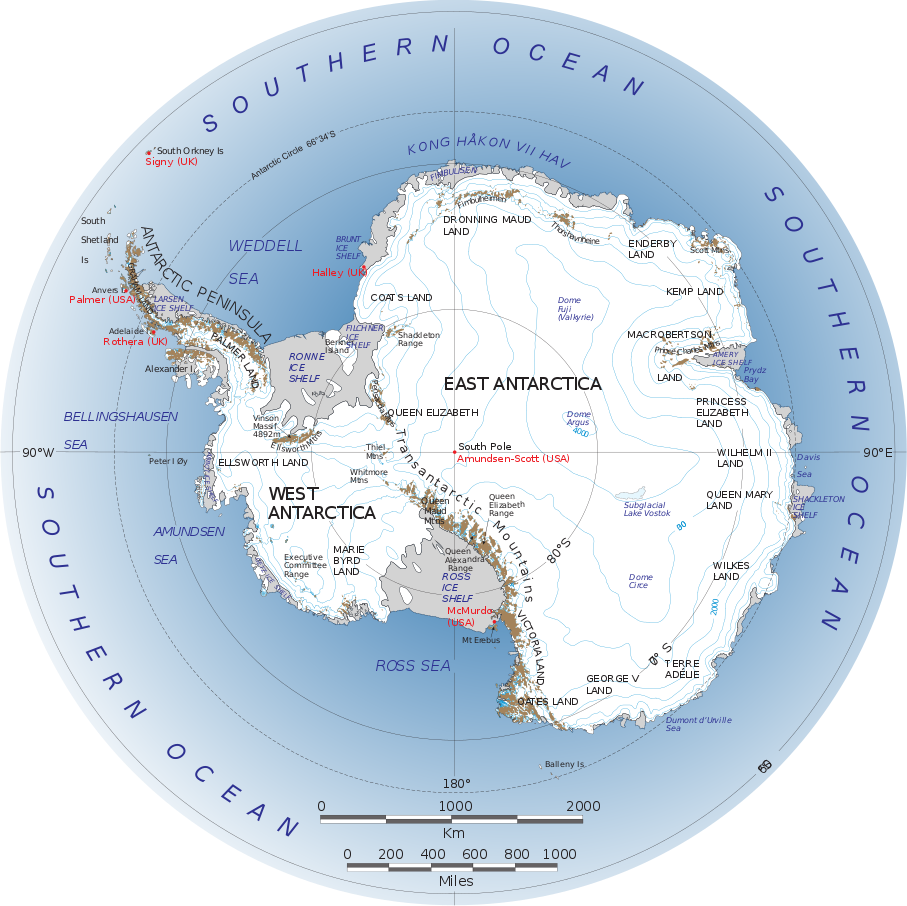
Latin American governments have a strong presence in Antarctica, with two countries, Argentina and Chile, formally claiming Antarctic territories while several others carry out annual scientific expeditions (apart from having research bases there). Regional navies are of paramount importance in these operations as they are the spearhead of their respective nations’ expeditions and security initiatives in Antarctic waters. In fact, in recent months, there have been new developments that signal a greater Latin American naval presence in the Antarctic in the near future: Peru has commissioned its new oceanographic vessel while Chile has commenced the construction of a new icebreaker.
Antarctic geopolitics will only increase in importance due to climate change and the upcoming year 2048 when the Antarctic Treaty will be open for review. Hence it is important that Latin America, broadly speaking, takes steps to maintain a continuous presence in Antarctica in order to have a voice when the frozen continent’s future is decided. Increasing budgets in order to modernize or replace aging vessels and expanding already successful scientific and security programs will play a critical role in regional navies’ future Antarctic operations.
Antarctica as a National Interest
The importance of Antarctica in Latin American security and defense strategies, as well as more comprehensive foreign policy concepts, cannot be overemphasized. One example of this is Antarctica’s frequent and prominent mentions in regional White Papers. For example, Argentina’s 2015White Bookrepeatedly references Antarctica, and explains how “the Ministry of Defense considers of the upmost importance the upgrade [of military platforms] necessary for the scientific development, international cooperation and preservation of the Antarctic environment” (P. 43). Similarly Peru’s 2005 White Bookmentions how the “Ministry of Defense, via the armed forces, has a fundamental role in the logistical support and the scientific research that encompasses the Peruvian presence in Antarctica” (P.42). Finally, Chile’s2010 White Book has an extensive chapter on the Chilean Antarctic, explaining how the armed forces aim to “have a permanent presence, even during winter, in the Antarctic continent and its islands” and to carry out oceanographic scientific research in the region (P. 51 & 52).
These three different White Books exemplify Latin American nations’ interests in having a strong Antarctic presence and how militaries, particularly navies, are regarded as the tip of the spear of Antarctic operations.
Vessels and Patrols
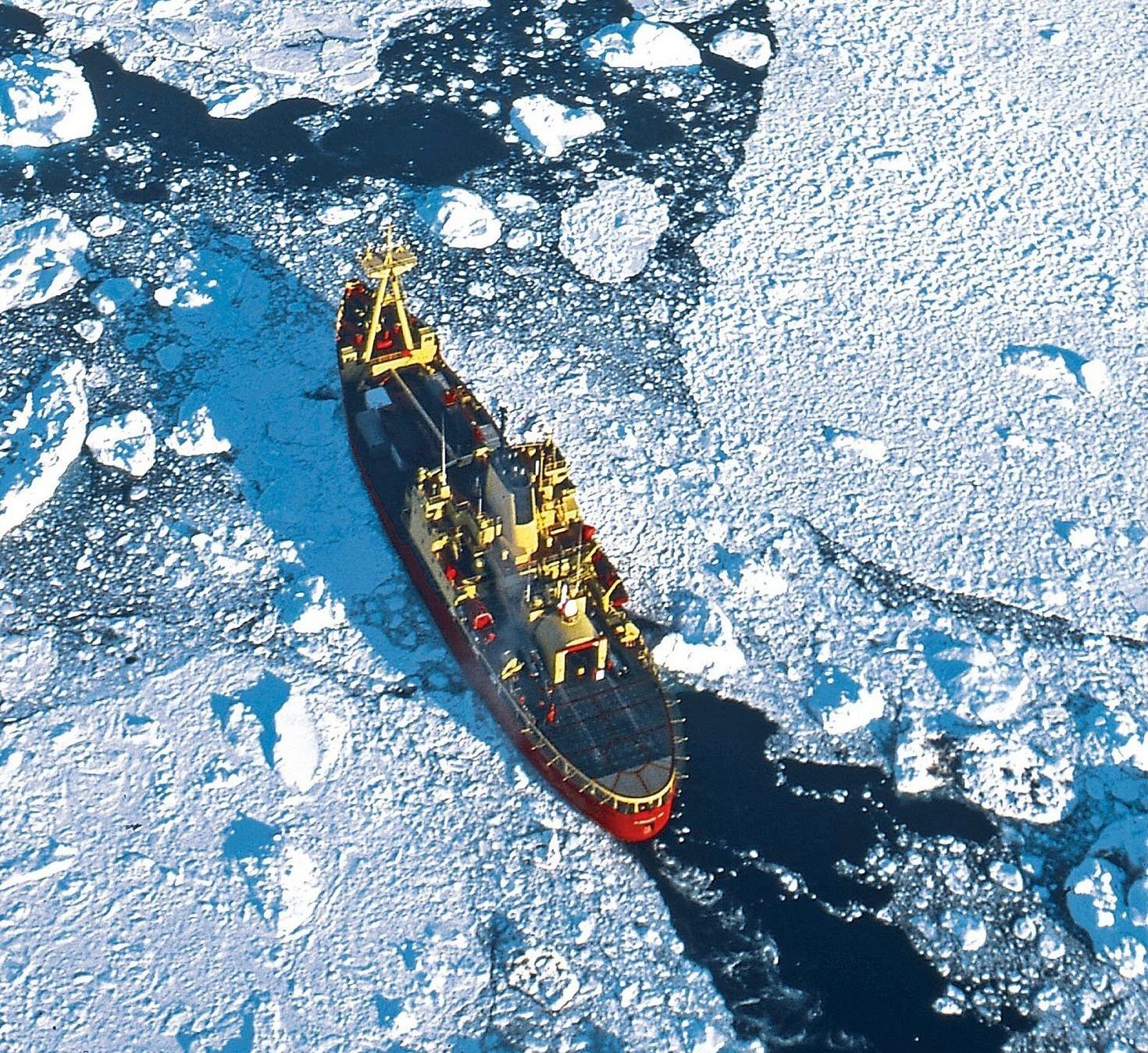
Argentina and Chile possess several platforms that operate in Antarctic waters for expeditions, patrols, and to support their Antarctic bases. Argentina has the icebreaker ARA Almirante Irízar(Q5) and in 2014, Buenos Aires acquired four Russian Neftegaz-class multipurpose vessels to support its Antarctic bases. Meanwhile, Chile has the icebreaker Almirante Oscar Viel (AP46), and several other vessels capable of operating in Antarctic waters.
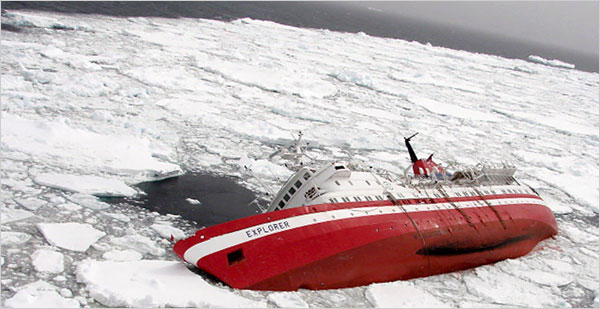
Additionally, the two countries set aside their differences—overlapping territorial claims in the Antarctic—to create the Joint Antarctic Naval Patrol (Patrulla Antártica Naval Combinada: PANC) in 1998. Via the PANC, naval platforms from the two countries come together during the Antarctic Summer months (November-March) to patrol Antarctic waters, assist vessels in need (e.g. the tourist vessel M/V Explorer in 2007), respond to oil spills, and visit and support various bases.
The PANC’s navies pride themselves on being prepared to safeguardthe lives of those who work in and travel to the region, and are prepared for search and rescue missions along with other various emergencies at sea. The creation and success of the PANC should not be underestimated as it exemplifies the possibilities of collaborative naval efforts in the Antarctic. It is worth stressing that neither PANC country is a military power, and theydo not have the samenaval capabilities as some of their wealthier Antarctic counterparts, thus putting them at a great disadvantage (especially when considering each nation’s capabilities alone). However, despite the older vessels in their fleets, their partnership over the past two decades has proven to be effective both to patrol Antarctic waters, and also as a confidence-building mechanism.
Non-claimant nations also have important Antarctic programs. Peru, for example, recently received BAP Carrasco (BOP171),constructed by the Spanish Freire shipyard in 2016. Jane’s 360 explainsthat “the steel-hulled ship has a length of 95.9 m, a 6,000-tonne displacement, has a streamlined and raked superstructure with a meteorological sensor platform at the forward end,” which will be of great help for Peru’s future operations in the Antarctic. In addition, Brazil has avaried presence in the region that consists of the Almirante Maximiano (H-41), an ice breaker, the Ary Rongel (H-44), an oceanographic support ship, and several C-130 Brazilian Air Force (FAB) aircraft that are utilized to transport essential equipment and personnel to the Brazilian Antarctic Program (PROANTAR) facilities.
Regarding Chile, it has commenced the construction of a brand-new icebreaker as part of its Antarctica I project. Thanks to information provided to the authors by ASMAR, (Astilleros y Maestranzas de la Armada) Chile’s state-owned shipyard that has partnered with the Chilean Navy since 1895, we know that the new platform, an over $210 million project, will be capable of longer Antarctic missions in part due to its design which allows it to operate at temperatures as low as -30 Celsius. Additionally, the icebreaker will be equipped with modern, state-of-the-art scientific equipment in its microbiological and chemical laboratories. Construction commenced on 9 May at ASMAR’s Talcahuano facilities. The new vessel will be operational by the 2022-2023 season, and will greatly support Chile’s Antarctic operations.
As for Colombia, the navy has refitted one of its oceanic patrol vessels, ARC 20 de Julio (PZE-46), so it can better operate in Antarctic conditions. The vessel has already carried out two expeditions.
Uruguay’s presence in Antarctica since 1985 is also worth noting. TheROU 26 Vanguardia is the small South American country’s primary platform used for scientific research and to supportBase Artigas and Station Ruperto Elichiribehety. The Vanguardia,named Otto Von Guericke at the time of its construction, was built in Poland for East Germany in 1976. The vessel was purchased by Montevideo in 1991 and was then given its current name. It has a length of 72.62 m, displaces 1872 tons, and a maximum speed of 14.5 knots. Other ships that participate in the country’s Antarctic activities are ROU 04Artigas and ROU 22 Oyarvide. Unlike the PANC, which focuses on patrolling and safety activities, Uruguay’s main operations in the continent take place via the Uruguayan Antarctic Institute, a national agency under the supervision of the Ministry of Defense that focuses on scientific, technological, and logistic activities.
Finally, it is worth stressing the general spirit of camaraderie in the Antarctic among South American navies. The PANC is a security-related initiative of two navies coming together in spite of historical differences and ongoing territorial claims in theAntarctic. Similarly, Uruguay has shared the results of some scientific studies with Chile and Argentina. In addition, Uruguay’s Mobile Marine Meteorological Station Project (Proyecto Estacion Meterologica Movil Marina) is an ongoing project that provides real-time information such as wind direction and speed, atmospheric and barometric pressure; and wave period, height, and type to Argentine and Chilean stations. This is a prime example of Latin American navies and scientific centers coming together to build upon each other’s successes in Antarctica.
Slow Improvements
While the aforementioned developments clearly demonstrate how Latin American navies are growing Antarctic capabilities, they should not be overestimated as there are also troubling shortcomings, particularly due to budget issues. For example, while Argentina’s icebreaker Irízar recently commenced sea trials and will likely return to operational duty by the 2017-2018 season, it has taken a decade-long reconstruction effort to repair the platform after it was ravaged by a fire in 2007. Similarly, budget issues have affected Argentina’s recent Antarctic operations, best exemplified by the recent summer 2016- 2017 season, in which the government had trouble figuring outhow to resupply its Antarctic bases.
As for other nations, platforms that are too old to continue operating safely are eventually replaced by other vessels, which is not the same as expanding a fleet in terms of numbers. For example, Peru’sCarrasco will replace BIC Humboldt, which was constructed in the late 1970s and has gone through extensive overhauls to extend its operational life. Similarly, the new Chilean icebreaker will replaceViel, which was constructed in the late 1960s. Other naval platforms utilized for Antarctic operations, including the PANC, will soon become outdated. For example, Chile deployed ATF Lautaro (67) to the 2016-2017 PANC mission, a vessel constructed in 1973, while Argentina deployed ARA Islas Malvinas (A24), constructed in the 1980s. While replacement platforms are always welcome, expanding fleets by acquiring newly constructed ships would be more practical as their operational lives would last much longer than repurposed, older vessels.
The aforementioned Argentine Almirante Irízar illustrates the benefits of a stronger commitment by regional states toward their Antarctic programs, including their naval platforms. While its post-fire reconstruction was extensive and lengthy, the Argentine government’s investment has made the vessel one of the 10 biggest icebreakers in the world, as well as one of the most capable. In a recent navigational test, the ship surpassed expectations, and showed no signs of the various previous problems it had when it first made its way to the Antarctic from Finland in 1978. Not only does the ship have improved navigation capabilities, but it is also nowmultipurpose, housing eight top-of-the-line scientific laboratories, and an overall scientific investigation sector six times larger than that of its original construction. Despite the lengthy timeline of the repair, the Argentine government’s decision to allocate scarce resources in revamping the Irizar is a Cinderella Story of sorts, as it exemplifies the benefits that could come from a bigger budget committed to Antarctic maritime operations. Obtaining a new vessel would have probably taken less time than repairing the Irizar, nevertheless, if reports are to be believed, this modernized vessel will be of great help for Argentina’s Antarctic operations for the foreseeable future.
Final Thoughts
Navies are usually viewed through the prism of defense and security; however they also play a critical role in Antarctic programs. Certainly other military services, government departments, and scientific institutions are other necessary pillars of any vibrant and robust Antarctic program, but navies are a sort of spearhead as they employ the primary platforms that deploy to this frozen continent. Hence it comes as no surprise that navies are prominently mentioned in the White Papers of several regional countries regarding Antarctic operations as they are engaged in various operations ranging from scientific activities to providing emergency assistance.
Countries like Peru and Chile are working on obtaining new platforms for Antarctic use while Colombia has refitted one of its navy’s vessels for these operations. Meanwhile, the Argentine and Chilean navies have come together to create a joint Antarctic naval patrol that has helped vessels and Antarctic bases in need. Finally, Uruguay’s scientific program and projects are also notable as they provide data that allows the multifaceted work of the Latin American countries in the region to continue operations safely and effectively.
The importance of Arctic and Antarctic geopolitics will increase due to climate change and the approaching year 2048, when the Antarctic Treaty is up for revision. The modernization of polar-capable vessels, such as Argentina’s Alimirante Irizar, if not the acquisition of newer ones like Peru’s Carrasco, will help Latin American navies increase the reliability and projection of already successful missions in Antarctica thereby fortifying Latin America’s presence and increasing its voice in regards to the future of the frozen continent.
Alejandro Sanchez Nieto is a researcher who focuses on geopolitical, military, and cyber security issues in the Western Hemisphere. Follow him on Twitter: @W_Alex_Sanchez.
Brittney J. Figueroa is a recent graduate from the University of California, Santa Barbara with a Bachelors degree in Global Studies, and a Minor in Latin American Iberian Studies.
The views presented in this essay are the sole responsibility of the authors and do not necessarily reflect those of any institutions with which the authors are associated.
Peru will host the VI World Congress on Quinoa and the IIIInternational Symposium of Andean Grains on March 21-24, 2017. The event will take place at the Universidad Nacional del Altiplano de Puno in the Puno region of southern Peru. The Congress’s objectives include promoting the nutritional, cultural, and gastronomic aspects of this grain to improve its stance in the global market, and also as a way to “reduce poverty and hunger, particularly in the communities of the high Andes.”
Peru is a global producer of this healthy grain, and is in constant competition with neighboring Bolivia for the title of Biggest Producer. The income gained from quinoa exports, as well as the way it helps promote the “made in Peru” brand across the world, makes the production of this grain a matter of national importance.
Export Numbers – Markets
Data from last year’s quinoa production and exports highlights the importance of this Peruvian crop, with the U.S. being its main destination. According to the Peruvian export association, Adex, between January and August of 2016, the country exported 33,778 tons of quinoa, 36% more than during the same period in 2015. Of this amount, 43% was bought by the U.S., with other destinations being Canada, Hong Kong, Israel, Italy, Japan, the Netherlands, and the United Kingdom. While the developed world continues to favor the grain as part of an ongoing health food craze, Peruvian quinoa is not just for consumption, as it can be utilized to produce cosmetics that Peru aims to export to the Asia Pacific region. Over half a million Peruvians make a living from growing quinoa,according to the Peruvian government.
Meanwhile, Bolivia continues to be a major quinoa producer with exports totaling 25 thousand tons in 2015, and 26 thousand tons in 2016. Moreover, other countries, like France, the United Kingdom, and the United States have their own variations of homegrown quinoa.
While production (in terms of volume) in the latter countries cannot be compared to the Andean states, it still poses a problem, as these are the target export countries for Lima and La Paz. Hence, consumption of locally-grown quinoa decreases the profits the South American countries obtain.
Another problem is theover-saturation of the market, which could reduce profits across the board. This is already happening inBolivia, as a January 27, 2017 report in the dailyLos Tiemposexplained. According to the article, 10% of two thousand Bolivian quinoa growers (members of the national quinoa associationANAPQUI) havestopped growing this crop “due to a fall in the international price and due to a drought.” Although not yet an issue in Peru, the situation in neighboring Bolivia should be of concern for Peruvian quinoa growers as well.
Culinary Diplomacy
A final word should be said about the role of quinoa as a component of a country’s culinary and cultural diplomacy. In 2013, Peru achieved a major victory when the Food and Agriculture Organization of the United Nations declared that year as the International Year of the Quinoa. Peruvian delegations regularly participate in international food fairs, in which different types of quinoa are shown to business owners and the general public. The goal is to not only increase Peruvian exports, (and by default, help the Peruvian state obtain more revenue) but also to establish a globally-known “made in Peru” brand that is associated, in this case, with culinary flavor and richness. Given the saturation of the global quinoa market, it is critical that Peruvian authorities ensure that international consumers regard Peruvian-grown quinoa as the most preferable.
Conclusions
In a 2013 commentary for Blouin News, one author argued, “Peru should embark in an aggressive culinary diplomacy by taking advantage of its rich agricultural resources and well-regarded traditional dishes. Capitalizing on the global craze over quinoa was a well thought-out initiative by the Peruvian government.” Lima has generally followed this suggestion, and the upcoming World Congress on Quinoa and the International Symposium of Andean Grains in Puno should cement a global association between quinoa and Peru. (While not the objective of this analysis, the authors would like to applaud the fact that the congress will take place in Puno, not in the capital, which is a step toward diversifying where international events are held in Peru.)
Quinoa’s importance is multifaceted, not only to Peru, but also to the rest of the world, hence it is commendable that the organizers of the upcoming World Congress include the ministries of Agriculture, Culture, Environment, and Foreign Affairs. The anticipated success of the event will help reaffirm Peru’s position as a global producer of quinoa.
W. Alejandro Sanchez Nieto is an international security analyst. Follow him on Twitter:@W_Alex_Sanchez
Brittney J. Figueroa is a recent graduate from the University of California, Santa Barbara with a Bachelors degree in Global Studies, and a Minor in Latin American Iberian Studies.
The views presented in this essay are the sole responsibility of the authors and do not necessarily reflect those of any institutions with which the authors are associated.