It is impossible to overstate the power of propaganda throughout the
Second World War and the Cold War. Along with creating national
narratives and heroes, propaganda machines churned out demons by the
thousands. One such individual whose legacy has been tarnished is
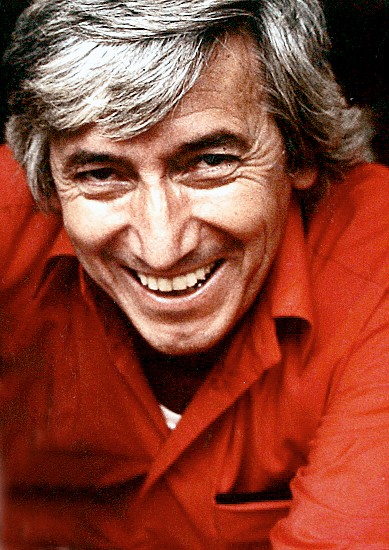
Kazakhstani activist and scholar Mustafa Shokay.
Captured by the Germans when they entered France, Shokay’s
time in Nazi captivity has been a subject of both fact-based speculation
and wild conspiracy theories. During the Soviet era, he was branded an
accomplice of Nazi Germany; however, the dissolution of the Soviet Union
allowed new studies of his life, showing a complex and multifaceted
individual devoted to an independent homeland for his fellow Turkic
people.
‘Hail, Caesar!’ is a 2016 comedy film by Joel and Ethan Coen which has enjoyed financial and critical success since its February 5 release. For IR scholars, the film showcases a tense period of U.S. history: the 1950s. This decade was marked by growing tensions and incidents as part of the Cold War, the fear of a Soviet takeover of the U.S. government and the rise of McCarthyism. In view of the tense relations between the U.S. and the Russian Federation today, which Russian Prime Minister Dmitry Medvedev recently described as a “new Cold War,” ‘Hail, Caesar!’ becomes, unfortunately, very topical.
A brief synopsis of ‘Hail, Caesar!’ is necessary: The movie takes place in 1951, when a famous actor, Baird Whitlock (George Clooney), is kidnapped from a studio set in a fictitious Hollywood film company. Whitlock is taken to a beach house in Malibu, California, in which he meets his kidnappers, a group of screenwriters that call themselves The Future. They turn out to be a Communist faction who explain Whitlock their ideology in order to convince him to join them. At one point in the film, another actor, Burt Gurney (Channing Tatum), is revealed to also be a Communist. He and the other members of The Future row a boat a few miles off the coast of Malibu where they encounter a Soviet submarine. Gurney (along with his dog) boards it as he defects to the USSR. His Future comrades suffer a different fate as they are arrested by the police, who also free Whitlock.
Red Hollywood
‘Hail, Caesar!’ provides a glimpse of what Hollywood was like in the 1950s. At the time, Washington feared that the Soviet Union was infiltrating all echelons of American society (i.e. the government, Hollywood, labor unions etc), with the goal of taking over the country. This paranoia prompted the rise of McCarthyism, named after U.S. Senator Joseph McCarthy who was known for his extreme anti-Communist endeavors. Communist witch hunts took place during the 1950s as thousands of Americans, thought to be Communists, were investigated and sometimes even imprisoned. The House of Un-American Activities Committee (HUAC), which operated from 1938 to 1975, took a prominent role throughout this period.
The Coen Brothers address the Red Menace head on as Hollywood was a major target of Washington’s surveillance operations. There was even a “Hollywood blacklist” – a name applied to the Hollywood workers (like screenwriters and producers) that the HUAC investigated because they were believed to be Communist spies or sympathizers who were implanting Communist ideologies in Hollywood productions. A Slate.com analysis of ‘Hail, Caesar!’ does a good job comparing some of the members of the fictitious Future to real life individuals: “the group leader, played by Max Baker, is named John Howard Hermann, after the Hollywood 10’s John Howard Lawson, the leader of the Hollywood section of the Communist party during the early 1950s. Eagle-eyed viewers will also notice a dog named Engels, whose namesake is more obvious [as in Friedrich Engels].”
Another important issue worth discussing is the appearance of a Soviet submarine off the coast of California, well within U.S. territorial waters. I do not know of any submarines operating so close to the U.S. mainland during that decade, though there were incidents in which Soviet vessels entered the Western Hemisphere and came close to the U.S. Case in point: the Soviet vessels off the coast of Cuba during the missile crisis. Another memorable incident was the loss of K-219 in 1986. This was a Soviet submarine that suffered an explosion and sank in the North Atlantic close to Bermuda.
Even though ‘Hail, Caesar!’ is set in the early 1950s, not much seems to have changed in Washington-Moscow relations, given the renewed tensions between the two global powers. Currently there are no suspicions that Hollywood, broadly speaking, has been infiltrated by Russian sympathizers. Nevertheless, I will acknowledge that conservative commentators routinely label the entertainment industry as “the liberal left.” Case in point, in his book Primetime Propaganda Ben Shapiro has accused Hollywood of trying to “shape America in their own leftist image.” Moreover, there have been recent cases of alleged espionage. One memorable case was that of Anna Chapman, a Russian national who lived in New York and who was arrested, along with nine other individuals, in 2010 as they were suspected of working for the SVR, a Russian intelligence agency. She was sent back to Moscow that same year as part of a spy swap.
The Soviet/Russian Navy
The possibility of a Russian submarine entering U.S. territorial waters nowadays, portrayed in “Hail, Caesar!” deserves a greater discussion. In recent years, the Russian Federation has sought to increase its military might, which includes opening new bases (like in the Russian Arctic) and manufacturing new vessels for its Navy. In fact, the Russian Navy’s Pacific Fleet recently received a new submarine, theVladimir Monomakh. Moreover, there have already been instances of Moscow displaying its renewed strength in the Western Hemisphere. In 2008, Russian warships visited the Caribbean, docking in Caracas, Venezuela, and carrying out exercises with the local Navy. More recently, in January 2015, theViktor Leonov, a Russian intelligence vessel, docked in Havana, Cuba.
With that said, it is important to stress that there have been no, at least from what I can gather via open sources, incidents of Russian warships or submarines entering U.S. territorial waters, though it is true that Cuba is only 90 miles away from the Straits of Florida. Doing so would signify an escalation of tensions between Moscow and Washington, akin to if the U.S. opened a military base in Ukraine next to Crimea. Moreover, should a Russian submarine manage to reach Malibu, California, this would mean that it successfully evaded U.S. security systems (i.e. warships and Coast Guard vessels monitoring coastal waters, satellites, radars and intelligence operations). The implications of such an incident would prompt a major revision of the U.S. defense establishment.
Even though it is beyond the scope of this movie review, it is important to mention that in February, the Russian government filed a request to the U.S. to fly a surveillance plane over U.S. airspace as part of the 1992 Open Skies Treaty. The difference between this request and ‘Hail, Caesar!’ is that it is doubtful that Moscow requested Washington permission to pick up a defector via a submarine in California. Nevertheless, the point stands that nowadays there are (very limited) occasions in which the Russian military is allowed to enter the U.S.
Final Thoughts
“Hail, Caesar!” has enjoyed success at the box office. The film has some entertaining comedic moments, however, its major contribution to the IR field is to remind us that the current tensions between the two global powers are nothing new. Accusations of Russian espionage have occurred for decades, though the 1950s paranoia of Hollywood implanting Communist ideas in films has morphed into the more traditional “learning state secrets” type of intelligence operations. Moreover, when Channing Tatum’s character boarded a Soviet submarine off the Californian coast, while fun to watch, this can be utilized to discuss Soviet/Russian naval technology in the 1950s and today.
As Prime Minister Medvedev declared, we are witnessing the start of a new Cold War, and the events of six decades ago are being recreated, albeit slightly different, today.
— The author would like to thank Erica Illingworth, who is pursuing an M.A. in International Relations at the University of San Diego, for her helpful suggestions throughout the preparation of this review.
The Man From U.N.C.L.E., released in August, has so far received mostly positive reviews and has performed well in the box office. While this action-comedy-spy film will not break any attendance records, it could be the start of a new espionage franchise. The Man from U.N.C.L.E. is an entertaining production, but there are aspects regarding intelligence operations in the film that, from the perspective of international relations experts, should be discussed.
The Plot
A basic summary of the plot is necessary to properly assess the movie’s qualities and shortcomings from an international relations standpoint. [1](Warning, this will contain plot spoilers).
The movie centers around two intelligence operatives, an American CIA agent, Napoleon Solo (played by Henry Cavill) and a Soviet KGB agent Illya Kuryakin (played by Armie Hammer). The year is 1963, and the two agents are ordered to work together to locate a missing scientist suspected of working for an Italian corporation whose owners have ties with the Nazis. To make matters worse, the Italians are trying to develop a nuclear bomb. Solo and Kuryakin’s are charged with stopping the would-be terrorists with the help of Gabby Teller (played by Alicia Vikander), who is a relative of the aforementioned scientist.
Ultimately, the trio saves the day and foils the villain’s plan. Thanks to their successful mission, Solo, Kuryakin, and Gebber are told in the closing scene that they will now work for a new multinational intelligence agency led by a British agent: the United Network Command for Law Enforcement (U.N.C.L.E.).
An Underutilized Female Lead
Perhaps the biggest problem with The Man From U.N.C.L.E. is the underutilization of the female lead, Gabby Teller. Apart from an exciting car-chase at the beginning of the movie and a couple of amusing jests, Teller does not play an important role in stopping the Nazi sympathizers. This marginalization is even more troubling when it is revealed that she is actually an agent for the British intelligence agency MI5, unbeknownst to the CIA and KGB.
The writers arguably did not give Teller a big role because the focus was on Solo and Kuryakin; after all, they are the main characters of the film.
With that said, real-life female intelligence agents and informants have played an important part in intelligence agencies and operations throughout 20th century global conflicts. We cannot provide a comprehensive list of all female operatives, but one prominent name is Ethel Rosenberg, who, along with her husband, was executed in 1953 by the United States for providing Moscow with information on the atomic bomb. A more recent case is Anna Chapman (born Anna Kushchyenko), a Russian who migrated to the United States for espionage but was arrested, along with members of a spy ring, by U.S. authorities in 2010. She was returned to Russia as part of a prisoner swap. (For a complete list of female spies during World War I and World War II, click here). Teller does some undercover work, however it does not appear critical to the film’s plot; at least not as critical as that done by real-life female spies.
Aside from giving her greater importance in the espionage plot, the film’s producers could have allowed Teller to be more physically active (to add to the car chase scene and one quasi-fight with Kuryakin), considering that Cold War era spies would have been inspired by the heroines of World War II; known for their courage in the field. One major example is the New Zealander Nancy Grace Augusta Wake, AKA “The White Mouse,” who worked in occupied France for the Allies and at one point killed an SS Sentry with her bare hands.
Should The Man From U.N.C.L.E. get a sequel, Teller will hopefully play a larger and more pivotal role in future U.N.C.L.E. operations. This adjustment would be a respectful homage to the female operatives who risked their lives for their countries and governments, regardless of which side of the iron curtain they were on.
Joint Intelligence Operations
Another important feature in The Man From U.N.C.L.E. are intelligence services actively working with each other. The events in the movie take place in 1963, at the height of the Cold War after the Cuban Missile Crisis of 1962. It would have been bizarre for the CIA and KGB to choose to collaborate, but the underlying idea is that the evil Nazi organization’s ambition to obtain a nuclear bomb is a threat that temporarily supersedes tensions between Washington and Moscow. In other words, the saying “the enemy of my enemy is my friend” is the reason Solo and Kuryakin find themselves working together.
The idea of allies fighting against a common threat is, of course, nothing new. However, the idea of Washington and Moscow jointly countering a major threat in 1963 demands further analysis. One can certainly point to World War II, when the Allies and Russia united against the Nazi threat. Moreover, after the 9/11 attacks and the rise of Al Qaeda there was an (unfortunately brief) era of cooperation again between Washington and Moscow. For example, “on July 6, 2009, Moscow and Washington signed theMilitary Transit Agreement on regular transit of US military equipment and personnel to Afghanistan over Russian territory.” Finally, even though Cold War-era tensions have started to resurface, especially because of to Russia’s role in the conflict in Ukraine, Washington and Moscow have recently tried to promote intelligence sharing to jointly confront the Islamic State.
Around the world there have also been initiatives to combat common security threats between one-time foes. For example, there have been instances of collaboration between the Israeli Defense Forces and the Egyptian military to counter al-Qaeda-affiliated terrorist groups; between the Israeli and Lebanesenavies in the Mediterranean; between the Pakistani and Afghan intelligence services to combat terrorism, and between Peru and Chile against money laundering and terrorism. In other words, there are precedents that indicate that the Hollywood imagined CIA-KGB partnership could have occurred.
Numerous analysts have discussed the necessity to share intelligence information, particularly to combat non-traditional global threats with “an international approach,” because it will bring different perspectives and help create more common vocabularies and decrease misunderstandings.[2] Some scholars also stress, “if you do not share information, you can have only marginal success in fighting global terrorism. On the other hand, by sharing information, you can also get burned … there is an unwritten rule, which is called ‘trust.’”[3]
The Man from U.N.C.L.E. portrays the necessity for two enemy states to put aside their differences in order to fight a different kind of threat: a non-state actor that wishes to obtain a weapon of mass destruction. That does not mean that Solo or Kuryakin fully trust each other, though, which is illustrated in a memorable scene where they throw the transmitters/recording devices at each other that they had placed in each other’s hotel rooms. Similarly, MI5 does not inform the CIA and KGB until late in the operation that Teller, who everyone thought was a civilian, is actually an undercover agent working for the British. In that sense, the movie is accurate, as even close allies will likely want to retain some intelligence information, even from their most trusted partners.
The U.N.C.L.E. Utopia?
One final aspect worth discussing occurs at the end of The Man From U.N.C.L.E. After the world is saved, a MI5 agent announces the creation of a multinational agency, U.N.C.L.E. The MI5 agent will be its director, and it will have the CIA’s Solo, KGB’s Kuryakin, and M15’s Teller as its agents. Presumably, Solo and Kuryakin’s respective bosses have approved this initiative. U.N.C.L.E’s objective is not specified in the film, though it can be assumed that it will deal with global security threats. (In the 1960s TV show, U.N.C.L.E.’s main adversary was another fictitious organization, called T.H.R.U.S.H.).
The idea of a multinational agency that will carry out security operations throughout the world has existed since World War II at various levels. For example, we have the United Nations (UN), which carries out peacekeeping (or sometimes peace-enforcing) operations in conflict zones around the world. Moreover, organizations like the North Atlantic Treaty Organization (NATO) and the European Union (EU) have long discussed the idea of creating a standing army made up of their members. The closest the EU has come to achieving this goal is the creation of a Rapid Reaction Force. As for law enforcement, the International Criminal Police Commission, most commonly known as INTERPOL, was created in 1923 to promote police cooperation among its member states. There are also regional law enforcement initiatives, namely the European Police Office (EUROPOL) and the Latin American & Caribbean Community of Police Intelligence (CLACIP).
As for multinational intelligence operations, these are (unsurprisingly) more difficult to identify, but we know of the existence of a few; for example, there is the Intelligence Directorate of the European Union’s Military Staff (INTDIV) and the Join European Union Situation Center (SITCEN). Meanwhile, NATO has an intelligence division under its International Military Staff. It would not be inconceivable that other blocs of close allies may develop an intelligence branch. One possible example could be the Shanghai Cooperation Organization, which has Russia and China as its two leaders and has been promoting security among its members to combat terrorism in Central Asia. This agency even has a security branch called the Regional Anti-Terrorist Structure of SCO (RATS SCO). Nevertheless, there is too much distrust and too many competing interests between Moscow and Beijing for such an initiative to fully develop á la SITCEN or NATO. With that said, as with the CIA, MI5 and KGB in The Man From U.N.C.L.E., sufficient common external threats could bring two or more competitors together.
As for multinational intelligence agencies openly working with each other and carrying out operations, one well-known example is the controversial “Alliance Base,” a Paris-based organization that brought together countries like the United States, France, the United Kingdom, and other close allies.[4] The objective of the agency was to crack down on Islamic extremist elements.
The aforementioned examples demonstrate that multinational intelligence agencies like the fictitious U.N.C.L.E. can exist because they have in the past. Nevertheless, a major global security threat would be necessary to bring foes together to cooperate at the intelligence level, as this would mean discussing information (and sources of information) that agencies would probably prefer to not disclose (i.e. MI5 not informing the other agencies about Teller’s true identity). Moreover, the idea of intelligence supranationalism, or, to put it in U.N.C.L.E.’s terms, that a CIA agent will take orders from an MI5 officer (seemingly without having to consult his/her superiors at Langley first), is a concept that needs to be further researched. But given the covert nature of intelligence work by default, finding concrete examples to argue or not whether an U.N.C.L.E.-type organization can exist today would require significantly more information than is publicly available.
The U.N.C.L.E. Should Return
There has been no word yet whether The Man From U.N.C.L.E. will have a sequel, though one would provide, as one critic argued, the “zany fun, the unashamedly silly dialogue, the dryly delivered non-sequiturs, and the old fashioned sight-gag humor” featured in the first movie. From a cinema-goer’s perspective, it would be a welcome development to have an espionage franchise that does take itself seriously, á la James Bond, Jason Bourne and Mission Impossible (for the record, I am a fan of these series as well).
Moreover, at the scholarly level, it would be interesting to see more movies that take place throughout the Cold War, in order to analyze their plausibility in comparison to real events. For example, The Man From U.N.C.L.E. properly approaches the challenges of intelligence cooperation between two or more agencies in order to combat a common foe. There certainly have been many cases of this collaboration, including real-world rival governments that have put aside some of their differences as they recognize that, in order to fight a non-state threat, cooperation is key. On the other hand, the movie underutilizes some of its main characters, particularly the female lead; hopefully future adventures allow the Gabby Teller character to develop so she can properly portray the valuable role female intelligence officers played during World War II and the Cold War. As for whether a multinational intelligence and surveillance agency like U.N.C.L.E. could exist, there are modern-day examples, but these have been successful due to the close governmental relationship among its members, something that was lacking in the 1960s between Washington and Moscow.
Overall, The Man From U.N.C.L.E. is an enjoyable movie for moviegoers in general; while for IR scholars, it will provide a fun opportunity to observe how many mistakes, or accuracies, the film depicts with regards to the real Cold War.
Notes
[1] There was a television show of the same name that aired in the 1960s. Parallels, or lack thereof, between the show and the movie will not be discussed in this review.
[2] Janine McGruddy. “Multilateral Intelligence Collaboration and International Oversight.” Journal of Strategic Security. Volume 6 / No. 5. Fall 2013: Supplement: Ninth Annual IAFEI Conference: Expanding the Frontiers of Intelligence Education. Article 24. P. 215.
In a major development in Cuban foreign affairs (more meaningful than the recent feature story of a handshake between President Obama and President Castro), the Russian Federation has forgiven 90% of Cuba’s debt with Moscow. The agreement, which was announced this past Tuesday, December 10, means that the debt has been reduced from $32 billion to $3.2 billion.
Moscow-Havana Relation
Throughoutthe Cold War, the Cuban regime (then under the rule of the iconic Fidel Castro) was the Soviet Union’s closest ally in the Western Hemisphere, which translated into Moscow providing significant amounts of economic and military assistance to the Castro Regime.
Nevertheless, the dissolution of the USSR and its economic meltdown meant that Havana could no longer support the Cuban economy. Unsurprisingly, the Cuban economy collapsed and a harsh period of austerity followed. The 1990s are known inCuba as the “lost decade.”
In recent years, Cuba’s economy has slowly improved while the Castro brothers, particularly Raul, have made timid attempts at liberalizing the economy, allowing for the growth of a middle class and the private ownership of businesses.
In 2007, this author published a comprehensive analysis in the academic journal Cuban Affairs, in which Cuban-Russian relations were discussed in the post-Cold War era. In the article, I argued that Russia’s relations with Cuba in modern times resembled a capitalist relationship more than an ideological one.
In other words, Russia will gladly provide Cuba with whatever goods and services it needs,so long as Havanahas the finances to pay for them. The era of major financial assistance based on grounds of a common political ideology between the two countries is over.
Russian President Vladimir Putin spelled out as much in his July 2012 meeting with President Castro in Moscow.
Putin stated that“our relations have gone through various periods […] Today, they are becoming more pragmatic [...]” The lack of a common ideology notwithstanding, friendliness between the two governments does exist. Moreover, Russia wants to capitalize in the near future off the still Moscow-friendly (and Washington-indifferent) government in Havana.
This is perhaps best exemplified by the diplomatic meetings that Russian officials routinely make to the Caribbean island; take, for example, Putin’s visit to Cuba in 2001. This trip was memorable because the Russian leader closed Russia’s radar base in Lourdes, which had been a beacon of USSR espionage operations on the U.S. during the Cold War.
More recently, Prime Minister Dmitry Medvedev visited the island this past February, in which the debt deal was discussed.
Additionally,two Russian warships,the “Moskva” and the “Vice Admiral Kulakov,” docked in Havana’s port this past August as part of a mission to improve bilateral security ties.
As for trade initiatives, the Russian news agencyRussia Today praised bilateral ties, stating “Cuba remains a strong ally of Russia, with trade between the two countries at about $200 million last year.”
In other words, while Cuban-Russian relations over the past decade can at most be described as “modest,” as no major initiatives have been orchestrated (apart from the debt deal), Havana has not been fully forgotten by Moscow.
Future Expectations
The question now becomes: how should the Russian-Cuban agreement be interpreted? Cuba now has a decade to pay off the remaining three billion. Under the new debt deal, Cuba will have to pay $320 million annually for the next decade.
This amount is still quite significant for the Cuban economy. The country’s 2012 GDP was estimated at around $121 billion (according to theCIA Factbook), so this new debt is much more manageable.
To be fair, it should be noted that Cuba still owes billions in foreign debt to other nations and the Cuban government is trying to improve its international financial credibility by re-structuring its debt.
If Raul Castro does leave theCuban presidencyin 2018, thanks to these deals, he will leave the next generation of Cuban leaders a country in a better economic situation.
The Russian legislative will now have to vote on the deal, probably early in 2014. Given that President Putin seems to approve it, there is no reason to believe that Putin’s Duma will not follow suit.
With that said, it is necessary to wonder if this deal has additional elements that have not been made public. Offshore oil exploration is the first thing that comes to mind.
For years, several companies, including Russia’s Zarubezhneft, have been searching foroil in Cuba’s waters, but nothing has been found so far. It is widely regarded that if major quantities of oil are found, this could be a game changer for the Cuban economy and will make the company in charge of extraction very rich.
Russia’s pardoning of most of Cuba’s debt could be a sign of greater things to come and a more lasting Russian influence in the Caribbean state, apart from dollars and cents in debt.
W. Alejandro Sanchez Research Fellow Council on Hemispheric Affairs Blog Post - August 20, 2011
*Additional Bulgaria-related article by the author: A Drop in the Ocean: A Discussion of Bulgaria’s NATO Membership and Black Sea Geopolitics. European Security. December 2008. (Vol.17, No. 4). http://bit.ly/a5cjY2
Todor Zhivkov was Bulgaria’s ruler for over three decades, making him the longest serving ruler of the Warsaw Pact. Zhivkov’s importance in the greater Cold War game is sometimes not valued enough as he secured the Soviet Union’s southern flank from potential threats. Even though he was not a die-hard Communist, his relationship and faithfulness to Moscow was close enough that Washington never took interest in that country, labeling it as the Soviet Union’s 16th republic. There is little that can be seen as Todor’s legacy to Bulgaria; he was a harsh ruler, without a clear political ideology, and was more interested in his own power and position than in the ideology war around him. Todor Zhivkov was Moscow’s dark but faithful knight in the Balkans, and that’s how he may end up being remembered
"[Zhivkov] served the Soviet Union more ardently than the Soviet leaders themselves did." Georgi Ivanov Markov -Bulgarian dissident who was assassinated in London by agents of the Bulgarian secret police assisted by the KGB (September 11, 1978).
Todor Zhivkov was the ruler of Bulgaria, serving as First Secretary of the Bulgarian Communist Party, from March 4, 1954 until he was ousted by the party on November 10, 1989. He was the longest serving leader of any of the Eastern bloc nations during the Cold War. I aim to make a profile of Todor, analyzing his actions as leader, “papa” in Todor’s opinion, of Bulgaria and putting him in the proper context of the Cold War and the East vs. West ideological struggle. Was Todor really a Communist? Or simply a greedy man who followed Moscow’s wishes in order to stay in power? It would be unwise to simply label Todor as a member of the “dictator’s club” that Moscow kept in power for decades, like for example Nicolae Ceacescu of Romania, without doing a profile of Todor’s intentions and motivations. He certainly was a dictator and oppressor, he ruled Bulgaria with an iron fist, much to Moscow’s liking, however at the same time he managed to create a cult around himself that gave him a degree of popularity. Indeed, many Bulgarians still refer to him as the “papa” of Bulgaria (a term that has been adopted by other iron-fist leaders, like Saparmurat Niyazov calling him “Turkmenbashi” of Turkmenistan”).
Coming to Power and Staying in Power In 1951, Zhivkov became a full member of the Politburo, and was made first secretary of the Bulgarian Central Committee, the youngest of any of the Eastern bloc leaders. For the first two years of Zhivkov's tenure as first secretary, the Stalinist Vulko Chervenkov remained the country's real leader, but the latter was forced out of power in 1956 in the wave of Eastern European “destalinization” that followed Nikita Khrushchev's denunciation of Joseph Stalin.
Zhivkov is one of those characters that emerged in the Cold War, a time when the fate of the globe was played like a gigantic chess game, and his place in history can be described as a pawn. But he was an astute pawn. I argue that his goal in life was not to advance and consolidate Communism or Socialism, but to consolidate his power and status in Bulgaria. He was astute in the sense that he knew the global game that was been played around him and was aware of what he had to do to please his masters in Moscow. He was not a Communist at heart, but would pretend to be one in order to stay in power. Given Bulgaria’s strategic location in southeastern Europe, any attempt by Zhivkov to draw away from Communism and Moscow’s wishes would have most likely earned him a bullet in his head; therefore the most logical option was for him not be too ambitious or daring regarding the geopolitical game.
Within Bulgaria Todor’s actions differed from other dictators around him. He had a dictatorial-type of government for most of his time, as he oppressed his people, had dissidents murdered (or who simply disappeared), while his decisions as a ruler hardly ever were for the benefit of the Bulgarian population. In 1986, when a meltdown occurred at the nuclear plant in Chernobyl, Ukraine, Zhivkov did not inform his countrymen in order to avoid chaos that could hurt his rule. The difference between him and others like Ceaucescu (who was summarily trialed and executed in Christmas 1989, a month after Zhivkov himself was sacked from power) is that he managed to create a cult around him in his native Bulgaria, which assured him that he had the support of at least part of the local population. Even today there are die-hard Communists in Bulgaria that see Zhivkov as a good leader and call him, as the whole country was forced to do at one point, by the nickname that he chose for himself: “papa.”
Todor Zhivkov’s place in Cold War history is that of an astute, Moscow-controlled pawn. He was not a visionary, nor an idealist, much less a Communist. Zhivkov wanted power, and he obtained it, at the cost and suffering of the people of Bulgaria.
I. Background: Todor as “papa” and dictator
Dissidence Zhivkov, following the pattern of oppressive rulers the Balkans have seen for centuries, was not in any way tolerant to dissidence. He was also known for sending potential rivals as well as critics of his government to jail, or at the very least getting out of their positions of power. One of these critics was Boris Taskov, who was purged from the politburo and from his post as minister of trade during the spring of 1959 (1). Another example is what happened with Vulko Chervenkov (kown as “Little Stalin”) who had ruled Bulgaria as first secretary of the party before Zhivkov came to power. During the plenum of the Bulgarian central committee on November 28-29 of 1958, Zhivkov expelled Chervenkov, essentially his mentor, from the politburo, the central committee, and his government post as deputy premier (2).
The most famous murder attributed to the Bulgarian government was that of Georgi Markov, a BBC World Service journalist and Bulgarian dissident who in 1978 was murdered in London by being injected with ricin from the tip of an umbrella.
Coups One event that probably helped Zhivkov’s decision to violently clash on dissidents was an attempted coup d’etat against him in 1965 when disgruntled military officers and Party members attempted to overthrow Zhivkov. This was the first ever such occurrence in a communist state. It is true that there had been over occasions where there were uprisings against Communist governments prior to 1965, most notably the Hungarian uprising of 1956, however what made the Bulgarian attempt different is that it was not a popular movement, but that it came from within the Communist party and the military. It can be argued that Khrushchev’s fall from Soviet power in 1964, greatly shocked Zhivkov and political opponents saw this as the best time to strike. According to Stefan Svirdlev, a colonel in the state security who defected in 1971, between 1965 and 1971 there were no less six coup attempts aimed at the forcible overthrow of the Bulgarian first secretary (3).
The 1965 attempt, known as the “April conspiracy,” had General Ivan Todorov-Gorunia as leader, who later killed himself to avoid arrest. He was joined by the commander and deputy commander of the Genov detachment, Tsolo Krustev and Major General Tsviatko Anev. Among the others who were brought to trial were two active-duty major generals. According to the official version of the case, the conspirators sympathized with Maoism and wished to impose a Chinese ideology in Bulgaria (4). Unofficially, rumors flew that they did not like Zhivkov’s sub-ordinance to the Soviet Union, or simply were angry about the favoritism Zhivkov had for other partisan veterans, particularly those of his own Chavdar brigade (5). In an interview with the author, Vladimir Stoinov, ex member of the BCP and deputy-major of the municipality of the Bulgarian town of Elin Pelin, mentioned that according to his memory, even a tank brigade from Sofia was involved in the coup attempt (6).
Following the 1965 coup attempt was the crash of a Bulgarian Airlines flight on November 1966. The crash killed 82 people including the Bulgarian opera singer Katya Popova. However, what made news was that among the dead was also the Bulgarian Ambassador to East Germany and the former head of the Bulgarian army’s general staff, Ivan Buchvarov. The ambassador had been for a long time on Zhivkov’s black list for being involved, even though it is not clear to what extent, in the 1965 coup attempt by Todorov. While officially the crash was blamed on bad weather, it would be very much like Zhivkov to sacrifice the lives of over 80 individuals just to kill one potential adversary (7).
Even the cultural life of Bulgaria was affected by Todor Zhivkov. In 1963 he charged writers who supported cultural liberalization as being guilty of formalism, pessimism, decadence and infatuation with Western forms alien to Bulgarian national traditions, demanding that they adhere to socialist realism and a strong infusion of partinost (party spirit) into cultural life (8). The magazine Literaturni novini (Literary News) was closed down and liberals were removed from the editorial staffs of other publications. Zhivkov also installed Georgi Dzhagarov as head of the Writer’s Union and in 1971 was promoted to deputy chairmanship of the State Council, effectively becoming Zhivkov’s viceroy in Bulgarian literature life (9). The critic Lazar Tsvetkov was jailed for circulating the works of Russian dissidents while Blgada Dimitrova, a great Bulgarian writer, suffered a campaign of denunciation in 1982 when her novel Litso (Face) offended the party leadership with its depiction of cynicism and hypocrisy among the elite (10).
Finally it is necessary to mention the existence of prisoner camps in Bulgaria, following the model of Hitler’s concentration camps and the Russian gulags. The most infamous of these camps was located in Belene, a city close the Danube River, where a major TVO, which translated from Bulgarian means labor training communities, was built and operated for most of Zhivkov’s rule. The camp opened in 1949 but closed in 1953. It was reopened in 1956 via Protocol “B” due to the Hungarian uprising and with a recently appointed Zhivkov probably still alarmed that his control could crumble like in Hungary. The individuals sent to Belene and later to Lovech were mostly political dissidents, opposition leaders and in some cases actual criminals. For the government, these 500-600 individuals were “hopeless” as there was no way that they could be freed because of their beliefs, so simply disappeared in these camps, as they were worked to death. Camp survivors reported that they were not given meat in their meals, just vegetables and 700 grams of bread. The meals were given only once in the evening while washing was done in the polluted Osam river which was close to the camp. The detainees had to use old soldier’s clothes filled with parasites; the ex prisoner Neno Hristov from Izvorovo village explained that: “I’ve never seen before sores on people’s bodies full with worms. The only thing one could do about it was to ask a friend to pee in the sores on our backs... there was no other way. (11)”
Out of the 1500 inmates that were in such camps at one time or another, around 155 died. Interestingly, there were never any written orders given at these camps, simply oral commands from one officer to another, so there is no paper trail that can be used to put on trial the officers who ran these camps and the government officials who ordered their existence (12).
The Economy Unlike many other communist leaders, Zhivkov proved himself a fairly acceptable handler of the economy. In 1956, Bulgaria was still an agrarian country, where the rural economy still outweighed the industrial sector. A 1957 edict of the Executive Council on one of the Sofia districts designated the specific locations where domestic animals and poultry could be bred. As Rossitza Guentcheva writes, the average Bulgarian citizen in the 1950s was most likely to be disturbed by the mooing of cows than anything else (13). The 1960s, with the country already under Zhivkov rule, saw an aggressive push for industrialization. Among the decisions carried out by Zhivkov for the “better of the people,” was building compact buildings where people would live, with a flat being 75 square meters big, as dictated by the Council of Ministers (who did not live in such flats) (14).
Minorities What occurred in Bulgaria under Todor was a state-backed program to ethnically homogenize the nation, very much like Ceausescu was doing in next-door Romania vis-à-vis the ethnic Hungarians of Transylvania. The 1971constitution -- Zhivkov’s Constitution -- spoke of “citizens of non-Bulgarian extraction” (Art. 45 (7)), while in 1977 the BCP proclaimed that Bulgaria already was ‘almost of a single ethnic type and was nearing complete homogeneity’. The term “unified Bulgarian nation” appeared in the official press in 1973. In 1977 the Communist Party daily Rabotnichesko Delo, defined Bulgaria as “almost completely of one ethnic type and moving toward complete national homogeneity.” In 1979, party leader Todor Zhivkov claimed that “the Bulgarian national question has been solved definitively and categorically by the population itself.”
In reality, Bulgaria is a very cosmopolitan country, where its citizens include not only ethnic Bulgarians by a grand diversity of different ethnic groups. During Todor’s time, one ethic group that was particularly targeted with repressive means were the Turks. There has always been an unstable relationship between the Bulgarians and the Turks as the latter were the former’s masters for close to 500 years during the Ottoman Empire. When the communists came to power in Bulgaria, a large number of ethnic Turks sought to migrate to Turkey, as their schools were nationalized and their farmlands were confiscated (15). The Bulgarian government demanded in August 1950 that Turkey accept 250,000 Turks over three months time. After many discussions the Turkish government eventually accepted and almost 155,000 Turks migrated to Turkey over a two-year period (16). Bulgaria began a campaign of forced assimilation of ethnic Turks, which included name changes, prohibition of Islamic religious customs, the closing of mosques, and the banning of Turkish music and traditional clothing as well as the use of the language in public. (The practice of using force on minorities to adopt Bulgarian names had been carried out against the Pomaks [Slavic Muslims] between 1972 and 1974 and against Turkish-speaking Roma between 1981 and 1983) (17).
In 1984 there was a radical change of strategy regarding the minorities: the Bulgarian government excluded the term “Turk” from official discourse, and replaced it by “Muslim Bulgarian citizens” or “Bulgarians with restored [Bulgarian] names,” implying that the so-called “Turks” were “Bulgarians” in origin. New history books were written to avoid the term “Turks”. During the mid 1970s most Turkish schools were closed and Turkish language newspapers and journals were terminated. In 1984 the Zhivkov government forced the Bulgarian Turkish minority to adopt Slavic names. Vladimir Stoinov explains how the Elin Pelin municipality received the order ( by word to mouth, nothing written) that if a Turk changed his name, they had immediately to find him work , a place to live and money if necessary (18). When news of the Bulgarian actions reached Turkey in early 1985, there was agitation in the Turkish media and public protests throughout the country. Bulgarian authorities attempted to deflect accusations made from Turkey by pointing to Turkish treatment of its Kurdish minority (19).
It is generally and accepted that minorities like ethnic Turks, Gypsies and Pomaks were not represented in the Bulgarian government in accordance with their number in the general population. For example, in the 1981 central committee there were 3 Jews, 1 Turk, 1 Pomak and no Gypsies (20). It would take the eventual ouster of Bulgaria’s president Todor Zhivkov in November 1989 and legislation the following year before minority groups would be allowed to restore their names and to practice their faith and customs freely (21).
II. Todor in the Cold War Bulgaria was important for Moscow during the Cold War. Its geopolitical position made it imperative to have a very Moscow-friendly government in place as the Balkan peninsula had at the time two NATO countries, Greece and Turkey. At the same time Romania’s Nicolae Ceasescu was more of a self-centered dictator than a Moscow-ally, which made him unreliable. Moreover, Yugoslavia had broken away from Moscow’s grip, which made it a security issue. Given such a geopolitical reality, it was necessary to keep Bulgaria as very pro-Moscow to protect the Warsaw Pact’s southern flank.
Pawn of Moscow In his memoirs, former U.S. ambassador to Bulgaria Raymond Garthoff explained that “Ambassador Basovsky, as the Soviet representative in Bulgaria […] had great influence [and] event acted virtually as an adjunct member of the Bulgarian leadership. He even appeared in public along with members of the Bulgarian politburo flanking Zhivkov on the reviewing stand for parades. (22)” During the 1968 Prague Spring uprising, Bulgarian troops take part in Soviet invasion of Czechoslovakia to quell the rebellion. During most of Zhivkov’s rule, Bulgaria’s lack of independence was seen by the West as an example that this country was essentially the sixteenth Soviet republic (23).
An important factor to mention is how Soviet leaders continuously sought to restrain Zhivkov from some of his desires to industrialize (for example, an industry utilizing petroleum products, the raw materials for which Bulgaria obtained largely from the USSR at below-world-market prices) (24). Such small differences between Bulgaria and the Soviet Union did exist however they were never openly mentioned, hence the relationship, in the eyes of the rest of the world, continued to be that of a major power dealing with a close satellite. An additional aspect that cemented this union was the historical relationship between Russia and Bulgaria, with the latter regarding the former as their “Slavic big brother,” which can be traced as far back as the Crimean War ( a war between Russia and the Ottoman Empire) and the liberation of Bulgaria in 1878 from Ottoman rule.
In general terms though, Zhivkov was Moscow’s preferred friend, particularly during the Khrushchev era. After coming to power, Khrushchev adopted an aggressive policy to “de-Stalinize” the Soviet Union and the Warsaw Pact, namely getting rid of anything and anyone that had to do with the Stalin era. The Bulgarian leader Chervenkov was one of these leaders who simply had to be removed in Khrushchev’s time. In May of 1962 Khrushchev and a high-ranking Soviet delegation visited Bulgaria, with the Soviet leader praising Zhivkov and the “normalization” in Bulgarian party life that had taken under his leadership. It was clear that Zhivkov had become Khrushchev’s chosen instrument to rule Bulgarian, for the Soviet leader praised several times as well as stressing their “warm personal relationship (25).” In 1978, the Varna-Illichevsk ferry opened this was an important event as it permitted the movement of Soviet military forces to Bulgarian soil without having to go through Romania (26).
With the advent of perestroika in the Soviet Union, the first cracks began to appear in the thirty-five-year regime of Bulgaria's former dictator Todor Zhivkov. After 1985, opposition groups began to form, despite the still-powerful and repressive government. At the behest of the Soviet Union, Zhivkov initiated reforms in 1987, but these measures were half-hearted and largely ineffective. There are some plausible theories that the Soviet Union encouraged Zhivkov's ouster as the Soviets had become increasingly unhappy with the pseudo-reforms undertaken by Zhivkov during his last four years in power, and it is possible that they instigated or supported BCP attempts to remove the dictator. While the Soviet Union almost certainly did not bear full responsibility for the overthrow, President Gorbachev could not have been displeased with the fall of the Bulgarian leader (27).
Bulgaria in the Cold War During the Cold War, Bulgaria was part of Moscow’s sphere of influence, particularly when it came to foreign policy. Bulgarian support for Third World national liberation movements included financial backing, paramilitary training and sanctuary for members of the Palestinian Liberation Organization as well as several radical African movements (28). At a personal level, Todor Zhivkov was friends with leaders like Fidel Castro, Muammar al-Qaddafi and Yasser Arafat.
We also have to discuss relations with Turkey, Bulgaria’s southern neighbor as well as Sofia’s relationship with other Balkan countries. Sofia’s Balkan policy was also another issue that sometimes put the country at odds with the Soviet Union. Relations with Greece had been particularly tense after the Hellenic country joined NATO and agreed to have American missile bases on its soil. To tense relations even more, the Greek government was upset that Bulgaria allowed its territory to be used as a refuge by leftist opponents of the Greek regime (29). Only in 1964 did relations improve, when the Bulgarian foreign minister visited Athens to sign different agreements, including one in which Bulgaria agreed to pay Greece $7 million in reparations for World war II. The 1967 Greek military coup did not change much relations between both governments, but relations did improve when the military regime in Athens fell and Andreas Papandreou won the Greek elections in 1981 (30).
Relations with Romania were generally good because of the personal friendship between the two dictators, Zhivkov and Ceausescu. In the late 1970s, both leaders began the tradition of an annual exchange of visits and agreed to take joint projects along like development along the Danube (31). An interesting historical fact is that when Ceausescu, with the support of Bulgaria, called for developing a Balkan “nuclear-free zone,” the Turkish government rejected the proposal as it remained firmly committed to NATO.
Regarding Turkey, as previously mentioned, the issues of Bulgaria’s Turkish minority was the main obstacle preventing normal relations between both countries (not to mention that Turkey was a NATO member like Greece). Relations improved after a 1969 agreement where Turkish Bulgarians where allowed to emigrate; between 80 and 90 thousand individuals, about 10% of Bulgaria’s Turkish minority, left the country (32). In December 1975, Turkey and Bulgaria signed a Declaration of Principles of Good-Neighborliness and Cooperation, which included pledges of nonaggression and respect for their common frontier, assurances similar to the ones Bulgaria had given Greece a few months earlier (33). Following the Turkish military coup in September 1980, the Soviet media attacked the regime as being repressive and all too willing to collaborate with the United States; yet state-to-state relations remained generally normal and Turkish-Soviet trade increased. Turkish-Bulgarian relations were also business as usual; when Turkey was under military rule, there were mutual visits betweenr Zhivkov and his Turkish counterpart, General Kenan Evren (34). It is important to note that although Bulgarian foreign policy under the communists reflected that of the Soviet Union, such was not necessarily the case during Gorbachev’s rule, especially regarding bilateral ties with Turkey. Even as early as December 1984, months before Gorbachev came to power, Turkish-Bulgarian relations were deteriorating as a result of the Bulgarian government’s treatment of its Turkish population (35).
Finally, relations between Sofia and Belgrade were at odds during the 1960s and 1970s, coming from several declarations by Zhivkov about the historical Bulgarian character of Macedonia and denying the existence of a separate Macedonian nationality (36). Both Zhivkov and Tito were stuck in a war of words over this issue, however not even Tito’s death improve the situation. In August 1983, the Bulgarian press suggested that only in the Bulgarian Pirin region do Macedonians enjoy genuine freedom (37). The controversy never took a higher dimension than just a word of words between the authoritarian leaders of the two countries. For Bulgarians, as John Bell argues, emphasis on the Macedonian question promoted patriotism and diverted national feeling away from resentment for Zhivkov and the government being subjugated to the USSR (38). In addition, since Moscow was at odds with Belgrade because of Tito’s breaking away of the Warsaw Pact, it is not difficult to believe that policymakers in Moscow saw with happy eyes tensions between its satellites and Yugoslavia, further isolating the latter country.
Washington connections? Throughout the Cold War, Bulgaria was regarded by Washington as firmly in Moscow’s sphere of influence, hence there was no major attempt to improve relations between both countries. Relations had been severed by the U.S. in 1950 after the Bulgarian government had accused a U.S. diplomatic official of being a spy and contact for a Bulgarian political opponent who was executed (39). Relations were only restored in 1959 but even after their restoration, there were constant incidents that kept relations cool. In the late 1970s, for example, the Bulgarian government continuously jammed the broadcasts of Voice of America in the country (40).
In the 1970s the U.S. embassy in Sofia was a fairly small mission, with a staff numbering only some sixty-one people, of whom 26 were Americans and 35 local Bulgarians (41). In 1979 the staff of the American embassy was lowered to a class- IV (42). This is an internal way of organizing the importance of missions abroad by the State Department; a higher ranking embassy simply meant that the country was given more attention by the State Department ( for example Bucharest was a class II). Vladimir Stoinov adds that it was Todor’s daughter Ludmila who kept contacts open with Washington, but Moscow was always an obstacle. He adds that an example of this occurred when the Bulgarian politician Ognjan Doinov was taken from power because he tried to bring Bulgaria closer to Japan and West Germany (43).
In any case, relations with the U.S. as well as with the West in general reached were generally strained due of a number of issues, like for example Bulgaria’s support for the USSR’s interventions in Czechoslovakia in 1968 and Afghanistan in 1979. Furthermore there was the murder of dissident Maikov in London. Finally, in May 1981, Pope John Paull II was victim of an assassination attempt while he was in St. Peter’s Square. The would-be assassin was a Turkish militant named Ali Agca who stated that the Bulgarian government hired him to kill the Pope. No concrete proof ever came that proved Bulgaria’s, and by default Zhivkov’s, role in the assasination attempt, however in 1984 the U.S. Senate adopted a resolution branding Bulgaria a “terrorist nation (44). ”
III. Todor the Megomaniac or Communist In the spring of 1956, Todor Zhivkov proclaimed the end of the personality cult but, in reality, he became a generator of an even more oppressive cult about himself. This dictatorial sort of ruler was exactly what was favored in the conditions of the socialist system and the Kremlin-imposed political and social order in the countries of Eastern Europe. Todor Zhivkov and his associates were never lacking in ideas about Bulgaria's economic development. At the numerous party congresses, they molded their ideas into resolutions but the inherent wrongness of the very foundation of the totalitarian system and the rules of the Kremlin-directed game doomed those ideas to failure, no matter how promising they might have seemed at first glance.
Zhikov was a power hungry individual. In the 1971 tenth party congress, a new constitution was approved to replace the Dimitrov constitution of 1947. Thanks to the new constitution, the Council of Ministers became a subordinate to a State Council, whose chairman became the official head of state; Zhivkov resigned his post as prime minister, the title he had held until then, to assume his new post (45). Zhikov’s ability to replace his subordinates like an expert chess player greatly helped stabilize his power to minimize new potential coups against him.
Communist ideologies Even though Todor was Moscow’s most trusted pawn in the Balkans, it is not appropriate to call him a Communist. His decision to go into the Communist path and, as head of state, continuously follow Moscow’s wishes (either in Czechoslovakia in 1968 or Afghanistan in 1979), had more to do with him recognizing who his masters were that kept him in power than ideological respect. Any attempt to follow another course of action, like breaking away from Moscow’s influence, might have earned him a bullet in the head. Furthermore, seeing how repressive the Bulgarian government was against dissidence, one could speculate that Todor was continuously afraid of any kind of movement that could take him from power (like almost happened in 1965) and stayed with Moscow because he did not think he could survive as ruler of the country without outside help. Vladimir Stoinov mentions that he did not think Todor was a Communist or Socialist; he highlights decree 56, which allowed for private property, as an example of this (46).
The Bulgarian leader’s reluctance to follow with perestroika and glasnost during the late 1980s, as dictated by the head of the Soviet Union Mikael Gorbachev is another prove of Todor’s reluctance to follow all of Moscow’s orders. If Zhikov had been a true communist, he would have followed the orders at once as dictated by Gorbachev himself, but he only did so with great reluctance. Todor probably guessed that these processes could undermine his rule and could eventually help him losoe power –which ultimately became true.
The “Papa” Cult John Bell writes that “despite his steadily firmer grasp on power, Zhivkov did not introduce a personality cult like those of Stalin, Chervenkov or his northern neighbor Nicolae Ceausescu (47).” Bell explains that Zhivkov, or “Bai Tosho” ( which is Bulgarian for “papa,” as he came to be widely called), cultivated a common touch that, whether natural or feigned, was in line with the country’s egalitarian tradition. In this author’s point of view, Bell’s statement is not correct. While perhaps Zhivkov was not as fancy of building statues of himself or making shrines out of places where he had been before, he slowly became regarded as the “papa” of Bulgaria. Reviewing his achievements, he argued that in 1956, when he assumed power, Bulgaria had been 'the most backward of the members of the Warsaw Pact and CMEA'. Under his rule it rose to third place in per capita income and on the eve of his fall Bulgaria was producing more in three days than in the whole of 1939. This was made possible by 'socialism' but, in Zhivkov's view, it also needed his own enlightened leadership (48).
He also placed his kids, particularly Ludmila Zhivkova and later Vladimir Zhivkov in government positions, essentially trying to make a dynasty that would maintain power. For example, Ludmila was, until her untimely death, the head of Bulgaria’s cultural policy, spending millions to buy works of art from around the world. Her husband, Ivan Slavkov, was made a boss of the state-controlled Bulgarian Television, and later President of the Bulgarian Olympic Committee. Meanwhile, Vladimir led a playboy style of life. His drinking bouts made it impossible to promote him further than the top ranks of the Komsomol. Ludmila also introduced strange ideas related to Far Eastern philosophy which were not welcomed by the Bulgarian old guard; some sources maintain that her death in 1981 was due to Soviet meddling.
IV. Conclusions Towards the end of his reign, Zhivkov made several limited attempts to modernize Bulgaria, such as scaled down versions of glasnost and perestroika, while keeping the country under his control. However, these failed to prevent the collapse of Communism and his ultimate own ouster. In 1989, he was expelled from the Bulgarian Communist Party, and arrested in January 1990. Two years later, Zhivkov was convicted of embezzlement and sentenced to seven years in prison. However, due to his frail health, he was allowed to serve his term under house arrest. Todor Zhivkov died of pneumonia in 1998.
Todor Zhivkov’s legacy to Bulgaria and the world is fairly direct and simple. He was Moscow’s pawn in the Balkans, loyal and securely tied to the Soviet Union’s sphere of influence. While Todor was not as harsh as some of his contemporary rulers (i.e. Ceaucescu in neighboring Romania), the decades he spent in power hardly ever benefited the Bulgarian people. The “papa” name, as some Bulgarians still remember him by today, may diminish in the coming decades if more information of Todor’s actions becomes more widely known and people realize that the cult was not created by the masses out of love, but imposed from above. Todor Zhivkov was a non-Communist, authoritarian and egomaniac ruler; unfortunately that might not be the way he planned to be remembered after this death.
References Allen, Peter. “Transitions and the Global Implications in Greece, Bulgaria and France.” Reviews in Anthropology. Vol. 32. Pp. 239-52.
Anson, Jon; Todorova, Elka; Kressel, Gideon; Genov, Nikolai. Ethnicity and Politics in Bulgaria and Israel. Avebury. Aldershot. 1993.
Bell, John D. The Bulgarian Communist Party from Blagoev to Zhivkov. Hoover Institution Press. Standford, California. 1986.
Bishku, Michael B. “Turkish-Bulgarian Relations: From Conflict and Distrust to Cooperation.” Mediterranean Quarterly. 2003. Spring. 2003. Pp.77-94.
Chiodini, Steven. “Bulgaria: An Eastern European Revolution in Suspension.” Harvard International Review. Vol. 13 Issue 2. Winter 1991. Pp. 47.
Conquest, Robert. “Sofia Diary: Back to Bulgaria.” The National Review. January 24, 1994. Pp. 52-59.
Dobrinsky, Rumen. “The Transition Crisis in Bulgaria.” Cambridge Journal of Economics. Vol. 24. 2000. Pp.581-602.
Eminov, Ali. Turkish and other Muslim Minorities in Bulgaria. Routledge. New York. 1997.
Ex-Communist Party in Bulgaria whitewashed and ready for the EU. Agence France Press. November 9, 2004.
Garthoff, Raymond L. A Journey Through the Cold War: A Memoir of Containment and Coexistence. Brookings Institution Press. Washington D.C. 2001.
Hristov, Hristo. "The crimes during the time of communist regin and the tryes for their investigatememnt after the 10th of november 1989.” In Bulgarian. 13.11.2004. Available at: http://oshte.info/doc/other/025/htm
Karpat, B.H. (Editor). The Turks in Bulgaria: The History, Culture and Political Fate of a Minority. The Isis Press. Istanbul. 1990.
Lampe, John R. and Mazower, Mark (Editors). Ideologies and National Identities: The Case of Twentieth-Century Southeastern Europe. CEU Press. Budapest. 2004.
Marantz, Paul. “Prelude to Détente: Doctrinal Change under Khrushchev.” International Studies Quarterly. Vol. 19. No. 4. December, 1975. Pp. 501-28.
Mason, David S. “Glasnost, Perestroika and Eastern Europe.” International Affairs. Vol. 64. No. 3. Summer, 1988. Pp. 431-48.
Nedeva, Ivanka. “Lyudmila Zhivkova and the Paradox of Ideology and Identity in Communist Bulgaria.” East European Politics and Socities. Vol. 18 No. 2. 2004. Pp. 278-315.
Temkov, Boris. “I was a Conspirator”. In Bulgarian. Available at: http://www.pirdop.com/index.php?con=temkov#3
Palairet, Michael. ““Lenin” and “Brezhnev”: Steel Making and the Bulgarian Economy, 1956-90.” Europe-Asia Studies. Vol. 47, No. 3. May, 1995. Pp. 493-505.
Schopflin, George. “The End of Communism in Eastern Europe.” International Affairs. Vol. 66, No. 1. January, 1990. Pp. 3-16.
Stoinov Vladimir, ex member of BCP and vice - major of Elin Pelin `s municipality. Interview with the author. November 17, 2005. Special thanks to Anita Georgieva for arranging this interview.
Todor Zhivkov: Statesman and Builder in New Bulgaria. Second Revised Edition. Pergamon Press. Oxford. 1985.
1. Bell. The Bulgarian Communist Party from Blagoev to Zhivkov. pp. 119. 2. Bell. pp. 123. 3. Bell. pp. 125. 4. Bell. pp. 126 5. Bell. Pp. 126. 6. Stoinov Interview. 7. Temkov. “I was a Conspirator”. In Bulgarian. 8. Bell. pp. 138. 9. Bell,. pp. 139 10. Bell. pp. 140 11. Hristov. "The crimes during the time of communist reign” In Bulgarian. 13.11.2004. 12. Ibid. 13. Guentcheva. Sounds and Noise in Socialist Bulgaria. Pp. 212. 14. Guentcheva. Pp. 215. 15. Bishku. “Turkish-Bulgarian Relations: From Conflict and Distrust to Cooperation.” It should be noted that with Bulgaria’s annexation of southern Dobrudja in 1940—recognized by the Soviet Union in 1947—Bulgaria acquired between 100,000 and 150,000 additional Turks. Thus the Turkish ethnic group in Bulgaria totaled about 750,000, more than 10 percent of that country’s population. 16 Ibid. A former Turkish ambassador to Bulgaria notes,“This haste could be explained by the fact that the Bulgarians were probably acting on behalf of the Soviets, who wished to ‘punish’ Turkey for its participation in the Korean War.” Turkish authorities could afford to take in only about thirty thousand immigrants to start with. They protested that the action by the Bulgarians would result in a mass expulsion and a flagrant violation of Turkey’s 1925 treaty with Bulgaria concerning the voluntary exchange of populations. Nevertheless, the Bulgarians sent Turks across the border without entry visas, and by October 1950, Turkey closed its frontier. In December the Bulgarian government accepted Turkish conditions that it wait for entry visas to be issued and that it allow illegal immigrants to be returned, but it sent Roma across the border using forged Turkish visas and refused to readmit them. Turkey was forced to close its frontier once again in November 1951; in retaliation, Bulgaria issued no more exit visas. 17. Bishku. Pp.89. 18. Stoinov. Interview. 19. Bishku, Pp. 89. 20. Bell. pp. 131. Also Stoinov Interview. Stoinov explained how there were attempts to appoint Gypsies to the local militia, however these individuals would go on robbery rampages where a Gypsy policeman would provide cover while the other Gypsies would rob stores. The Gypsies were kicked out because of this. Interestingly, when it came to housing, there was a rule to appoint one Gypsy family to live in each building with Bulgarian families. 21. Bishku, Michael B. “Until then, Turkey brought up the issue of Bulgaria’s treatment of ethnic Turks at international conferences and in its diplomatic discussions with Western and Islamic countries as well as the Soviet Union. Such moves did bring some action prior to Zhivkov’s ouster; Azeris in the Soviet Union held demonstrations of sympathy for Bulgarian Turks, while the Soviets at the urging of Turkey attempted to reconcile matters between it and Bulgaria. Prior to the Bulgarian leader’s ouster, in May 1989, he expelled some two thousand Bulgarian Turk activists and demanded that Turkey open its border; when Ozal did so, about 310,000 Turks entered Turkey until August, when Turkey reestablished visa requirements and, in effect, closed its frontier. As it was difficult to provide shelter for the masses of immigrants, Turkey desired an agreement that would regulate their numbers. By January 1990, with a changed political climate, some 130,000 of the immigrants returned to Bulgaria. 22. Garthoff, Raymond L. A Journey Through the Cold Warpp. 308. 23. Bell . pp. 142. 24. Garthoff . pp. 317 25. Bell. pp. 123. 26. Bell. pp. 143. 27. Chiodini. “Bulgaria: An Eastern European Revolution in Suspension.” Pp. 47. 28 Garthoff. Pp. 312. Also read Todor Zhivkov’s speech: Internal and Foreign Policy of the People’s Republic of Bulgaria. Speech delivered at the Tenth Session of the Seventh National Assembly Sofia, 27 April 1979. Available: Todor Zhivkov: Statesman and Builder in New Bulgaria. Second Revised Edition. Pergamon Press. Oxford. 1985. pp. 235-63. 29. Bell. pp. 144, 30. Bell. pp. 144. 31. Bell. pp. 145. 32. Bell. pp. 144.. 33. Bishku. Pp. 88. 34. Bishku Pp. 88. 35. Bishku. Pp. 89. 36. Bell. pp. 145. 37. Bell. pp. 145. 38. Bell. pp. 146.. 39. Garthoff. pp. 310 40. Garthoff. pp. 311. 41. Garthoff. pp. 305. 42. Garthoff. pp. 306. 43. Stoinov Interview. 44. Bell. pp. 147. 45. Bell. pp. 129. 46. Stoinov Interview. Decree 56 was passed on 01.01.1989 - the decree for the private property. There’s a following Government’s decree No36 , 28.06.1989 that says that the state manufactures become shared property. 47. Bell, John D. pp. 127. 48. Ex-Communist Party in Bulgaria whitewashed and ready for the EU. Agence France Press.
Please accept this article as a free contribution from this author, but if re-posting, please afford authorial and institutional attribution. Exclusive rights can be negotiated.