Showing posts with label weapons trafficking. Show all posts

Thursday, May 31, 2018

Report: Addressing Non-State Actors: Multiple Approaches

Addressing Non-State Actors: Multiple Approaches


Executive Summary

While the attacks of September 11, 2001 focused many in the United States on the dangers posed by non-state actors, challenges to state authority and international order by such groups are not new. With the global community now more aware of conflicts other than those between states, there is a need to better understand approaches that do—or do not—work when addressing non-state actors. Taking a wide view of what they see in their respective work and an expansive definition of “non-state,” experts in this report offer an array of recommendations, in many instances based on working with or engaging nonstate groups.

Drawing upon his experience in directly reaching out to armed non-state actors, primarily but not exclusively around landmine research and anti-landmine advocacy, Yeshua Moser-Puangsuwan offers advice to those who would approach such groups. Recognizing that there is danger in doing so, but also a need from a humanitarian perspective, he recommends being well aware of one’s own goals and the likely expectations of any engaged group as just two of many steps in outreach to non-state actors.

Noting the important achievements of the Mine Ban Treaty, especially in the context of Colombia where former FARC rebels are now engaging in mine clearance efforts, Maria Pia Devoto and Camilo Serna Villegas use developments in the country as an example of how it is possible for non-state perpetrators of armed violence to become agents of reconciliation. After briefly describing a group of 20 former combatants, now part of the “Humanicemos DH” effort, they argue that this work could be a model for other non-state armed groups still in the country.

Matthew Bolton
turns to another part of the world to discuss the roots of increased armed violence in Kenya by and against pastoral communities, initially around wildlife “poaching” but now linked to regional and global networks. Drawing upon insights from Arms Trade Treaty (ATT) Academy meetings in the region and other scholarship, he concludes that when agreed by Kenya and properly implemented, the ATT could provide paths to improved community security, in part through increased transparency and better risk assessment in the arms trade.

Wilder Alejandro Sanchez
explores the troubling reality that weapons used by armed non-state actors in Latin America often come from the stockpiles of police or national armed forces. While recognizing that there are other sources of weapons and that there have been some successful cases of arms recovery, he argues that much more can and should be done to stem this flow of weaponry. Recommendations include tackling corruption more directly, possibly through stronger training and stiffer legal penalties, and also better sharing of records across jurisdictions.

Seth Binder
and Robert Watson tackle the ongoing practice of U.S. arming of non-state actors, noting both recent and historic examples. They argue that the lack of institutional capacity of many non-state actors, as well as the long life of various weapons, contributes to risk associated with such practices. They find that despite claimed goals— often short-term ones—, U.S. aid to non-state actors has typically not proven successful, resulting in unintended consequences and long-term instability.

Jeff Abramson
turns the issue around by looking for ways that civil society-led initiatives have an impact upon non-state actors, whether armed or arms producing. Using examples that broadly fall under the “humanitarian disarmament” umbrella, he identifies efforts to convince armed non-state groups to commit to the norms of the Mine Ban Treaty, actions to stop weapons production by stigmatizing financial investment in their manufacturers, and calls by scientists and artificial intelligence experts to prohibit killer robots. He concludes that such efforts focused on human security have a track record of success that merit ongoing support.

Authorship

Experts listed by the Forum on the Arms Trade were invited to participate in this publication, bringing in other colleagues if desired, to author short essays about how their work provides insights into challenges posed by non-state actors (broadly defined). Rather than create an exhaustive report, the intention is to gather diverse perspectives from those working on arms trade, security assistance, and weapons use, often in different regions of the world and focused on distinct issues. Each essay was reviewed by at least one peer, but each should be considered the independent work of the author(s).

Inclusion on the Forum on the Arms Trade expert list, and inclusion in this publication, does not indicate agreement with or endorsement of the opinions of others. Institutional affiliation of authors, when detailed, is indicated for identification purposes only.

Forum on the Arms Trade: A Worrisome Conundrum: Latin American Defense and Security Forces and Weapons Trafficking

"A Worrisome Conundrum: Latin American Defense and Security Forces and Weapons Trafficking"
W. Alejandro Sanchez
18 May 2018
Forum on the Arms Trade
Originally published: https://www.forumarmstrade.org/looking-ahead-blog/a-worrisome-conundrum-latin-american-defense-and-security-forces-and-weapons-trafficking 

This is one of six essays in the May 2018 report "Addressing Non-State Actors: Multiple Approaches" (see full report). Each essay is the independent work of its author. 

Latin America continues to face internal and transnational security threats that include drug cartels, transnational gangs, insurgent movements, as well as street crime. Naturally, preventing criminals and terrorists from obtaining weapons is an objective for any government. This goal becomes even more complicated when the weapons in question are obtained from the very institutions that are tasked with combating criminal and violent organizations.

Tragically, in recent years there have been a number of incidents in which weapons were taken from military bases and police stations across Latin America; this suggests a lack of adequate security measures in such facilities at best, or collusion between corrupt defense personnel and criminal enterprises at worst. When it comes to preventing violent non-state actors in Latin America from obtaining weapons to commit crimes, step one should be, unsurprisingly, that they do not come from military and police depots.

Recent Cases from Regional Armed Forces

There are a number of recent cases of the theft of weapons from military depots across Latin America. For example, in early January 2016, two rifles were robbed from the Uruguayan Army's battalion “Florida”.[i] One soldier was accused of helping criminals sneak into the facilities to steal the weapons. Unfortunately, these crimes have occurred before in the small South American state: in 2011 the Uruguayan daily El Observador reported that throughout the 2009-2011 period, as many as 19 weapons (15 FAL rifles, two submachine gun, and two Browning 9mm guns) were stolen from the Uruguayan air force and navy. Uruguayan sailors were found to have traded their weapons for recreational drugs.[ii]

Similar thefts have also occurred in Peru: in early April 2017 as many as 130 grenades were stolen from the Peruvian Air Force’s Punta Lobos base.[iii] A year earlier, 18 Galil rifles were reported missing from the arsenal of the 115th ordnance battalion in Loreto region (in the Peruvian Amazon).[iv] The hypothesis was that the weapons were delivered to FARC insurgents in Colombia or Brazilian criminals - the theft likely took place sometime in late 2015 but the weapons were only reported missing in January 2016.[v]

As for Bolivia, a group of Brazilian criminals, in cahoots with a Bolivian citizen, stole equipment from a Bolivian naval base in 2015.[vi] The weapons taken included 11 rifles, five guns as well as ammunition.

One particularly troubling incident occurred in Colombia in 2015, as some 400 weapons (109 rifles, 87 pistols, among others, according to the Colombian media) were stolen from the artillery battalion “San Mateo de Pereira.”[vii]  One sergeant and one soldier were reportedly charged for the theft.

Finally, in August 2017 there was a violent incident in Venezuela when a group of individuals (who apparently were anti-government, former military personnel) attempted to steal weapons from the Venezuelan Army’s Paramacay base, where the 41st armored brigade is headquartered.[viii] A firefight that reportedly lasted three hours between the military and the thieves, ensued, with several of the latter killed. It is unclear if any weapons were stolen.

Recent Cases from Regional Police Forces

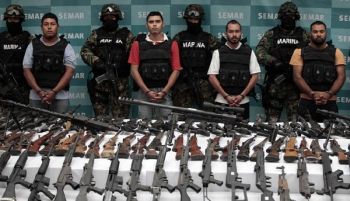
As for weapons taken from police bases, there have been similar incidents, particularly in Mexico. For example, in October 2016, unidentified individuals entered a police station in Nezahualcóyotl, State of Mexico, overpowering the police officers. According to the local media, the criminals left with three handguns, one carbine and one shotgun.[ix] That same month, 20 long-range and 10 short-range weapons disappeared from a different police station in Morelos region.[x]

Meanwhile, in late October 2017, 28 guns disappeared from a police base in Iquique, Chile.[xi] The media reports on the incident stressed that the weaponry was not part of the local police’s own depot, but rather that they were delivered there for safekeeping. The origin of the weapons aside, such a crime is very problematic.

Other recent thefts have been reported across police stations in Colombia, Costa Rica and Peru.[xii]

Successful Recoveries

It is worth noting that there have been several successes when it comes to stopping these crimes and retrieving the lost weapons. Case in point, Uruguayan authorities foiled an attempt to rob an army base in Chuy in early July 2017 – according to Uruguay’s El Pais, one of the criminals was a former soldier.[xiii]

Additionally, many lost weapons have been retrieved. For example, in 2015, several individuals were detained in Brazil, and security forces retrieved the 11 AK-47 rifles that had been stolen from the aforementioned Bolivian naval base.[xiv] That same year the Chilean police (Policía de Investigaciones de Chile) recovered one Ingram Mac-10 machine pistol and one FN/FAMAE Norinco pistol, which had been stolen from a military base in Arica.[xv] Also in 2015, the Colombian army reported that it had retrieved some 12 weapons out of the 400 that were stolen from a military base in Pereira.[xvi]

An Issue that Hinders An In-depth Analysis

Before we continue with our analysis, one disclaimer is necessary: The author has not been able to find reliable governmental statistics that detail how many weapons are missing from military and police depots. There have been sporadic reports that have tried to keep track of the data. For instance, a March 2015 article in the Argentine daily La Nacion explains that a preliminary report by the Comisión Provincial por la Memoria (provincial commission for remembrance) stated that, at that time, in  Buenos Aires region alone, some 900 weapons were believed to be missing from local police stations, although that was a conservative estimate.[xvii]  Similarly, a 2015 report in Peru’s daily La Republica explains how, at the time, 86 members of the country’s police and military were charged with stealing weapons from their respective units and police bases.[xviii] Colombia’s renowned Semana has also reported on this problem.[xix]

Similarly, research centers such as FLACSO and the Small Arms Survey have drafted occasional case studies about weapons trafficking in different Latin American states (Ecuador and Honduras, respectively).[xx]

Nevertheless this problem requires constant monitoring not only by governmental offices, but also by non-governmental organizations in order to ensure transparency.[xxi]

Discussion

The objective of this essay is not to imply that Latin American criminals are exclusively obtaining weapons from military or police depots; in reality that number is probably minuscule when compared to other sources – many U.S. media reports consistently point out that most of the weapons Mexican cartels utilize come from the United States.[xxii] Nevertheless, this analysis has demonstrated that this is a recurring issue in the region, with missing weaponry that includes pistols, rifles, and grenades. It is a problem that should be addressed.

In many cases, weapons were taken from military bases or police stations because corrupt police or military personnel willfully cooperated with criminal organizations, begging the question: what convinces a Latin American police or military officer to provide criminals with weapons that will be most likely utilized against security forces?

When it comes to discussing the best practices to combat weapons trafficking, some suggestions are self-evident. Case in point, having a database with the model and serial numbers of missing weapons is necessary, so that when a gun is retrieved from criminal organizations, the authorities can track where said weapon came from. A problem with this proposal is that, as aforementioned, many weapons are smuggled across border lines so that crime syndicate “X” in country “Y” uses a weapon that was taken from country “Z” – as was probably the case for the Galil rifles stolen in Peru. This is a particular problem for Ecuador, which serves as a corridor for weapons smuggled from Peru to Colombia (known as “ant-type smuggling” or tráfico hormiga).[xxiii] Ideally, cooperation initiatives between regional police and armed forces should include greater sharing of information regarding the weapons that are seized from criminals.

There are already several agreements in place to promote record sharing between regional governments, such as the Inter-American Convention Against the Illicit Manufacturing and Trafficking in Firearms, Ammunition, Explosives and Other Related Material (CIFTA) [xxiv] Additionally there are a number of bilateral agreements among hemispheric governments to combat crimes related to weapons trafficking – for example the governments of Ecuador and the United States signed an agreement to improve cooperation to combat crimes such as drug and weapons trafficking in late April 2018.[xxv]

Furthermore, there is something particularly disappointing about finding out that the individuals tasked with protecting a country and its citizens from criminals and insurgents are precisely those providing the latter with weapons to attack the former. Is there a “best practice” that can be suggested for those specific crimes? Harsher prison sentences for those found guilty is an obvious option. In fact, several military and police personnel have been prosecuted (fairly or unfairly depends on how one interprets the evidence) for some of the aforementioned incidents: as a result of the missing Galil rifles, four army officers were given six-month prison sentences.[xxvi] Similarly, in Chile, four ex police officers have been prosecuted for the missing guns in Iquique.[xxvii]

Another suggestion would simply be, as naive as it may sound, stronger indoctrination courses in military and police academies, so that new recruits do not forget the pledge they are making to protect their country and fellow citizens, and how helping criminals obtain weapons is the polar opposite of said oath. A Latin American military officer interviewed by the author argued in favor of this proposal, arguing that “you can put five more guards, four more security cameras and three more locks at weapons arsenals, but such incidents will continue to occur… you have to train soldiers better, educate them better, pay them better.”[xxviii] On the other hand, another Latin American army officer explained to the author, that such incidents should prompt armed forces to “take security measures of the weapons depots to the extreme.”[xxix] There is certainly no one-stop-solution to address the issue of weaponry theft.

As a final point, it is important to highlight that the theft of weaponry from military bases is not a problem solely relegated to Latin America. In the U.S. “more than $1 million in weapons parts and sensitive military equipment was stolen out of Fort Campbell, Kentucky, and sold in a vast black market,” according to an August 2017 report by the Associated Press.[xxx] Another theft occurred in the U.S. Army’s facilities in Stuttgart, Germany, in 2016.[xxxi] Without a doubt, “rotten apples” exist in defense and security forces across the world.

Final Thoughts

Weapons trafficking is a major crime across the world, as it adds the proverbial wood to the destructive fire that is crime and terrorism. Latin America is no exception to this problem as it is not difficult to find at least one incident within the last decade of wicked  personnel who have helped criminals obtain weapons from military or police arsenals. To the credit of regional defense forces, several weapons have been successfully retrieved, but the lack of open-source data that shows how many weapons are missing from depots makes it difficult to figure out what quantities we are talking about.

In any organization, including those tasked with security and defense, it is inevitable that there will be bad personnel that will seek to profit by committing criminal acts, which apparently include providing weapons to criminal entities. But while avoiding such incidents may be a utopia, it is important for Latin American police and military forces to constantly come up with new preemptive strategies not only to prevent robberies from happening – like better salaries and stricter security protocols– but, when they do occur, to be able to quickly track them, particularly across borders. Weapons trafficking is a complex and very profitable crime, and Latin American security and defense forces should be combating it, not be involved in it.


Wilder Alejandro Sanchez is a researcher who focuses on geopolitical, military, and cyber security issues.
 
The views presented in this essay are the sole responsibility of the author and do not necessarily reflect those of any institutions with which the author is associated.

---

[i]Militar sospechoso de robo de armas en Uruguay,” Ecos – Latinoamerica, Actualidad, January 30, 2016.

[ii]Militares procesados por robo y tráfico de armas,” El Observador (Uruguay), April 11, 2011

[iii]Roban 130 granadas de una base de la Fuerza Aérea del Perú,” Perú21, April 6, 2017.

[iv]Loreto: Roban 18 fusiles de guerra de base militar en Iquitos,” Perú21, January 5, 2016.

[v]Ministro inspecciona base militar tras robo de 18 fusiles,” RPP Noticias (Peru), January 4, 2016.

[vi] Alonaca, Jesus, “Un imputado por el robo de armas en base militar,” El Deber (Bolivia), December 11, 2015.

[vii]Capturan a dos militares por robo de armamento en batallón de Pereira,” El Espectador, Judicial, February 2, 2015; “Ejército recupera 12 armas que fueron robadas del batallón San Mateo de Pereira,” El Espectador, Nacional, July 9, 2015.

[viii]De base militar de Carabobo habrían robado más de 100 fusiles y lanzagranadas,” RCN Noticias, August 7, 2017; “Dos muertos dejó enfrentamiento en la 41 Brigada Blindada del Ejército en Carabobo,” La Patilla, August 6, 2017.

[ix]Comando irrumpe en cuartel y roba armas de la Policía Estatal en Neza,” Proceso (Mexico), October 18, 2016.

[x] Pedro Tonantzin, “’Madrugan’ a policias, les roban 30 armas en cuartel de Morelos,” Excelsior (Mexico). October 5, 2017.

[xi]Desaparecieron 28 armas que custodiaba Carabineros en la Primera Comisaría de Iquique,” SoyChile.cl, October 30, 2017.

[xii]Un policía estaría detrás de robo de armas en Estación de Carabineros,” Noticias RCN (Colombia), December 23, 2014; “Policía sin pistas sobre responsables de robo de armas en Jicaral,” La Nacion (Costa Rica), Crimenes, May 5, 2017; “Policía incautó más de mil armas y municiones en megaoperativo,” El Comercio (Peru). April 27, 2017.

[xiii]Detuvieron a delincuentes que planeaban asaltar cuartel en Rocha,” Radio Montecarlo, July 7, 2017.

[xiv]Operativo en Brasil recupera 11 fusiles AK47 robados de un puesto militar boliviano,” La Razon (Bolivia), December 17, 2015.

[xv]PDI recupera armas robadas al Ejército en Arica,” Ministerio del Interior y Seguridad Publica (Chile). August 28, 2015.

[xvi]Ejército recupera 12 armas que fueron robadas del batallón San Mateo de Pereira,” El Espectador, Nacional, July 9, 2015.

[xvii] Jesus Cornejo, “Los policías bonaerenses pierden un arma cada 48 horas,” La Nacion (Argentina), March 9, 2015.

[xviii]86 militares y policías enjuiciados y condenados por robo de armas y granadas,” La Republica (Peru), September 29, 2015.

[xix]Escándalo: mil armas perdidas en guarniciones militares,” Semana,  June 13, 2015.

[xx] Carlos Valdivieso, “Armas de fuego en Ecuador, ”FLACSO (Facultad Latinoamericana de Ciencias Sociales), Perfil Criminológico, No.17, July 2015; “Measuring Illicit Arms Flows: Honduras,” Small Arms Survey, Research Notes, No. 62, November 2016.

[xxi] This would also serve to understand better not only how many weapons are lost or stolen, but how many are also found. The author has relied on open-source news articles and reports for this analysis. Sources consulted by the author explained that a person can request ministries and specific government agencies for information regarding the incidents discussed in this analysis, but it would take time for these petitions to be processed.

[xxii] Analyzing weapon sales and weapons trafficking in Mexico is complicated due to its proximity to the United States. For example, see: German Lopez, “Where do Mexican drug cartels get their guns? The US,” VOX, January 14, 2016. Also see: Bill Chappell, “In Mexico, Tens Of Thousands Of Illegal Guns Come From The U.S.,” NPR, International, January 12, 2016. And see: John-Lindsay Poland, “How U.S. Guns Sold to Mexico End Up With Security Forces Accused of Crime and Human Rights Abuses,” The Intercept, April 16, 2018.

[xxiii]El tráfico de armas permea la frontera norte de Ecuador,” El Comercio (Ecuador), February 19, 2018; Autoridades ecuatorianas identifican rutas para el tráfico de armas hacia Colombia, Centroamérica y México,” Andes, June 5, 2015.

[xxiv] The Inter-American Convention Against the Illicit Manufacturing and Trafficking in Firearms, Ammunition, Explosives and Other Related Material (CIFTA), 1997, http://www.weaponslaw.org/instruments/1997-oas-convention-cifta.

[xxv]Ecuador y EEUU firman convenio de cooperación en lucha contra crimen y drogas.” EFE/El Espectador, April 16, 2018.

[xxvi]Iquitos: Dictan 6 meses de prisión preventiva para implicados en robo de fusiles | VIDEO,” La Republica (Peru), January 22, 2016.

[xxvii]Ex carabinero procesado por extravío de armas en Iquique dijo que se matará ‘para que ese fiscal se pudra en la cárcel,’" SoyChile.cl,  November 30, 2017; “Nueva polémica en Carabineros: acusan ‘montaje’ del Labocar Temuco por el Caso Armas en Iquique,” Soychile.cl, February 1, 2018.

[xxviii] Telephone conversation between the author and a Latin American military officer, March 2018, off-the-record.

[xxix] Telephone conversation between the author and a Latin American military officer, March 2018, off-the-record.

[xxx] Kristin M. Hall. “'Easy Money' Made Selling Army Weapons Stolen by US Soldiers,” Associated Press, August 31, 2017.

[xxxi] John Vandiver, “Army offering $25K reward in search for weapons stolen from Stuttgart arms room,” Stars and Stripes, January 30, 2018.

Tuesday, July 14, 2015

Blouin Beat: World: The Bahamas: television fantasy vs. darker reality


"The Bhamas: Television Fantasy vs. Darker Reality"
W. Alejandro Sanchez
Blouin Beat: World
July 14, 2015
Originally published: http://blogs.blouinnews.com/blouinbeatworld/2015/07/14/the-bahamas-television-fantasy-vs-darker-reality/

On July 10, the Bahamas celebrated the 42nd anniversary of its independence from Great Britain. The islands that make up this Caribbean nation have become a must-see tourist destination over the past decades, while Nassau, the capital, has a history that is currently being glorified by Hollywood. The TV series ‘Black Sails,’aired on the Starz network, depicts what life was like in Nassau in the early 18th century when pirates ruled the Caribbean.

‘Black Sails’ is loosely based on a combination of real-life pirates and the popular book Treasure Island. The show focuses on real-life characters, like Charles Vane, and the fictional Captain J. Flint, pirates who made a profit from robbing merchant ships. The stolen bounty is then brought back to New Providence Island (where Nassau is located), where it is resold via the island’s black market. Both Vane and Flint share the utopian goal of Nassau becoming an independent nation, free from the threat of a British invasion. (I will skip the other subplots).

There is little threat of pirates taking over Nassau nowadays, but crime, both in the maritime waters and in the plethora of islands that makes up the country, remains a major problem. The smuggling of illegal narcotics is of particular concern due to the volume of the contraband – this is best exemplified by “Operation Take Down,” which took place in Nassau in early July. The police operation searched a home and found 100 pounds of marijuana, with a street value of $100,000 USD. Moreover, smuggling in Bahamian waters continues. In 2014, the security forces of the Bahamas detained a speedboat off Long Island; two men were arrested and a cargo of 37 bales of marijuana, worth a whopping $1.3 million USD, was seized. Despite the success of law enforcement officials, the area continues to be regarded as an attractive corridor for drug trafficking. In early June, the U.S. Coast Guard seized a vessel off Andros Island, which carried an impressive cargo of 985 pounds of marijuana (street value at $1 million USD).

While the sword and pistol fights depicted in ‘Black Sails’ may make for good television, weapons in the hands of criminals continue to threaten security in the modern-day Bahamas. On July 3, police officers from the Drug Enforcement Unit seized an AK-47 rifle, a Browning .308 rifle, and 974 live rounds of ammunition in a trailer in Long Island.

Finally, one major plot of ‘Black Sails’ revolves around the pirates avoiding a British invasion, as London wants to regain control over its lost territory. Nowadays, the government in Nassau has cordial relations with both London and Washington. In fact, just this past June, U.S. Assistant Secretary for the Western Hemisphere Roberta Jacobson travelled to the Bahamian capital for a meeting of the United States-Caribbean high-level citizen security dialogue to promote regional cooperation and address common threats. The meeting falls under the umbrella of the Caribbean Basin Security Initiative, which is Washington’s overall strategy for the Caribbean. The State Department explains that the CBSI aims to combat illicit trafficking, increase security, and promote social justice. Washington will certainly keep an eye on the Bahamas, given its close proximity to the United States, ongoing smuggling, and a curious fact: the aforementioned Andros Island is the location of the secretive Atlantic Undersea Test and Evaluation Center, where the U.S. Navy tests maritime weapons.

Thus, it is no surprise that both the American and British navies are actively supporting their Bahamian counterparts’ efforts to crack down on regional crimes. Apart from the U.S. Coast Guard operating in the area, the British HMS Severn made a port-call at Nassau Harbour this past January in order to carry out exercises with its local counterparts. In statements picked up by Bahamas Information Services, the British High Commissioner, His Excellency David Fitton explained that the British ship is “work[ing] with the regional Defense Force’s interdiction of drug smugglers, sometimes migration smugglers, and arms smugglers even. The most common one they work on here is drug smuggling.”

The Bahamas recently celebrated over four decades of independence from the United Kingdom — a dream for which the characters of the popular series ‘Black Sails’ fought. But romantic quest for independence aside, crimes like drug smuggling are a serious real-world problem for Nassau. The criminal elements depicted in ‘Black Sails’ are entertaining, but in the 21st century, the Bahamas needs a strong security force and regional allies (even its former colonial rulers) in order to prevent the rise of Charles Vane-like criminals.

Thursday, October 3, 2013

Blouin Beat: World: Latin America tries out the U.N. Arms Trade Treaty


Latin America tries out the U.N. Arms Treaty
W. Alejandro Sanchez
Blouin Beat: World
October 3, 2013
Originally published: http://blogs.blouinnews.com/blouinbeatworld/2013/10/03/latin-america-tries-out-the-u-n-arms-trade-treaty/
 
Good news for arms regulators and for the U.N.: as of the most recent General Assembly, over 20 more governments had signed the body’s Arms Trade Treaty (ATT). Said treaty is an ambitious attempt to regulate “the international trade in conventional arms, from small arms to battle tanks, combat aircraft and warships,” as explained in the website of the U.N. Office for Disarmament Affairs.
Since the U.S. is the world’s biggest exporter of weapons, much hype and media attention was given to Secretary of State John Kerry, who signed the treaty in the name of the U.S. government. However, it is important to highlight that an increasing number of Latin American and Caribbean nations have also signed this treaty — and some have also ratified it.
The ATT has been open for signing since June 3, and so far, 113 U.N. member states have signed it. Many of these nations come from Latin America or the Caribbean. For example, Brazil signed the treaty on June 3 –an important development considering that Brazil has a growing and vibrant military industry (via Brazilian companies like EMBRAER, which produces the renowned Super Tucano military aircraft). The governments of Peru and Colombia signed the treaty during the UN General Assembly, while the small Caribbean island of Dominica is the newest signatory as it signed on October 1.
However, signing this arms treaty is only half of the job, as 50 U.N. member states have to ratify it before ATT’s provisions can be implemented. According to the U.N., only seven nations have so far ratified the ATT: Antigua & Barbuda, Costa Rica, Guyana, Iceland, Mexico, Nigeria and Trinidad & Tobago – in other words, a solid majority come from the Americas.
Guyana, Trinidad & Tobago and Antigua & Barbuda are not known for being military powerhouses. Costa Rica lacks a military (though it does have well-trained police forces) and has shaped its foreign policy and international image to become a continental “champion of the peace.” Mexico, however, is a Latin American military powerhouse, with a robust defense budget and a military which has been used for internal security in the past and it is a significant development that Mexico City has ratified the ATT.
But the treaty evoked some big-name “nays”, as well. The three countries that voted against it are Iran, North Korea, and Syria, with 23 other countries abstaining (tacitly implying that they have some reservations, to put it mildly, about the treaty). And Latin America had some prominent abstentions as well: Bolivia, Cuba, Ecuador and Venezuela. These countries have protested the treaty, stating that it aids nations that export weapons (i.e. the U.S., various European states, Russia or China) and that the ATT could be “politically manipulated.”
The acquisition of 113 signatures and seven ratifications in less than six months is a promising start for the ATT, but the ratification of treaties is a slow and potentially divisive process, and we will not see the 50 required ratifications achieved anytime soon. The negotiations of what to put in the ATT took several years, and the result was still not regarded as satisfactory by several nations, best exemplified by the number of abstentions and “no” votes.
Nevertheless, it is worth noting the general support from Latin America and the Caribbean for this treaty. Even more so, given that most Latin American states have growing defense budgets and have been carrying out major military purchases in recent years thanks to a regional economic boom. Recent signatories Peru and Colombia are also carrying out important acquisitions of military hardware, ranging from Colombia’s purchase of drones from Israel to Peru currently testing theRussian T-90S tank (Lima has been trying to select a tank to modernize its tank fleet for years).
It is encouraging to see that nations of the Western Hemisphere recognize the necessity for a global treaty regulating the sale of conventional weapons. While Latin America has not sufferedmajor inter-state wars in over close to a century, the concern that inter-state tensions and random incidents could spark an arms race is alive and well among for Latinamericanists. The ATT, even in its embryonic phase, serves as a potential damper there.

Monday, September 19, 2011

The Proliferation of Small Arms in the Northern Andean Countries


The Proliferation of Small Arms in the Northern Andean Countries

by Alex Sanchez
Research Fellow
Council on Hemispheric Affairs
Blog Post - September 19, 2011

Disclaimer: Like with the Philippines post, this is an excerpt of a piece I did on small wears in the Northern Andes some time ago that never got published. I apologize if any of the info is too dated, but the analysis is still pretty relevant I think.

South America’s northern Andean region (Peru, Colombia, Venezuela & Ecuador) continues to be a flea-market for the trafficking of small arms. In an egregious non-sequitur, the lack of inter-state warfare in the hemisphere for the last several decades has failed to stop the various South American militaries from upgrading their military power, particularly in recent years. In addition, small weaponry, such as rifles, pistols and grenades are becoming dangerously common in much of Andean South America, especially due to the proliferation of guerilla movements, and criminal organizations. Common street criminality is also on the rise in major cities like Lima, as criminals have access to light arms to carry out their illicit activities, prompting citizens to acquire guns to protect themselves and their families. The proliferation of small arms from the “grassroots” level to major arm purchases by a country’s security forces, is an important factor that needs to be taken into account to understand the current micro and macro geo-security landscape of Andean South America.


Inter- vs. Intra- state warfare

As aforementioned, an important aspect to mention about the contemporary security landscape of South America is that, aside from the Falklands conflict between Argentina and the United Kingdom in 1982, the region has not witnessed an inter-state warfare for decades. Even though tensions still exist, and often countries have been on the verge confrontation (like between Peru’s Juan Velasco Alvarado and Chile’s Augusto Pinochet in the 1960s and 1970s, or tensions between Venezuela and Colombia in 1987), bellicose face-offs have been relatively rare. Peru and Ecuador had a number of non-declared borders wars in 1981 and 1995; however both were very localized and short-lived. Other short lived conflicts include the 1969 war between Honduras and El Salvador (known as the 100 Hours War or the Soccer War), and the Falklands War between Argentina and the United Kingdom in 1982.Nevertheless, today South America is in a new arms race: Venezuela is buying staggering amounts of weaponry from Russia and China, Peru is upgrading its air fleet and purchasing frigates from Italy (Lupo class), and Chile has acquired Leopard tanks and American F-16 fighter jets. Not to mention Brazil’s plans for a nuclear-powered submarine.

However it is the different levels of intra-state strife and crime that is the dominating security factor in Andean South America, due in large measure to the threats posed by the Colombian guerrilla body, the FARC, and Peru’s resurgent Shining Path. Other sources of internal instability, which are linked to the proliferation of small weapons, are drug cartels and multinational and local criminal gangs.

Light Weaponry Distributors and Buyers
A number of countries have become the exporters of light weaponry to South America, particularly the Andean nations:

Russia
Moscow is regaining its international status in the Western Hemisphere as a major arms dealer. Concerning light weaponry, the sale that has made attracted the most coverage was Caracas’ decision to build, in Venezuelan territory, a Kalashnikov rifle factory, in addition to a plant to produce the AK-103’s ammo. The goal is to have the company operational by 2009-2010 and capable of producing up to 30,000 automatic rifles per year. Colombian policymakers have, at times, expressed apprehension that some of these Kalashnikovs may unintentionally (or even intentionally), end up in the hands of the Colombian FARC rebels.

Belgium/Argentina
The Fusil Automatique Léger (Light Automatic Rifle – FAL) is the standard weapon used by a number of military forces, like for example Peru. The FAL is a 7.62mm NATO self-loading, selective fire rifle produced by the Belgian armaments manufacturer Fabrique Nationale de Herstal (FN). The Argentine Armed Forces officially adopted the FN FAL in 1955. The FALs were produced by the Argentine state-owned manufacturing industry FM (Fabricaciones Militares) at the Fabrica Militar de Armas Portatiles "Domingo Matheu" (FMAP "DM") in Fray Luis Beltrán, located north of Rosario.


Argentina’s possession of the Belgian FAL license becomes relevant today because of Venezuela’s purchases of different types of rifles, including the AK rifle factory, to be set up in the latter country. On December 14, 2005 the Associated Press ran a story by Fabiola Sanchez, which explained that Caracas was considering sending its 30,000 FAL rifles to Argentina for repair. According to the article, the plan would be to give the restored FALs to the Venezuelan army reserve, while the new AK assault rifles would be given to active troops.

United Kingdom
London is not a major exporter of small arms to South America. According to the Annual Report on Strategic Export Control, published by the Foreign & Commonwealth Office, the British government has sold limited quantities of light weapons to Andean nations. The 2006 report mentions that Peru purchased gun silencers; Ecuador obtained pistols as well as technology relating to the use of pistols; and Venezuela purchased heavy machine guns and components for general purpose machine guns. The report for the first quarter of 2007 mentions that Colombia acquired heavy machine guns and other equipment for a total value of one million pounds. In all cases, the official reports do not provide major specifications about the weaponry or components that were purchased.

The U.S.
American small arms in the northern Andes are a mix of both legal and illegal trade. It is relatively easy to find American-made pistols in a number of black markets in downtown Lima for example. The key, yet unclear, issue is the number of legally sold small arms to regional countries, particularly Colombia. Much has been written regarding the amount of economic and high-tech weaponry sold by Washington to Bogota, like the UH-60L Black Hawk helicopters; however it is unclear the level of trade regarding small arms, like assault rifles and pistols that may have been purchased for the Colombian army, some of which may have even found their way to right-wing, military supported, paramilitary groups. Nevertheless, a few months ago there was a bizarre, and embarrassing, incident, in which guns landed in the hands of Mexican cartels via a gun-trafficking operation dubbed “Fast and Furious” by the Bureau of Alcohol, Tobacco, Firearms and Explosives (ATF).

The operation was designed to build big criminal cases against violent Mexican drug cartels and the people who provided them with Ak 47s and other high powered weapons. But instead, ATF agents in some cases lost track of the weapons under surveillance and they later turned up at crime scenes on both sides of the Southwest border, including the December 2010 death of U.S. Border Patrol Agent Brian Terry.


Illegal Producers of Small Arms
Weaponry, like small arms, can also be obtained from illegal manufacturers that make copies of rifles and ammo, some of which are highly accurate in appearance and performance. This is a particularly profitable and booming business as criminals (not to mention terrorists) will want to acquire such weapons to carry out their attacks or other criminal activities, while citizens will purchase these guns for protection, leading to the proliferation of illegally-produced small arms. For example, in late November 2007, the Peruvian police arrested a family (a mother and her two sons) in their house in the district of Lince, Lima and accused them of illegally manufacturing guns and ammo. In the course of the raid, police officers came upon thousands of different magazines of ammo, including the infamous “dum dum” bullets. The commander of the VII police region, General Octavio Salazar Miranda, declared that “we do not know if [the guns and ammo] were going to go to the hands of terrorists, drug cartels or to the Colombian FARC guerrillas.”

Attempts at stopping small arms proliferation
A significant event occurred in July 2007, during a celebration of International Gun Destruction Day, when almost 14,000 small arms were destroyed in Colombia. A July 19 article by the Inter Press Service quotes Ambassador Claudia Blum as saying that the weapons destroyed in the July celebration did not come from the armed forces. “There were 13,778 weapons destroyed, which included machine guns, handguns, rifles and mortars," she said. “Out of these, the vast majority -77 percent- were confiscated from criminal organizations and illegally armed groups throughout the national territory. The rest were legally owned weapons turned in by private citizens committed to security and nonviolent coexistence,” the ambassador concluded.

The report “Violencia, Crimen y Trafico Ilegal de Armas en Colombia,” published by the United Nations’ Oficina contra la Droga y el Delito explains that small arms found during raids on insurgent movements and criminal cartels had originated from a variety of sources, including: Belgium, France, Spain, Bulgaria, Germany, Hungary, China and North Korea. The report’s sources explain that none of these governments authorized the sales or validated that the ultimate destination of the weapons would be Colombian insurgent movements.


Meanwhile, reports in June 2007 show that the Ecuadorian government has taken steps to control the illegal possession of weapons, in order to boost the safety of its citizenry. Ecuador’s Interior Minister Gustavo Larrea has declared that, “illegally bearing arms is a crime carrying a sentence of up to five years in jail.” The crackdown on illegal weapons came after as many as six minors were killed in Guayaquil during the first half of the year as a result of gun fights. This prompted Ecuadorian President Rafael Correa to launch his “Ecuador Without Weapons” program.

The Incan Weapons Market
The case of Peru is a good example of how the trafficking of small arms can spread throughout different levels of a country’s government, security forces and civil society. For years there have been reports of trafficking mafias in that country’s military and police. This illicit practice is carried out by both retired and active duty officers. For example, the 1990s deal by former Peruvian intelligence chief Vladimiro Montesinos-FARC deal over AK rifles (known as “Operation Siberia”) had as main middle man a retired army lieutenant, Jose Aybar Cancho.

In April 2007, an article published on the webpage of the Colombian Air Force highlighted the link between weapons sales from Peru to the FARC. The article explained that in September 2006, Peruvian authorities detained a group of Peruvian weapons traffickers and a load of contraband which included: 25 thousand magazines and five surface-to-air rockets that belonged to the Peruvian armed forces. The article went on to explain that the individuals who were detained for allegedly belonging to this group included Peruvian lower rank army officers, who had easy access to military ammo warehouses.

Investigations were made public in May 2007 that showed that there was a group of arms traffickers that moved weaponry and ammo from Peru to Colombia, via Ecuador. A report pinpointed Luis Pijo Angulo, a retired Peruvian police lieutenant, as the head of the group. Regarding the multiple illegal arms dealers with ties to the country’s military and police forces, the vice-president of the Defense Committee of the Peruvian Congress, David Waisman (also a former defense minister), said “I very much doubt that the high leadership [of the military]does not know about this [the illegal arms trafficking]. I suspect everyone right now as we are talking about very large quantities [of weaponry and ammo].”


The proliferation of small arms in Peru is shown by its blooming black market which makes small arms readily available to citizens. Any individual that visits street markets like Tacora or Las Malvinas in Lima can purchase with ease a Glock for $390 (including two clips of ammo), or a Browning for $400. There is no set price for these weapons; they are sold at whatever the merchant decides. A June 5, 2005 article in La República quotes a Peruvian small arms merchant saying “aquí el precio lo ponemos según la cara de pavo” (“the price [on weapons] is based on the [prospective] buyer’s appearance). Other weaponry (new and used) that can also be easily purchased in such markets include the Brazilian Taurus or the Italian Beretta.

What (and who) is killing people?
The strategies used in guerrilla warfare consist mostly of ambushes and hit-and-run attacks, which greatly diminish the relevancy of jet fighters or frigates, used for conventional warfare. Examples of attacks that have effectively utilized light weaponry include, for example, a November 2005 attack in Bogota – a hand grenade was thrown in a shop in the neighborhood of Fontibon, in Bogota’s northwest. The explosion killed 3 people, including two children.

In Brazil, a gun fight between rival gangs in June 2006, wounded six children by stray bullets, while eleven more were wounded due to shrapnel. The attack occurred in Rio de Janerio, in the Henrique Foreis school located in a shantytown. A September 9, 2006 Associated Press article by Harold Olmos explained that: “with their labyrinthine webs of narrow alleys, favelas offer easy hideouts to traffickers, and the slums' misery makes it easy to recruit young people into the narcotics trade. A study by the non-governmental group Viva Rio says the city has about 5,000 armed children soldiers in the battle for control of lucrative drug-dealing spots.”

Finally, the rise in criminal violence in Peru, particularly in major cities like Lima, has prompted civilians to purchase small arms in order to protect themselves and their homes, which could easily result in deadly accidents, aside from planned assaults.

A catastrophe could be in the making as Venezuela goes on with the scheduled plan of an AK factory, unless production was under vigorous control. This would almost certainly end up on the black market, or even legally, which could provoke more accidents if children come across ill-stored weapons in their homes.

The Grim Future
As South America becomes more involved in an arms race, there is no reason not to expect that an increase in violence will not follow. Inter-state warfare still remains unlikely; however intra-state warfare as well as widespread acts of ad hoc violence are every-day events in the region. Nations like Colombia and Ecuador have taken some steps to quell the spread of light arms to insurgent groups, as well as to criminal organizations and gangs, but much more needs to be done.

South America may not have witnessed an inter-state ware since the 1995 Peru – Ecuador border dispute; however, a day seldom passes without some new report of deaths or injuries as a result of small arms. The lack of conventional warfare does not mean that South America, the northern Andean region in particular, can be considered an entirely safe zone. Violence occurs using other types of weaponry, not necessarily tanks or fighter planes, but AK rifles, hand grenades and pistols. The future looks very grim for the northern Andean countries as small arms claims the lives of scores of their citizens on a weekly basis. The reality of the northern Andes is that the region is involved in a silent, never-ending cycle of internal violence, a human catastrophe going on before the world’s eyes.

A complete history and analysis of the AK rifle can be found in Larry Kahaner’s “AK-47: The Weapon That Changed the Face of War.” (Wiley; 1 edition – October 20, 2006)

Please accept this article as a free contribution from this author, but if re-posting, please afford authorial and institutional attribution. Exclusive rights can be negotiated.

Wednesday, March 17, 2010

The Proliferation of Small Arms in the Northern Andean Countries

South America’s northern Andean region (Peru, Colombia, Venezuela & Ecuador) continues to be a flea-market for the trafficking of small arms. In an egregious non-sequitur, the lack of inter-state warfare in the hemisphere for the last several decades (since the 1982 Falklands War) has failed to stop the various South American militaries from upgrading their military power, particularly in recent years. In addition, small weaponry, such as rifles, pistols and grenades are becoming dangerously common in much of Andean South America, especially due to the proliferation of guerilla movements, and criminal organizations. Common street criminality is also on the rise in major cities like Lima, as criminals have access to light arms to carry out their illicit activities, prompting citizens to acquire guns to protect themselves and their families. The proliferation of small arms from the “grassroots” level to major arm purchases by a country’s security forces, is an important factor that needs to be taken into account to understand the current micro and macro geo-security landscape of Andean South America.


Inter- vs. Intra- state warfare
As aforementioned, an important aspect to mention about the contemporary security landscape of South America is that, aside from the Falklands conflict between Argentina and the United Kingdom in 1982, the region has not witnessed an inter-state warfare for decades. Even though tensions still exist, and often countries have been on the verge confrontation (like between Peru’s Juan Velasco Alvarado and Chile’s Augusto Pinochet in 1975, or the Caldas incident between Venezuela and Colombia in 1987), bellicose face-offs have been relatively rare. Peru and Ecuador had a number of non-declared borders wars in 1981 and 1995; however both were very localized and short-lived.

Nevertheless, today South America is in a new arms race: Venezuela is buying staggering amounts of weaponry from Russia and China, Peru is upgrading its air fleet and purchasing frigates from Italy (Lupo class), and Chile has acquired Leopard tanks and American F-16 fighter jets. Not to mention Brazil’s plans for a nuclear-powered submarine.

However it is the different levels of intra-state strife and crime that is the dominating security factor in Andean South America, due in large measure to the threats posed by the Colombian guerrilla body, the FARC, and Peru’s resurgent Shining Path. Other sources of internal instability, which are linked to the proliferation of small weapons, are drug cartels and multinational and local criminal gangs.

Light Weaponry Distributors and Buyers
A number of countries have become the exporters of light weaponry to South America, particularly the Andean nations. This is not meant to be a comprehensive list:

Russia
Moscow is regaining its international status in the Western Hemisphere as a major arms dealer. Concerning light weaponry, the sale that has made attracted the most coverage was Caracas’ decision to build, in Venezuelan territory, a Kalashnikov rifle factory, in addition to a plant to produce the AK-103’s ammo. The goal was to have the company operational by 2009-2010 and capable of producing up to 30,000 automatic rifles per year. It's unclear the current status of the plant due to a lack of information from the Venezuelan government. Chavez has also purchased 100,000 AK rifles and 5,000 Dragunov rifles from Russia. Colombian policymakers have, at times, expressed apprehension that some of these Kalashnikovs may unintentionally (or even intentionally), end up in the hands of the Colombian FARC rebels.

Belgium/Argentina
The Fusil Automatique Léger (Light Automatic Rifle – FAL) is the standard weapon used by a number of military forces, like for example Peru. The FAL is a 7.62mm NATO self-loading, selective fire rifle produced by the Belgian armaments manufacturer Fabrique Nationale de Herstal (FN). The Argentine Armed Forces officially adopted the FN FAL in 1955. The FALs were produced by the Argentine state-owned manufacturing industry FM (Fabricaciones Militares) at the Fabrica Militar de Armas Portatiles "Domingo Matheu" (FMAP "DM") in Fray Luis Beltrán, located north of Rosario.

Argentina’s possession of the Belgian FAL license becomes relevant today because of Venezuela’s purchases of different types of rifles, including the AK rifle factory, to be set up in the latter country. On December 14, 2005 the Associated Press ran a story by Fabiola Sanchez, which explained that Caracas was considering sending its 30,000 FAL rifles to Argentina for repair. According to the article, the plan would be to give the restored FALs to the Venezuelan army reserve, while the new AK assault rifles would be given to active troops.

United Kingdom
London is not a major exporter of small arms to South America. According to the Annual Report on Strategic Export Control, published by the Foreign & Commonwealth Office, the British government has sold limited quantities of light weapons to Andean nations. The 2006 report mentions that Peru purchased gun silencers; Ecuador obtained pistols as well as technology relating to the use of pistols; and Venezuela purchased heavy machine guns and components for general purpose machine guns. The report for the first quarter of 2007 mentions that Colombia acquired heavy machine guns and other equipment for a total value of one million pounds. In all cases, the official reports do not provide major specifications about the weaponry or components that were purchased.

The U.S.

American small arms in the northern Andes are a mix of both legal and illegal trade. It is relatively easy to find American-made pistols in a number of black markets in downtown Lima for example. The key, yet unclear, issue is the number of legally sold small arms to regional countries, particularly Colombia. Much has been written regarding the amount of economic and high-tech weaponry sold by Washington to Bogota, like the UH-60L Black Hawk helicopters; however it is unclear the level of trade regarding small arms, like assault rifles and pistols that may have been purchased for the Colombian army, some of which may have even found their way to right-wing, military supported, paramilitary groups.

It should be added that Colombia produces the Israeli Galil rifles. An example of home-built weaponry is Peru's MGP submachine gun.

Illegal Producers of Small Arms
Weaponry, like small arms, can also be obtained from illegal manufacturers that make copies of rifles and ammo, some of which are highly accurate in appearance and performance. This is a particularly profitable and booming business as criminals (not to mention terrorists) will want to acquire such weapons to carry out their attacks or other criminal activities, while citizens will purchase these guns for protection, leading to the proliferation of illegally-produced small arms. For example, in late November 2007, the Peruvian police arrested a family (a mother and her two sons) in their house in the district of Lince, Lima and accused them of illegally manufacturing guns and ammo. In the course of the raid, police officers came upon thousands of different magazines of ammo, including the infamous “dum dum” bullets. The commander of the VII police region, General Octavio Salazar Miranda, declared that “we do not know if [the guns and ammo] were going to go to the hands of terrorists, drug cartels or to the Colombian FARC guerrillas.”

What do Insurgents fight with?
Insurgent groups tend not to make public the type and quantities of weaponry they utilize; nevertheless, from a variety of sources, it is possible to gain some kind of insight on the current situation.

Sendero Luminoso (Shining Path) – Peru
Shining Path does not appear to have a coordinated plan to increase their firepower from one particular source. Instead, they are likely to resort to robbing weapons, ammo and equipment from wounded or dead soldiers and police officers that they manage to ambush. Hence, their current arsenal consists of a variety of weapons, like FALs, AK-47s and a variety of revolvers and pistols.

Fuerzas Armadas Revolucionarias de Colombia (FARC) – Colombia

The FARC, because of the millions that the group receives from a variety of illicit activities (i.e. drug trafficking, money laundering and kidnapping for ransom), has the monetary resources to obtain weaponry and ammo as needed. For several years the Peruvian media has reported the use of Peruvian territory as a corridor for illegal weapons trafficking into Colombia. According to a September 26, 2002 article in the Peruvian magazine Caretas, traffickers transport weapons from Recife (Brazil) via air to the Peruvian jungle, namely Puerto Arica in the Putumayo, and from there the illegal goods are transported across the numerous rivers along the Peruvian-Colombian border to the FARC.

The FARC tactics of using drug money to purchase has become normal procedure. In the 1990s, it was revealed that Vladimiro Montesinos (intelligence service chief of former-Peruvian dictator Alberto Fujimori) had sold weaponry to the FARC. As far as facts are known, in 1998-1999 Montesinos sent individuals (disguised as Peruvian military officers) to Jordan, where they purchased around 60,000 AK-47 rifles. Of those rifles, 10,000 were sent via plane to the FARC in Colombia. The assault rifles were dropped off in parachutes over Barrancominas in Colombia, controlled by the FARC’s Frente 16 which was under the control of FARC commander Medina Caracas (AKA “El Negro Acacio”). The FARC gained the monetary resources to pay for this transaction by selling drugs to Brazilian drug traffickers, namely the Brazilian drug dealer Fernando Da Costa (AKA “Fernandinho”). Montesinos was paid millions for brokering the transaction. Deals like this exemplify the links between drugs and weapons trafficking.

The FARC also uses routes in Central America to obtain weaponry. A March 21, 2005 article in the Mexican daily El Universal mentions the existence of an arms cartel trafficking AK-47 rifles to Colombia from Nicaragua, via Honduras.

Ejercito de Liberacion Nacional (ELN) – / Colombia
In October 2006 , the Colombian armed forces carried out a number of military operations against ELN bases. Reports after the raids mention that a major operation was carried out in the town of Aguadas in the northeastern department of Caldas by the Colombian army’s Eighth Brigade. Among the weapons seized were AK-47 semi-automatic rifles, an M-60 automatic rifle, an M-79 grenade launcher, seven grenades and assorted munitions belonging to the ELN’S Carlos Alirio Buitrago front.

Attempts at stopping small arms proliferation
A significant event occurred in July 2007, during a celebration of International Gun Destruction Day, when almost 14,000 small arms were destroyed in Colombia. An article by the Inter Press Service quotes Ambassador Claudia Blum as saying that the weapons destroyed in the July celebration did not come from the armed forces. “There were 13,778 weapons destroyed, which included machine guns, handguns, rifles and mortars," she said. “Out of these, the vast majority -77 percent- were confiscated from criminal organizations and illegally armed groups throughout the national territory. The rest were legally owned weapons turned in by private citizens committed to security and nonviolent coexistence,” the ambassador concluded.

The report “Violencia, Crimen y Trafico Ilegal de Armas en Colombia,” published by the United Nations’ Oficina contra la Droga y el Delito explains that small arms found during raids on insurgent movements and criminal cartels had originated from a variety of sources, including: Belgium, France, Spain, Bulgaria, Germany, Hungary, China and North Korea. The report’s sources explain that none of these governments authorized the sales or validated that the ultimate destination of the weapons would be Colombian insurgent movements.

Meanwhile, reports in June 2007 show that the Ecuadorian government has taken steps to control the illegal possession of weapons, in order to boost the safety of its citizenry. Ecuador’s Interior Minister Gustavo Larrea has declared that, “illegally bearing arms is a crime carrying a sentence of up to five years in jail.” The crackdown on illegal weapons came after as many as six minors were killed in Guayaquil during the first half of the year as a result of gun fights. This prompted Ecuadorian President Rafael Correa to launch his “Ecuador Without Weapons” program.


The Incan Weapons Market

The case of Peru is a good example of how the trafficking of small arms can spread throughout different levels of a country’s government, security forces and civil society. For years there have been reports of trafficking mafias in that country’s military and police. This illicit practice is carried out by both retired and active duty officers. For example, the aforementioned Montesinos-FARC deal over AK rifles (known as “Operation Siberia”) had as main middle man a retired army lieutenant, Jose Aybar Cancho.

In April 2007, an article published on the webpage of the Colombian Air Force highlighted the link between weapons sales from Peru to the FARC. The article explained that in September 2006, Peruvian authorities detained a group of Peruvian weapons traffickers and a load of contraband which included: 25 thousand magazines and five surface-to-air rockets that belonged to the Peruvian armed forces. The article went on to explain that the individuals who were detained for allegedly belonging to this group included Peruvian lower rank army officers, who had easy access to military ammo warehouses.

Investigations were made public in May 2007 that showed that there was a group of arms traffickers that moved weaponry and ammo from Peru to Colombia, via Ecuador. A report pinpointed Luis Pijo Angulo, a retired Peruvian police lieutenant, as the head of the group. Regarding the multiple illegal arms dealers with ties to the country’s military and police forces, the vice-president of the Defense Committee of the Peruvian Congress, David Waisman (also a former defense minister), said “I very much doubt that the high leadership [of the military]does not know about this [the illegal arms trafficking]. I suspect everyone right now as we are talking about very large quantities [of weaponry and ammo].”

The proliferation of small arms in Peru is shown by its blooming black market which makes small arms readily available to citizens. Any individual that visits street markets like Tacora or Las Malvinas in Lima can purchase with ease a Glock for $390 (including two clips of ammo), or a Browning for $400. There is no set price for these weapons; they are sold at whatever the merchant decides. A June 5, 2005 article in La República quotes a Peruvian small arms merchant saying “aquí el precio lo ponemos según la cara de pavo” (“the price [on weapons] is based on the [prospective] buyer’s appearance). Other weaponry (new and used) that can also be easily purchased in such markets include the Brazilian Taurus or the Italian Beretta.

The Caracas Connection
In June 2007, during a visit by Hugo Chavez to Moscow, an agreement was reached between the Venezuelan leader and the Kremlin to construct two plants in Venezuela. The original objective was to have the two plants operational by the end of 2009 or beginning of 2010. However there have been issues regarding this, particularly when it comes to the Russians not moving forward with the construction unless the Venezuelans pay their fees first. One of the plants will produce the AK-103 rifle, while the other facility will produce 7.62mm caliber bullets. At the time it's unclear when and if the facilities will be fully operational, particularly as Caracas is not providing much information about it.

This becomes a security issue when combined with the 100,000 rifles the Chavez government has already purchased from Russia. Furthermore, Caracas has also purchased 5,000 Dragunov sniper rifles. An August 16, 2007 article in the International Herald Tribune explains that: “because sniper rifles are specialized infantry weapons and not typically issued to large numbers of [foot] soldiers, diplomats and military officers and analysts said, a purchase of several thousand Dragunovs would not seem to have a conventional military use for Venezuela's armed forces.” In addition, as stated before, Russia is building a Kalashnikov-rifle factory in Venezuela.

Combining the AK rifles, the Dragunovs, in addition to the weapons already in the arsenal of the country’s security forces, the question then becomes why does Venezuela need AK manufacturing facilities? A possible answer will be that Chavez is seeking to arm his entire nation in order to repel a possible attack from a foreign power (meaning the U.S.) In November 2005, the Associated Press reported that Chavez, during his weekly radio program “Alo Presidente,” had stated “we will do what we can to avoid (a war), but I've told the generals and admirals ... that we must have the rifles ready because, who knows, if a president later has to go prepared into the mountains ... we must be prepared.” Venezuela has about 130,000 troops in its military, in addition to a Chavez-created militia Territorial Guard and the Military Reserves, they are said to number more than 1 million, though only about 10,000 have received arms and training.

It would seem that Chavez is prepared to transform his nation into a military establishment. Unfortunately, his plans could backfire, giving way to growing criminal violence within the country, in part due to the easy availability of stolen weapons. Another fear is that the AK rifles will find their way into the hands of criminal organizations or rebel groups like the FARC or Shining Path.

What (and who) is killing people?
The strategies used in guerrilla warfare consist mostly of ambushes and hit-and-run attacks, which greatly diminish the relevancy of jet fighters or frigates, used for conventional warfare. Examples of attacks that have effectively utilized light weaponry include, for example, a November 2005 attack in Bogota – a hand grenade was thrown in a shop in the neighborhood of Fontibon, in Bogota’s northwest. The explosion killed 3 people, including two children.

In Brazil, a gun fight between rival gangs in June 2006, wounded six children by stray bullets, while eleven more were wounded due to shrapnel. The attack occurred in Rio de Janerio, in the Henrique Foreis school located in a shantytown. A September 9, 2006 Associated Press article by Harold Olmos explained that: “with their labyrinthine webs of narrow alleys, favelas offer easy hideouts to traffickers, and the slums' misery makes it easy to recruit young people into the narcotics trade. A study by the non-governmental group Viva Rio says the city has about 5,000 armed children soldiers in the battle for control of lucrative drug-dealing spots.”

Finally, the rise in criminal violence in Peru, particularly in major cities like Lima, has prompted civilians to purchase small arms in order to protect themselves and their homes, which could easily result in deadly accidents, aside from planned assaults.

A catastrophe could be in the making as Venezuela goes on with the scheduled plan of an AK factory, unless production was under vigorous control. This would almost certainly end up on the black market, or even legally, which could provoke more accidents if children come across ill-stored weapons in their homes.

The Grim Future
As South America becomes more involved in an arms race, there is no reason not to expect that an increase in violence will not follow. Inter-state warfare still remains unlikely; however intra-state warfare as well as widespread acts of ad hoc violence are every-day events in the region. Nations like Colombia and Ecuador have taken some steps to quell the spread of light arms to insurgent groups, as well as to criminal organizations and gangs, but much more needs to be done.

South America may not have witnessed an inter-state ware since the 1995 Peru – Ecuador border dispute; however, a day seldom passes without some new report of deaths or injuries as a result of small arms. The lack of conventional warfare does not mean that South America, the northern Andean region in particular, can be considered an entirely safe zone. Violence occurs using other types of weaponry, not necessarily tanks or fighter planes, but AK rifles, hand grenades and pistols. The future looks very grim for the northern Andean countries as small arms claims the lives of scores of their citizens on a weekly basis. The reality of the northern Andes is that the region is involved in a silent, never-ending cycle of internal violence, a human catastrophe going on before the world’s eyes.

W. Alejandro Sánchez
March, 2010