US Southern Command has stepped up its efforts to acquire a new Special
Mission Vessel that would essentially function as a mother ship for
helicopters and unmanned systems involved in operations such as
counter-illicit drug trafficking missions.
The Dutch Navy and Dutch shipyard Damen have carried out sea trials for the future Den Helder (A834), a Combat Support Shipyard built for the Dutch Navy. Den Helder is scheduled to be commissioned in the spring of 2025.
The shipyard told Zona Militar that CSS Den Helder is a
one-off support vessel, meaning Damen is not building another one. At
least not yet. “The Netherlands Ministry of Defence ordered one vessel.
"Damen reportó los avances más recientes en las
pruebas de mar del nuevo Buque de Apoyo al Combate de la Armada de los
Países Bajos"
La Armada de los Países Bajos y el astillero neerlandés Damen han realizado las pruebas de mar del futuro Den Helder (A834),
un Buque de Apoyo al Combate construido para la Armada neerlandesa.
Está previsto que el Den Helder sea comisionado en la primavera de 2025.
El astillero informó a Zona Militar que el CSS Den Helder
es un buque de apoyo único, lo que significa que Damen no construirá
otro igual, al menos por el momento. “El Ministerio de Defensa de los
Países Bajos encargó un único buque. Si necesitan más unidades en el
futuro, podemos, por supuesto, adaptarnos a sus requerimientos”, declaró
Damen a ZM.
The Alpha MMRC is being delivered to
the Australian Defence Force but its developer Whiskey Project Group is
interested in generating further interest.
Shipyards in Argentina, Brazil and
Chile are constructing vessels for their respective fleets, including
ships for polar operations.
The 27 February announcement
from Chilean shipyard ASMAR that it has cut first steel on a new
amphibious vessel for the Chilean Navy came at a time of strong activity
for South American naval shipbuilding.
Argentine state-run
shipyard Tandanor is preparing to build a new polar vessel with Finnish
assistance, while efforts continue in neighbouring Brazil on an
indigenously constructed vessel for Antarctic operations.
Written by Wilder Alejandro Sanchez, The Southern Tide addresses
maritime security issues throughout Latin America and the Caribbean. It
discusses the challenges regional navies face including limited defense
budgets, inter-state tensions, and transnational crimes. It also
examines how these challenges influence current and future defense
strategies, platform acquisitions, and relations with global powers.
“We
focus on partnerships…Our partners want to work with us. They want the
advantage of the United States education, training, exercises and
military equipment. It’s the best in the world. And so it’s up to us to
deliver that in a way that’s relevant and also provides a return on
investment for American taxpayer. So that is our focus.” –Navy Adm.
Craig S. Faller, commander of U.S. Southern Command, before the Senate Armed Services Committee July 9, 2019.
By Wilder Alejandro Sanchez
Introduction
A deployment by the U.S. Coast Guard cutter Stone (WMSL-758) to the South Atlantic, and two coast guard patrol vesselsdonated by the Korea Coast Guard (KCG)
to the Ecuadorian Navy, are some of the latest initiatives by South
America’s partners to help regional navies combat illegal, unreported,
and unregulated (IUU) fishing. As large, extra-hemispheric fishing
fleets continue to actively operate close to South American waters,
often crossing into the Exclusive Economic Zones (EEZs) of regional
states, navies require additional ships and the physical presence of
partner navies to combat these crimes. In the vast waters of the South
Pacific and South Atlantic, every ship counts.
Vessel to be delivered 12 months later than originally intended
Completion of the Antártica I project to build a new icebreaker for
the Chilean Navy has been delayed due to the COVID-19 pandemic, pushing
back the prospect of its deployment on Antarctic patrols.
In a 24 November visit to the state-run ASMAR shipyard that is building the vessel, Minister of ...
Please contact me if you would like a copy of this essay.
ABSTRACT
While
South America is geographically close to Antarctica, more so than some
countries that claim Antarctic territory, it is nevertheless important
to maintain modern and operational platforms, particularly vessels, via
which South American states can travel to this region. In recent years,
Peru has obtained a new polar vessel, while Chile is domestically
manufacturing a new icebreaker and Brazil is looking to purchase a new
polar ship. Nevertheless, countries like Argentina and Uruguay, due to
limited funds, do not appear to have plans to acquire new polar vessels
to replace their current, ageing naval platforms.
Certainly, governments
can also utilise aircraft to transport personnel and equipment to
Antarctica as well as to carry out some scientific tests and
search-and-rescue operations. However there are particular advantages to
possessing a vessel in the inventory of any country’s Antarctic
program, since it can transport heavy equipment, and perform subsurface
tests out at sea. Polar vessels also carry smaller craft and a
helicopter, which multiplies the ship’s capabilities. This essay aims to
discuss the current operational status of South America’s polar
platforms, with a specific focus on ships, and what are their future. We
will analyse the region’s ships and compare them to other nations that
have Antarctic programmes (e.g. Australia, the People’s Republic of
China and the United States), in order to have an idea of how South
American states are doing in comparison to other programs. As we look at
South America’s present and attempt to predict the region’s future in
Antarctica, we will discuss issues like cooperation amongst South
American Antarctic programs, and the future of regionally manufactured
naval platforms for polar use.
The Southern Tide Written by W. Alejandro Sanchez, The Southern Tide addresses
maritime security issues throughout Latin America and the Caribbean. It
discusses the challenges regional navies face including limited defense
budgets, inter-state tensions, and transnational crimes. It also
examines how these challenges influence current and future defense
strategies, platform acquisitions, and relations with global powers.
“My
plain and simple message to our friends in the region is ‘the United
States is a reliable and trustworthy security partner….Latin America and
the Caribbean are not our backyard. It’s our shared neighborhood… And
like the neighborhood … where I grew up, good neighbors respect each
other’s sovereignty, treat each other as equal partners with respect,
and commit to a strong neighborhood watch.” –Vice Admiral Craig Faller, USN, before the Senate Armed Forces Committee, Sep. 25, 2018.
By W. Alejandro Sanchez
Introduction USNS Comfort
(T-AH-20) has finished another deployment to the Western Hemisphere as
part of the Enduring Promise initiative. The U.S. hospital ship’s latest
tour took it to Colombia, Ecuador, Honduras, and Peru where it provided
free medical assistance to thousands of individuals in need. This is an
example of medical diplomacy at work and a great initiative to improve
U.S.-Latin American relations at a time when more cohesion among
governments in the Western Hemisphere is needed.
Current Deployment Comfort is a large vessel, with a length of 894 feet and a beam of 105 feet, the same as its sister ship, USNS Mercy (T-AH-19) – the two are converted San Clemente-class super tankers. According to the U.S. Navy,
each platform “contain[s] 12 fully-equipped operating rooms, a 1,000
bed hospital facility, digital radiological services, a medical
laboratory, a pharmacy, an optometry lab, a CAT-scan and two oxygen
producing plants,” along with helicopter decks. Hence, the vessel is
able to provide for vast numbers of patients simultaneously with
different services. The vessel’s most recent tour, the sixth time that
it has been deployed to the region, lasted 11 weeks.
Comfort
was well-received by the local populations. For example, the vessel was
in the city of Esmeraldas, Ecuador, from 22-26 October. According to
the Ecuadorian Ministry of Defense the medical staff attended between
500-750 per day, while a Southern Command press releasestated that “Comfort
has treated more than 4,000 patients, including nearly 2,500 medical
patients, 1,100 optometry patients, 450 dental patients, and performed
81 surgeries.” An Ecuadorian ministry press release explained “The arrival of the vessel is part of the strengthening of defense relations between Ecuador and the USA.” Comfort then traveled to Paita, in northern Peru, where it treated over 5,000 patients, according to the Peruvian government.
The U.S. hospital ship also donated wheelchairs and medical supplies.
The Peruvian government noted that this is the third time that Comfort has visited Peru, in 2011 it provided medical assistance to 7,352 patients, and in 2007, it aided 9,223 Peruvian citizens.
The
vessel’s stops in Colombia and Honduras had similarly positive results.
In Colombia, the U.S. hospital ship docked in Turbo (Antioquia) and
then Riohacha (La Guajira), with the local government estimating that some 7,400 patients were treated by Comfort’s
medical staff. As a final point, it is worth noting that the citizens
of these nations were not the only ones to receive treatment aboard Comfort. Case in point, while in Colombia medical personnel also helped Venezuelan migrants who have settled in Riohacha as they flee the political and socio-economic crisis in their homeland.
Discussion Enduring
Promise is an example of a medical diplomacy initiative that helps
promote a positive image of the U.S. In this case, the people that were
helped by Comfort, along with their families and other loved
ones, will likely now have a more positive view of the U.S. and its
military due to the free and professional medical services they
received. An indigenous person from the Wayuu ethnic community in
Colombia described Comfort’s visit as a “blessing from God” as it helped
vulnerable communities, peasants, and Venezuelan migrants, according to Colombia’s daily El Nacional. Even more, governments also get a load taken off their shoulders, as Comfort provided
services that local medical services could not offer, or were too
financially costly for families to afford. For the U.S. and its
partners, this was a win-win situation.
One important fact to mention is that Comfort
visited Ecuador. A few years ago, when former President Rafael Correa
was in power, this trip would have been unthinkable, as the former South
American leader was known for his anti-U.S. sentiments. He famously
expelled the U.S. military from its base in Manta, in 2009, and he was a close ally of the late-Venezuelan leader Hugo Chavez. Nevertheless,
President Lenin Moreno has carried out a complete turnaround to
Ecuador’s foreign policy by rapproaching the U.S. In recent months, the
Ecuadorian Esmeraldas-class corvette BAE Los Ríos (CM 13) participated in the U.S.-sponsored UNITAS multinational exercise in Colombia, personnel from the U.S. Naval Small Craft Instruction and Technical Training School visited the South American country, and Defense Minister Oswaldo Jarrin has visited the headquarters of U.S. Southern Command. Comfort’s visit, thus, is the proverbial cherry on top of the cake of improving bilateral relations.
As for Honduras, the visit is likewise significant as a caravan of Central American migrants, mostly Hondurans, is attempting to enter the U.S. as they escape poverty and violence in their homeland. Comfort’s
visit to the Central American state is an example of SOUTHCOM and the
U.S. Navy providing humanitarian aid to Hondurans in need, irrespective
of the rhetoric coming out of Washington lately. Hence, it is refreshing
to read SOUTHCOM’s 25 October communique,
which explains that “the embarked medical team will provide care on
board and at land-based medical sites, helping to relieve pressure on
national medical systems caused partly by an increase in cross-border
migrants. The deployment reflects the United States’ enduring promise of
friendship, partnership and solidarity with the Americas.”
China’s Peace Ark As a caveat to this analysis, it is necessary to mention China’s hospital ship, Peace Ark. In a previous CIMSEC commentary, “The Significance of U.S. and Chinese Hospital Ship Deployments to Latin America,”
the author discussed how both Washington and Beijing utilize their
hospital vessels as diplomatic tools in order to improve their image in
countries that said ships visit during their humanitarian tours. As it
turns out, both ships would be deployed simultaneously to the Western Hemisphere. While Comfort visited the aforementioned nations, Peace Ark visited Antigua and Barbuda, Dominica, the Dominican Republic, Grenada, and Venezuela. Even more, on 15 November the Ecuadorian Ministry of Defense announced that the vessel had docked in Guayaquil to provide medical assistance to as many as 3,200 patients.
While
governments are free to decide which vessels from foreign powers can
enter their ports, it is impossible to avoid the irony that the hospital
vessels of two nations that continue to be at odds with each other,
from trade wars to incidents in Asian waters, are back-to-back welcomed
in the territory of third-party states. As a result, Ecuadorians living
in the Esmeraldas and Guayaquil regions enjoyed free medical services
from two rival powers, while Quito maintains good relations with both
nations.
Final Thoughts Medical diplomacy is an effective way to improve bilateral ties between the U.S. and its Latin American allies. Comfort’s
visit to four Latin American nations, Colombia, Ecuador, Honduras, and
Peru will improve the U.S. image at the grassroot level, as the citizens
of these nations that received free and professional medical service
will know that, irrespective of the current rhetoric coming out of
Washington, U.S. medical personnel are still there to help those in
need.
Wilder
Alejandro Sanchez is a researcher who focuses on geopolitical, military
and cyber security issues in the Western Hemisphere. Follow him on
Twitter: @W_Alex_Sanchez. The
views expressed in this article are those of the author alone and do
not necessarily reflect those of any institutions with which the author
is associated.
"An overview of Colombia’s Antarctic programme" Wilder Alejandro Sanchez The Polar Journal Opinion Published Online: 28 November 2018 (Please contact me if you'd like a free PDF copy: wilder.a.sanchez at gmaill.com)
ABSTRACT
This
paper provides an overview of the history and growth of Colombia’s
Antarctic programme and how it has rapidly progressed in recent years.
The country carried out its first Antarctic expedition with a
domestically manufactured vessel during the 2014–2015 austral summer.
Annual expeditions have continued since then, and in early 2018 the
government announced its intention to acquire a new vessel and establish
a seasonal base by 2025 at the latest in a location yet to be
determined. This rapid succession of achievements demonstrates
Colombia’s seriousness about its Antarctic programme. Nevertheless, a
major challenge will be to secure funding for its Antarctic programme,
thus 2018 will be a critical year as the country will hold general
elections, and it will be imperative for the next administration to
consider the programme a priority in order to maintain its momentum. It
is important to understand the intention and objectives of non-claimant
nations with growing Antarctic programmes and for the international
community to harness this interest so that they can carry out meaningful
contributions in order to protect Antarctica.
Written by W. Alejandro Sanchez, The Southern Tide addresses
maritime security issues throughout Latin America and the Caribbean. It
discusses the challenges regional navies face including limited defense
budgets, inter-state tensions, and transnational crimes. It also
examines how these challenges influence current and future defense
strategies, platform acquisitions, and relations with global powers.
“The
security environment in Latin America and the Caribbean is
characterized by complex, diverse, and non-traditional challenges to
U.S. interests.” Admiral Kurt W. Tidd, Commander, U.S. Southern Command,
before the 114th Congress Senate Armed Services Committee, 10 March 2016. By W. Alejandro Sanchez
USNS Comfort
(T-AH-20) has become a regular visitor of Latin American and Caribbean
waters as it often carries out humanitarian operations in those regions.
Mostly recently, it was deployed to Puerto Rico to assist those
affected by Hurricane Maria. Furthermore, there is now an extra-regional hospital ship which is also traveling to these areas, namely China’s Peace Ark (866 Daishan Dao),
a Type 920 hospital ship that is operated by the People’s Liberation
Army Navy. Given that the governments these two platforms belong to are
experiencing growing national security tensions it is necessary to
discuss their activities and put this medical diplomacy in its proper
geopolitical context.
USNS Comfort We will not supply an exhaustive list of Comfort’s
operations throughout Latin America and the Caribbean, but will rather
provide some highlights. Most recently, as previously mentioned, Comfort
was deployed to Puerto Rico to assist those in need after Hurricane
Maria hit the island. The vessel also traveled to Haiti after the 2010
earthquake to assist with the relief and support efforts as part of
Operation Unified Response. Additionally, Comfort
has been deployed to the region as part of initiatives like the
Partnership for the Americas and Operation Continuing Promise. Countries
that were visited during these voyages include Colombia, Dominica,
Ecuador, El Salvador, Honduras, Jamaica, Peru, among others. It is worth noting that Comfort is a large vessel, with a length of 894 feet and a beam of 105 feet, the same as its sister ship, USNS Mercy (T-AH-19) – the two are converted San Clemente-class super tankers. According to the U.S. Navy,
each platform “contain[s] 12 fully-equipped operating rooms, a 1,000
bed hospital facility, digital radiological services, a medical
laboratory, a pharmacy, an optometry lab, a CAT-scan and two oxygen
producing plants,” along with helicopter decks. Hence, the vessel is
able to provide for vast numbers of patients simultaneously with
different services. For example, according to the magazine Dialogo, some 19,000 patients were treated by Comfort personnel when the vessel docked in Belize and Guatemala as part of Continuing Promise 2015.
Peace Ark As for Peace Ark, the Chinese vessel is newer than Comfort,
as the former was commissioned in 2008 while the latter was
commissioned in 1987 – a two decade difference. The newer vessel
reportedly measures 583 feet in length and displaces 10,000 tons fully loaded, and fields a Z-9 helicopter. It also has 300 beds for patients, eight operating rooms and 20 intensive care units. When deployed, its crew is made up of up to 328 plus 100 medical personnel.
In a 2014 article by USNI News, Peace Ark’s Senior Captain Sun Tao declared, “other than internal organ transplant …or any kind of heart disease treatment, [Peace Ark]
can pretty much do any kind of treatment.” The article goes on to note
that “This includes, perhaps not surprisingly, traditional Chinese
medicine. A room onboard Peace Ark is specifically reserved for the ancient therapies of cupping, massage, and acupuncture.” Because the Chinese vessel has also been deployed throughout Asia and Africa in the last decade, Peace Ark has traveled significantly fewer times than Comfort to Latin America and the Caribbean. Its first tour was “Harmonious Mission 2011,”a 105 day trip in which the platform visited Costa Rica, Cuba, Jamaica, and Trinidad and Tobago. The platform returned to the region in 2015, visiting countries like Barbados, Mexico, and Peru.
Significance At
a local level, the arrivals of these vessels are a welcomed development
as they provide medical services that local populations may not be able
to obtain otherwise from their local governments. Thus, it probably
matters very little to the inhabitants of these areas whether a hospital
ship flies either a U.S. or Chinese flag, as long as they provide
health services that are needed. Indeed, articles published by Latin
American and Caribbean media outlets that reported visits by either Comfort or Peace Ark included generally positive statements by local authorities andpatients.
At
a geopolitical level, these hospital ships carry out humanitarian
assistance and disaster relief operations (HA/DR) that are in line with
their respective navy’s overall strategies of aiding populations in
need. Moreover, and unsurprisingly, these visits help to boost up the
image of the nation deploying the platform in the eyes of the hosting
government and population. For example, a 2011 article by Mercopress that discussed Peace Ark’s
arrival to Jamaica had the following statement “the mission is part of a
global campaign by Beijing to portray its rapidly growing military as a
responsible power.” Similarly, the aforementioned CIMSEC article states
that HA/DR operations “are a vital part of U.S. Navy maritime strategy
by ensuring regional stability through building partner nation capacity
and expanding our sphere of influence.”
While an exhaustive analysis of each nation that Comfort
visits is beyond the objectives of this commentary, it is worth noting
that the countries it regularly visits are those that the U.S. has good
relations with, though there has been one notable exception. In 2011 Comfort docked in Manta, Ecuador: this is was a significant visit as then-President Rafael Correa
was known for his anti-Washington rhetoric and for having ordered the
shutdown of the U.S. military facilities in Ecuador in 2009. Thus, it is
somewhat bizarre that President Correa would authorize a (unarmed) U.S.
ship to enter his country’s territorial waters. It would be interesting
if the government of Venezuela would similarly allow Comfort to dock in Venezuela’s coast, given the problematic situation of the country’s health system.
Nevertheless, the tense bilateral relations make it highly unlikely
that Caracas would authorize such a visit, or that Washington would
offer it in the first place.
Moreover, as far as the author can determine, Peace Ark
has only visited countries whose governments recognize the People’s
Republic of China and not the Republic of China (ROC/Taiwan). It will
important to monitor if future Peace Ark deployments include
countries that still maintain relations with Taipei, as Beijing may be
looking to obtain the recognition of Taiwan’s last remaining allies in
the region – the latest nation to switch sides was Panama in mid-2017.
Ultimately,
setting aside the geopolitical motivations for the deployment of these
vessels, the humanitarian activities that they carry out ensures that
both Comfort and Peace Ark will continue to be
welcomed across the Latin America and the Caribbean as future harsh
climate events will require greater humanitarian assistance and disaster
relief operations.
In
2017 alone, regional navies had to carry out major relief operations.
Case in point, the Peruvian Navy (Marina de Guerra del Peru) deployed
several platforms to the country’s northern regions to provide assistanceafter
torrential rains hit many areas. Similarly, the Colombian Navy (Armada
de Colombia) has deployed offshore patrol vessels to transport
humanitarian aid to areas hit by floods. Even more, the Honduran Navy (Fuerza Naval) has acquired a multipurpose vessel, Gracias a Dios,
to combat maritime drug trafficking and to provide assistance to
coastal communities. In other words, humanitarian assistance has been a
key component of naval strategies, and its importance will only increase
in the near future, meaning that support from allies will remain a
necessity for many Latin American and Caribbean states.
Final Thoughts USNS Comfort and China’s Peace Ark
have carried out commendable humanitarian work throughout many coastal
communities in Latin America and the Caribbean as their tours in these
regions have helped individuals who would otherwise have trouble
accessing medical services. These humanitarian assistance deployments
will continue to be necessary in both the short- and long-term. As for
the geopolitical value of such deployments, they are a non-dangerous and
effective example of “soft power” via which both Beijing and Washington
utilize to maintain and improve their image in these regions.
Alejandro Sanchez is a researcher who focuses on geopolitical,
military, and cyber security issues in the Western Hemisphere. Follow
him on Twitter: @W_Alex_Sanchez
The
views presented in this essay are the sole responsibility of the author
and do not necessarily reflect those of any institutions with which the
author is associated.
"Latin American Navies and Antarctica"
W. Alejandro Sanchez and Brittney J. Figueroa
The Southern Tide
Center for International Maritime Security
June 27, 2017
Originally published: http://cimsec.org/latin-american-navies-antarctica/33097
Written by Wilder Alejandro Sanchez, The Southern Tide addresses maritime security issues throughout Latin America and the Caribbean. It discusses the challenges regional navies face including limited defense budgets, inter-state tensions, and transnational crimes. It also examines how these challenges influence current and future defense strategies, platform acquisitions, and relations with global powers.
“The security environment in Latin America and the Caribbean is characterized by complex, diverse, and non-traditional challenges to U.S. interests.” Admiral Kurt W. Tidd, Commander, U.S. Southern Command, before the 114th Congress Senate Armed Services Committee, 10 March 2016.
By Alejandro Sanchez Nieto and Brittney J. Figueroa
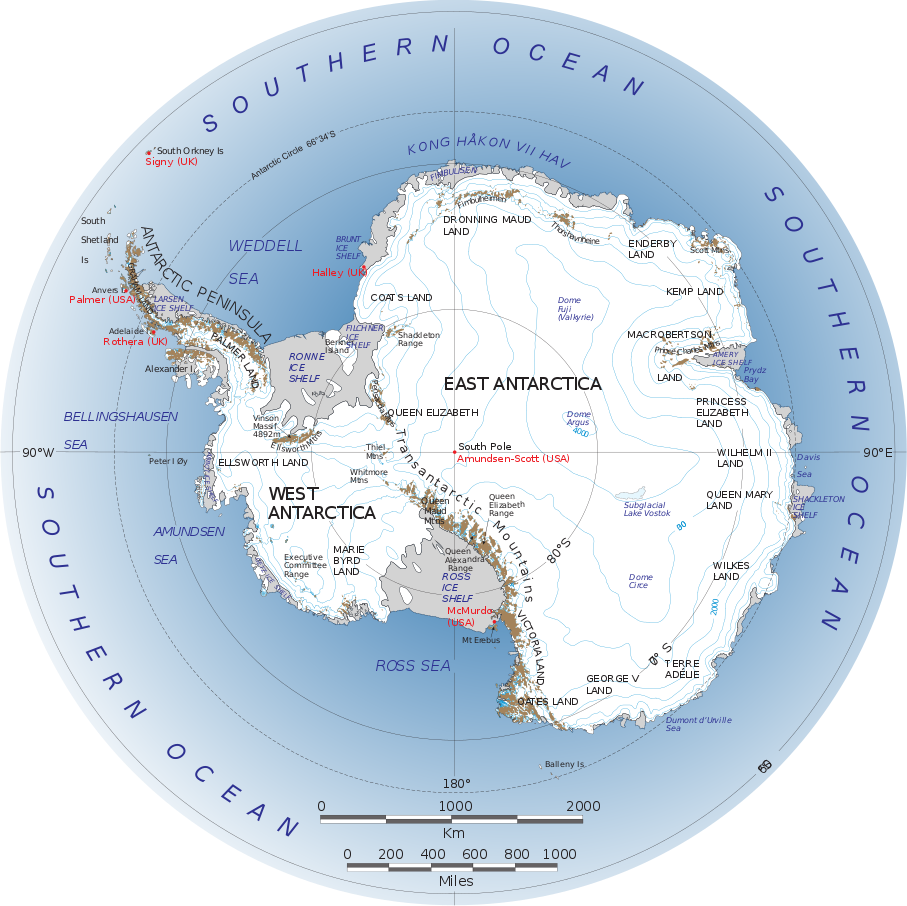
Latin American governments have a strong presence in Antarctica, with two countries, Argentina and Chile, formally claiming Antarctic territories while several others carry out annual scientific expeditions (apart from having research bases there). Regional navies are of paramount importance in these operations as they are the spearhead of their respective nations’ expeditions and security initiatives in Antarctic waters. In fact, in recent months, there have been new developments that signal a greater Latin American naval presence in the Antarctic in the near future: Peru has commissioned its new oceanographic vessel while Chile has commenced the construction of a new icebreaker.
Antarctic geopolitics will only increase in importance due to climate change and the upcoming year 2048 when the Antarctic Treaty will be open for review. Hence it is important that Latin America, broadly speaking, takes steps to maintain a continuous presence in Antarctica in order to have a voice when the frozen continent’s future is decided. Increasing budgets in order to modernize or replace aging vessels and expanding already successful scientific and security programs will play a critical role in regional navies’ future Antarctic operations.
Antarctica as a National Interest
The importance of Antarctica in Latin American security and defense strategies, as well as more comprehensive foreign policy concepts, cannot be overemphasized. One example of this is Antarctica’s frequent and prominent mentions in regional White Papers. For example, Argentina’s 2015White Bookrepeatedly references Antarctica, and explains how “the Ministry of Defense considers of the upmost importance the upgrade [of military platforms] necessary for the scientific development, international cooperation and preservation of the Antarctic environment” (P. 43). Similarly Peru’s 2005 White Bookmentions how the “Ministry of Defense, via the armed forces, has a fundamental role in the logistical support and the scientific research that encompasses the Peruvian presence in Antarctica” (P.42). Finally, Chile’s2010 White Book has an extensive chapter on the Chilean Antarctic, explaining how the armed forces aim to “have a permanent presence, even during winter, in the Antarctic continent and its islands” and to carry out oceanographic scientific research in the region (P. 51 & 52).
These three different White Books exemplify Latin American nations’ interests in having a strong Antarctic presence and how militaries, particularly navies, are regarded as the tip of the spear of Antarctic operations.
Vessels and Patrols
Argentina and Chile possess several platforms that operate in Antarctic waters for expeditions, patrols, and to support their Antarctic bases. Argentina has the icebreaker ARA Almirante Irízar(Q5) and in 2014, Buenos Aires acquired four Russian Neftegaz-class multipurpose vessels to support its Antarctic bases. Meanwhile, Chile has the icebreaker Almirante Oscar Viel (AP46), and several other vessels capable of operating in Antarctic waters.
Additionally, the two countries set aside their differences—overlapping territorial claims in the Antarctic—to create the Joint Antarctic Naval Patrol (Patrulla Antártica Naval Combinada: PANC) in 1998. Via the PANC, naval platforms from the two countries come together during the Antarctic Summer months (November-March) to patrol Antarctic waters, assist vessels in need (e.g. the tourist vessel M/V Explorer in 2007), respond to oil spills, and visit and support various bases.
The PANC’s navies pride themselves on being prepared to safeguardthe lives of those who work in and travel to the region, and are prepared for search and rescue missions along with other various emergencies at sea. The creation and success of the PANC should not be underestimated as it exemplifies the possibilities of collaborative naval efforts in the Antarctic. It is worth stressing that neither PANC country is a military power, and theydo not have the samenaval capabilities as some of their wealthier Antarctic counterparts, thus putting them at a great disadvantage (especially when considering each nation’s capabilities alone). However, despite the older vessels in their fleets, their partnership over the past two decades has proven to be effective both to patrol Antarctic waters, and also as a confidence-building mechanism.
Non-claimant nations also have important Antarctic programs. Peru, for example, recently received BAP Carrasco (BOP171),constructed by the Spanish Freire shipyard in 2016. Jane’s 360 explainsthat “the steel-hulled ship has a length of 95.9 m, a 6,000-tonne displacement, has a streamlined and raked superstructure with a meteorological sensor platform at the forward end,” which will be of great help for Peru’s future operations in the Antarctic. In addition, Brazil has avaried presence in the region that consists of the Almirante Maximiano (H-41), an ice breaker, the Ary Rongel (H-44), an oceanographic support ship, and several C-130 Brazilian Air Force (FAB) aircraft that are utilized to transport essential equipment and personnel to the Brazilian Antarctic Program (PROANTAR) facilities.
Regarding Chile, it has commenced the construction of a brand-new icebreaker as part of its Antarctica I project. Thanks to information provided to the authors by ASMAR, (Astilleros y Maestranzas de la Armada) Chile’s state-owned shipyard that has partnered with the Chilean Navy since 1895, we know that the new platform, an over $210 million project, will be capable of longer Antarctic missions in part due to its design which allows it to operate at temperatures as low as -30 Celsius. Additionally, the icebreaker will be equipped with modern, state-of-the-art scientific equipment in its microbiological and chemical laboratories. Construction commenced on 9 May at ASMAR’s Talcahuano facilities. The new vessel will be operational by the 2022-2023 season, and will greatly support Chile’s Antarctic operations.
As for Colombia, the navy has refitted one of its oceanic patrol vessels, ARC 20 de Julio (PZE-46), so it can better operate in Antarctic conditions. The vessel has already carried out two expeditions.
Uruguay’s presence in Antarctica since 1985 is also worth noting. TheROU 26 Vanguardia is the small South American country’s primary platform used for scientific research and to supportBase Artigas and Station Ruperto Elichiribehety. The Vanguardia,named Otto Von Guericke at the time of its construction, was built in Poland for East Germany in 1976. The vessel was purchased by Montevideo in 1991 and was then given its current name. It has a length of 72.62 m, displaces 1872 tons, and a maximum speed of 14.5 knots. Other ships that participate in the country’s Antarctic activities are ROU 04Artigas and ROU 22 Oyarvide. Unlike the PANC, which focuses on patrolling and safety activities, Uruguay’s main operations in the continent take place via the Uruguayan Antarctic Institute, a national agency under the supervision of the Ministry of Defense that focuses on scientific, technological, and logistic activities.
Finally, it is worth stressing the general spirit of camaraderie in the Antarctic among South American navies. The PANC is a security-related initiative of two navies coming together in spite of historical differences and ongoing territorial claims in theAntarctic. Similarly, Uruguay has shared the results of some scientific studies with Chile and Argentina. In addition, Uruguay’s Mobile Marine Meteorological Station Project (Proyecto Estacion Meterologica Movil Marina) is an ongoing project that provides real-time information such as wind direction and speed, atmospheric and barometric pressure; and wave period, height, and type to Argentine and Chilean stations. This is a prime example of Latin American navies and scientific centers coming together to build upon each other’s successes in Antarctica.
Slow Improvements
While the aforementioned developments clearly demonstrate how Latin American navies are growing Antarctic capabilities, they should not be overestimated as there are also troubling shortcomings, particularly due to budget issues. For example, while Argentina’s icebreaker Irízar recently commenced sea trials and will likely return to operational duty by the 2017-2018 season, it has taken a decade-long reconstruction effort to repair the platform after it was ravaged by a fire in 2007. Similarly, budget issues have affected Argentina’s recent Antarctic operations, best exemplified by the recent summer 2016- 2017 season, in which the government had trouble figuring outhow to resupply its Antarctic bases.
As for other nations, platforms that are too old to continue operating safely are eventually replaced by other vessels, which is not the same as expanding a fleet in terms of numbers. For example, Peru’sCarrasco will replace BIC Humboldt, which was constructed in the late 1970s and has gone through extensive overhauls to extend its operational life. Similarly, the new Chilean icebreaker will replaceViel, which was constructed in the late 1960s. Other naval platforms utilized for Antarctic operations, including the PANC, will soon become outdated. For example, Chile deployed ATF Lautaro (67) to the 2016-2017 PANC mission, a vessel constructed in 1973, while Argentina deployed ARA Islas Malvinas (A24), constructed in the 1980s. While replacement platforms are always welcome, expanding fleets by acquiring newly constructed ships would be more practical as their operational lives would last much longer than repurposed, older vessels.
The aforementioned Argentine Almirante Irízar illustrates the benefits of a stronger commitment by regional states toward their Antarctic programs, including their naval platforms. While its post-fire reconstruction was extensive and lengthy, the Argentine government’s investment has made the vessel one of the 10 biggest icebreakers in the world, as well as one of the most capable. In a recent navigational test, the ship surpassed expectations, and showed no signs of the various previous problems it had when it first made its way to the Antarctic from Finland in 1978. Not only does the ship have improved navigation capabilities, but it is also nowmultipurpose, housing eight top-of-the-line scientific laboratories, and an overall scientific investigation sector six times larger than that of its original construction. Despite the lengthy timeline of the repair, the Argentine government’s decision to allocate scarce resources in revamping the Irizar is a Cinderella Story of sorts, as it exemplifies the benefits that could come from a bigger budget committed to Antarctic maritime operations. Obtaining a new vessel would have probably taken less time than repairing the Irizar, nevertheless, if reports are to be believed, this modernized vessel will be of great help for Argentina’s Antarctic operations for the foreseeable future.
Final Thoughts
Navies are usually viewed through the prism of defense and security; however they also play a critical role in Antarctic programs. Certainly other military services, government departments, and scientific institutions are other necessary pillars of any vibrant and robust Antarctic program, but navies are a sort of spearhead as they employ the primary platforms that deploy to this frozen continent. Hence it comes as no surprise that navies are prominently mentioned in the White Papers of several regional countries regarding Antarctic operations as they are engaged in various operations ranging from scientific activities to providing emergency assistance.
Countries like Peru and Chile are working on obtaining new platforms for Antarctic use while Colombia has refitted one of its navy’s vessels for these operations. Meanwhile, the Argentine and Chilean navies have come together to create a joint Antarctic naval patrol that has helped vessels and Antarctic bases in need. Finally, Uruguay’s scientific program and projects are also notable as they provide data that allows the multifaceted work of the Latin American countries in the region to continue operations safely and effectively.
The importance of Arctic and Antarctic geopolitics will increase due to climate change and the approaching year 2048, when the Antarctic Treaty is up for revision. The modernization of polar-capable vessels, such as Argentina’s Alimirante Irizar, if not the acquisition of newer ones like Peru’s Carrasco, will help Latin American navies increase the reliability and projection of already successful missions in Antarctica thereby fortifying Latin America’s presence and increasing its voice in regards to the future of the frozen continent.
Alejandro Sanchez Nieto is a researcher who focuses on geopolitical, military, and cyber security issues in the Western Hemisphere. Follow him on Twitter: @W_Alex_Sanchez.
Brittney J. Figueroa is a recent graduate from the University of California, Santa Barbara with a Bachelors degree in Global Studies, and a Minor in Latin American Iberian Studies.
The views presented in this essay are the sole responsibility of the authors and do not necessarily reflect those of any institutions with which the authors are associated.